 roundup
 10 White Microphones That Look Clean and Sound Professional
We reviewed 10 white microphones that blend into clean desk setups and bright studios. Find the best white USB and condenser mics for any budget.

The tough, no-nonsense mics built to survive loud stages and heavy use. Broadcast, vocals, kick drums — if it needs a workhorse, it's probably in here.

We may earn a small commission through links on this page, at no extra cost to you. As an Amazon Associate, we earn from qualifying purchases. Ratings reflect our own editorial evaluation.
A dynamic microphone converts sound waves into an electrical signal through electromagnetic induction. It's the workhorse of the audio world, and that reputation is thoroughly earned.
If you've ever sung karaoke, attended a live concert, or watched a late-night talk show host crack jokes, you were looking at a dynamic mic. They're found on virtually every stage, in broadcast studios, inside recording rooms, and even mounted in truck cabs.
No other microphone type is this versatile.
Unlike condenser microphones, which need external power to operate, dynamics generate their own signal.
No phantom power, no batteries, no fragile circuit boards. That simplicity makes them tougher, more forgiving, and nearly bulletproof in harsh environments.
They absorb extreme sound pressure levels without distortion, which is exactly why you'll find them on snare drums, guitar cabinets, and in the hands of nearly every touring vocalist on the planet.
Here's something that trips a lot of people up: "dynamic" actually covers two distinct technologies: moving coil and ribbon. Both rely on electromagnetic principles, but the way they work and the sounds they produce couldn't be more different.
Knowing which is which saves you from buying the wrong mic.
The core principle is electromagnetic induction, the same physics that powers electric generators. Sound waves create air pressure changes that move a conductor through a magnetic field, generating a small electrical current that mirrors the original sound wave.
There are no active electronics in the transduction process. The acoustic energy itself produces the electrical signal, which is why dynamic microphones don't need external power to function.
It's that mechanical-to-electrical simplicity that gives dynamics their legendary reliability. Fewer components means fewer things that can break, fail, or wear out.
When most people say "dynamic microphone," they're picturing a moving coil design. A thin diaphragm attaches to a wire coil suspended inside a permanent magnetic field.
Sound waves hit the diaphragm, the coil vibrates back and forth through the magnet's field, and a small electrical current flows out.
No circuit boards, no active electronics. Just physics doing its thing.
That rugged simplicity is why a handheld microphone can get dropped on a concrete stage and still work flawlessly the next night.
The Shure SM58 is the poster child here, with documented cases of SM58s surviving house fires, getting run over by tour buses, and being used as an actual hammer.
Moving coil mics don't capture quite as wide a frequency range as condensers. They typically roll off the extreme highs above 15–16 kHz, and the lowest bass frequencies aren't reproduced as precisely.
For vocals and most instruments, though, that narrower response is actually useful. It naturally filters out low-end rumble and high-frequency hiss before the signal ever reaches your mixer.
Ribbon mics take a completely different approach. Instead of a coil and diaphragm, a thin strip of corrugated metal (the ribbon) sits suspended between two magnets.
Sound waves vibrate that ribbon, and as it moves through the magnetic field, it generates an electrical signal. It's a simple concept, but it works beautifully.
Engineers love ribbons for their smooth, warm sound. They handle transients with a naturalness and realism that moving coil mics simply can't replicate.
That quality is why ribbon mics have been a studio fixture since the 1920s microphone era, back when broadcast engineers first discovered how incredibly flattering they sounded on the human voice.
The tradeoff is fragility. A strong plosive blast at close range can stretch or snap the thin metal ribbon element.
Sending phantom power through a passive ribbon by mistake is another way to damage one permanently.
Companies like Royer have largely solved the durability problem with modern ribbon designs, but they still demand gentler handling than your average moving coil dynamic.
The story of the dynamic microphone starts in 1874, when Ernst Siemens filed the first patent for a moving coil transducer. The technology took decades to mature, but by the early 1930s, companies like Western Electric and RCA were producing the first commercially viable dynamic mics.
Those early dynamic microphones transformed broadcasting overnight. Before dynamics came along, carbon microphones were the standard, and they were noisy, fragile, and unreliable by comparison.
The shift to dynamic microphone technology brought dramatically cleaner sound to radio stations and recording studios across America.
The 1930s microphone era saw dynamic mics rapidly replace carbon designs in broadcast booths. By the 1940s, military communications during World War II pushed further innovation in dynamic mic durability and noise rejection.
Those battlefield-tested advances filtered directly into civilian audio equipment after the war ended.

Shure introduced the Unidyne model in 1939, featuring the first single-element unidirectional dynamic microphone capsule. That same basic design eventually evolved into the SM57 (1965) and SM58 (1966), two dynamic microphones that remain industry standards over half a century later.
The SM58 in particular became the most widely used dynamic vocal microphone in the world, found on every continent and in every genre from punk to gospel.
Its success proved that a dynamic mic didn't need exotic materials or complex engineering to dominate. It needed reliability, consistency, and a sound that worked for virtually every voice.
Ribbon microphones followed their own parallel path. RCA's 44A and 77 series defined the golden age of broadcast audio in the 1940s, but ribbons fell out of mainstream favor as rock music demanded mics that could survive extreme stage volumes without damage.
Modern ribbon manufacturers like Royer, AEA, and Rode revived the format in the late 1990s, engineering designs tough enough for contemporary studio and even live use. Today, dynamic microphones span $20 budget handhelds to $1,500+ premium ribbons, and the fundamental physics haven't changed one bit.
Walk into any concert venue, comedy club, or house of worship and you'll spot dynamic mics everywhere. Durability is only part of the explanation.
Feedback rejection is the real hero. Dynamic mics with cardioid or supercardioid patterns excel at ignoring sound from the sides and rear.
When you've got microphones on stage next to monitor wedges, PA speakers, and a full band, that off-axis rejection prevents the screaming feedback loops that would plague a condenser in the same position.
SPL handling is the other big one. A drummer cracking a snare at 130+ dB doesn't faze a dynamic mic.
A guitar amp cranked to stage volume? Not a problem.
These mics were literally built to absorb punishment that would overload a condenser's active electronics.
No phantom power requirement means fewer cables, simpler signal chains, and one fewer thing to fail mid-show. When a band loads in at 4 PM and needs to be sound-checked by 6, simplicity wins every single time.
Cost plays a massive role, too. You can mic an entire drum kit with quality dynamics for less than a single high-end condenser costs.
For venues, churches, and schools running dozens of channels, that savings adds up fast.
One thing people don't talk about enough is consistency. Condensers can sound noticeably different depending on humidity, temperature, and how long they've been powered on.
Dynamics deliver essentially the same tone whether it's a dry rehearsal room in January or an outdoor festival stage in August.
When you're managing 30 microphone channels across a festival, you need every single one to behave the same way.
Weight is worth mentioning, too. Dynamic mics are heavier than condensers because of the permanent magnets inside, but that mass actually helps on stage.
A mic with some heft in your hand feels more controlled and produces less handling noise than a lightweight alternative. For performers who move aggressively, that physical stability is a genuine advantage.
Dynamic microphones fall into five main categories: handheld vocal mics, instrument mics, broadcast and podcasting mics, USB and hybrid models, and specialty designs for niche applications.
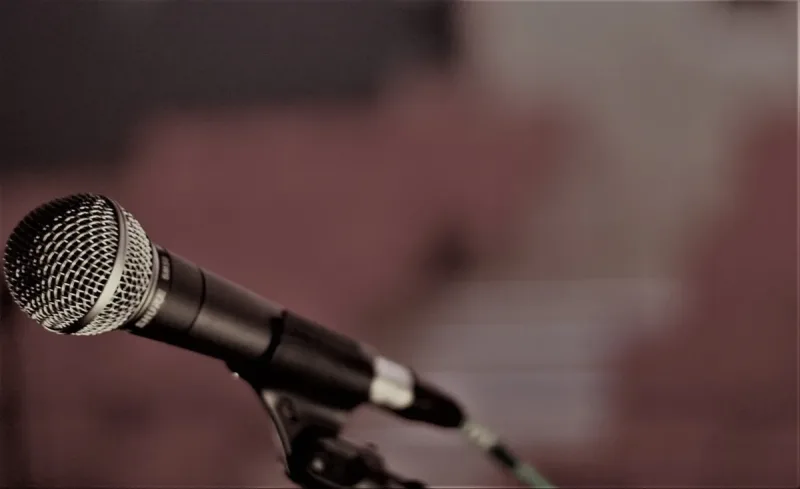
The classic handheld microphone is designed to be gripped, sung into, and (let's be honest) occasionally abused. The Shure SM58, Sennheiser e835, and Audio-Technica AE4100 all share that familiar ball-shaped grille that protects the capsule and doubles as a pop filter.
Vocal dynamics are voiced with a presence peak in the 2–5 kHz range so voices cut through a band mix.
They also roll off bass below 200 Hz to tame proximity effect when singers eat the mic, and they always do.
Want something with visual personality? Red microphones and other color variants from major manufacturers look great on stage without compromising the sound one bit.
Instrument dynamics come in different shapes depending on what they're built to capture. The Shure SM57, arguably the most recorded microphone in history, has a contoured frequency response that simply works on guitar amps, snare drums, and brass.
Specialty instrument mics handle very specific jobs. A trumpet microphone has to deal with extreme SPL and the directional blast of brass without falling apart sonically.
Clip-on violin microphones need to be light enough that they don't affect the instrument's natural resonance while still capturing its full tonal range.
Drum-specific dynamic microphones like the Sennheiser e604 and Audix D6 have frequency responses shaped specifically for toms and kick drums. They're compact, clip directly onto drum rims, and do a surprisingly good job rejecting bleed from neighboring drums.
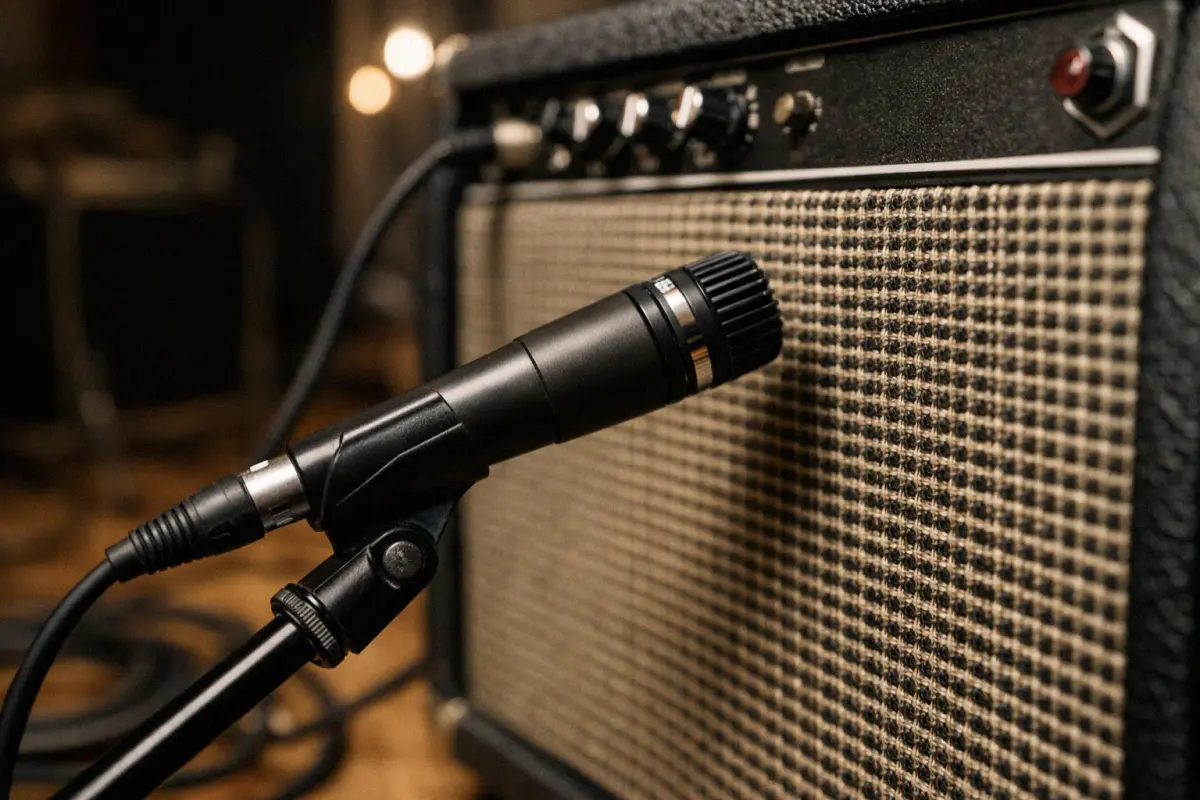
Zoom out from individual mics and the pattern is obvious: dynamics are the backbone of any stage microphone setup.
From the drum risers to the horn section, dynamics handle the full range of stage volume without requiring individual phantom power channels, which is a significant practical advantage when you're wiring up 20+ inputs for a large ensemble.
Broadcast has its own breed of dynamic mic, engineered specifically for close-up voice work in controlled rooms. The Shure SM7B, Electro-Voice RE20, and Heil PR-40 are the established big three in this category.
These are larger than stage dynamics and designed to live on boom arms, not in your hand. They feature excellent internal shock mounting, switchable bass rolloff, and an extended frequency response that captures the full richness and depth of the human voice.
If you're pursuing voice acting microphones professionally, a broadcast dynamic should be near the top of your list. In education settings, classroom microphone systems lean on dynamic capsules because they reject feedback well and survive daily use by students and teachers.
Podcasting's explosion created a whole new category: USB dynamic microphones that plug directly into a computer with no audio interface required.
The Samson Q2U offers both USB and XLR outputs in a single mic body, making it one of the most versatile budget dynamics you can buy. The Shure MV7 takes the hybrid concept upmarket with simultaneous USB and XLR output, onboard DSP processing, and a companion app for tone shaping.
Shure's SM7dB pushes even further with a built-in active preamp that eliminates the low-output issues plaguing traditional broadcast dynamics. No Cloudlifter needed, no cranking preamp gain into noise territory.
For podcasters and streamers who want the noise-rejecting advantages of a dynamic mic without the complexity of a full XLR signal chain, USB and hybrid dynamic microphones have completely changed the equation.
The tradeoff is upgrade flexibility. USB dynamic mics lock you into their built-in converter and preamp.
If you outgrow the sound quality, you replace the entire mic rather than just upgrading one component in your chain.
For many casual users, though, that simplicity is the whole point.
You'd be surprised where dynamic mic technology pops up. Parabolic microphones for wildlife recording and surveillance use dynamic capsules at their focal point because they endure harsh outdoor conditions without complaint.
The best CB microphones are almost universally dynamic, tough enough to handle vehicle vibration and electrical noise while keeping voice transmission clear. Gooseneck microphones on conference tables and podium microphones at lecterns frequently use dynamic capsules too.
The green bullet microphone, a classic harmonica mic, is a dynamic design that blues players have relied on for decades to get that overdriven, lo-fi tone.
And DJ microphone applications lean heavily on dynamics because they handle the noise and physical demands of club environments where condensers would struggle.
The five specs that matter most when choosing a dynamic microphone are frequency response, sensitivity, maximum SPL handling, proximity effect behavior, and polar pattern.
Frequency response tells you the range of sound frequencies a mic captures, measured in Hertz (Hz). Most dynamic microphones cover roughly 50 Hz to 15,000 Hz, though the exact range varies by model.
The shape of the response curve matters far more than the raw range. Perfectly flat isn't always what you want.
Stage vocal mics intentionally boost the presence range (2–5 kHz) so voices punch through a live mix. Kick drum mics scoop the mids and emphasize the low end plus the beater click.
If you're comparing an analog microphone to a digital one, the capsule's underlying frequency response matters just as much as the output format.
Sensitivity measures how much electrical signal a mic generates for a given sound pressure level, expressed in millivolts per pascal (mV/Pa) or decibels (dBV). Dynamic mics have lower sensitivity than condensers, typically between 1 and 3 mV/Pa.
Less output means dynamics need more preamp gain to reach usable recording levels. This is the single most misunderstood specification for dynamic mic buyers.
A low-output dynamic paired with a cheap interface that can't deliver enough clean gain produces a noisy, thin recording. The Shure SM7B, for instance, has a sensitivity of -59 dBV, which is very low even by dynamic standards.
Understanding what gain does on a microphone before buying will save you a costly lesson.
SPL stands for Sound Pressure Level, measured in decibels (dB). Dynamic microphones typically handle 140 dB or higher without any distortion at all.
For perspective, a jet engine at 100 feet hits about 140 dB. A snare drum from 6 inches away reaches around 130 dB.
This is where dynamics absolutely dominate condensers.
Most condensers start distorting around 120–130 dB unless you engage a pad switch.
Dynamics keep going because there are no active electronics to overload. It's pure electromagnetic physics converting sound to signal, and there's very little that can go wrong.
Every directional microphone (cardioid, supercardioid, hypercardioid) exhibits proximity effect, a bass boost that increases as the sound source moves closer. Dynamic microphones are no exception.
Singers use this deliberately. Move in close and the voice sounds warmer, more intimate.
Pull back and it thins out.
Seasoned vocalists constantly work the mic distance, and understanding how to hold a microphone is genuinely a performance skill.
Broadcast professionals exploit proximity effect on purpose to achieve that rich, deep "radio voice" quality.
With instrument mics, proximity effect means mic placement is critical. Shifting a mic just two inches on a guitar cab completely changes the captured tone.
A mic's polar pattern defines how sensitive it is to sound arriving from different directions. Most dynamic microphones use one of three patterns:
A bidirectional microphone (figure-8 pattern) picks up equally from front and back while rejecting the sides. That's the natural behavior of ribbon mics, and it's useful for recording two singers face-to-face or doing mid-side stereo recording techniques.
Omnidirectional patterns are rare in the dynamic mic world. Most applications that require full-sphere pickup use condensers instead, since the sensitivity advantage matters more at distance.
Dynamic mics are used for live vocals, guitar amps, drums, podcasting, broadcasting, two-way radio, and ensemble miking, essentially anywhere volume, durability, or noise rejection matters.
This is what dynamic mics were born to do. Whether it's a rock singer screaming into an SM58 or a jazz vocalist working a Sennheiser MD 441, nothing handles the chaos of live vocal performance like a dynamic.
For karaoke nights and casual gigs, a mini karaoke microphone gives you a fun, compact dynamic option without emptying your wallet. On the professional touring circuit, wireless handheld microphones with dynamic capsules remain the undisputed standard.
Miking a guitar amp with a dynamic is one of those "if it ain't broke" situations. The SM57 has been the go-to since the 1960s, and entire genres have been shaped by its sound on a cranked Marshall or Fender.
Dynamic microphones work so well on amps because they handle the brutal SPL without distortion, and their natural frequency curve flatters guitar speakers. They roll off the harsh fizz above 10 kHz that a condenser would faithfully (and unflatteningly) reproduce.
Placement matters enormously. A dynamic mic pointed at the center of the speaker cone sounds brighter and more aggressive.
Move it toward the edge and the tone warms up significantly.
Many engineers place two dynamic mics on one cabinet at different positions and blend them to taste.
A typical drum kit setup uses five or more dynamic mics: snare top, kick drum, each tom, and sometimes a bottom snare mic to capture that wire rattle. Every one of those positions needs a dynamic microphone that handles extreme SPL, rejects bleed from neighboring drums, and survives getting smacked by a stray drumstick.
The snare slot takes the most literal abuse, so rugged moving coil dynamics own it. Kick drum mics like the AKG D112 and Audix D6 are purpose-built with extended low-frequency response and a presence peak that captures both the chest-punch thump and the beater attack.
Tom dynamics round out the kit with models like the Sennheiser e604 offering compact clip-on designs that free up stand space and simplify teardown. For a complete breakdown, check our drum mics guide.
Dynamic mics have essentially taken over podcasting, and it makes total sense. They ignore room noise, minimize mouth clicks, and won't pick up your keyboard, AC unit, or your neighbor's dog barking through the wall.
If your recording space isn't acoustically treated (and most home setups aren't), a dynamic microphone sounds noticeably better than a condenser right out of the box. You can skip the acoustic panels, reflection filters, and noise gates entirely.
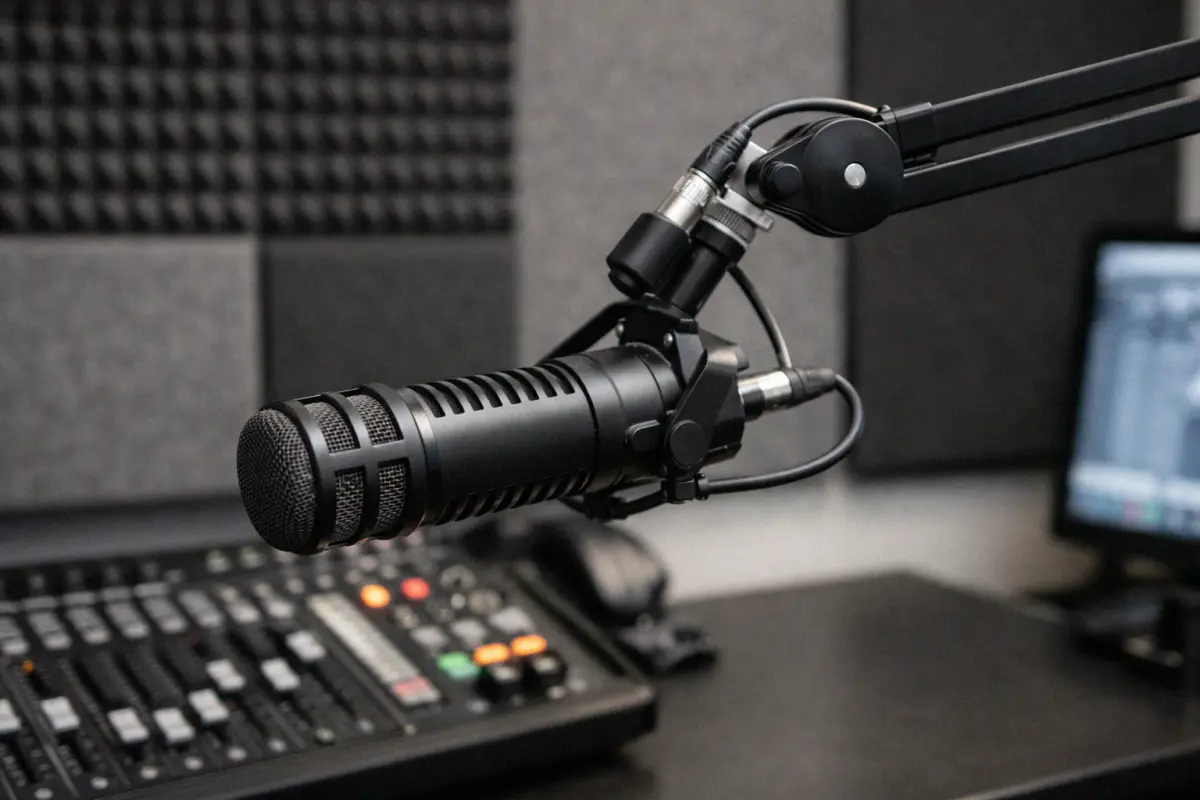
The Shure SM7B became the unofficial standard for podcasting after its adoption by high-profile shows, but more affordable dynamic mics like the Rode PodMic and Audio-Technica AT2040 deliver excellent results for a fraction of the cost. The digital microphone revolution has also brought dynamic capsules into USB form factors that make setup nearly effortless.
When budget matters, the best microphone under $100 is almost always going to be a dynamic.
Professional broadcasters have relied on dynamic mics for decades. The Electro-Voice RE20 and Shure SM7B are fixtures in radio stations worldwide.
They deliver a consistent, warm tone while rejecting room reflections and handling noise from studio equipment. That kind of consistency has earned dynamic microphones permanent spots on broadcast desks worldwide.
The echo microphone effect that some broadcasters use is easier to achieve cleanly when starting with a dynamic, since the drier source signal processes more predictably than a condenser recording full of room reflections.
Two-way radio is all about voice clarity. The best CB microphones use dynamic elements tuned to the 300 Hz to 3,000 Hz voice intelligibility range.
They handle vibration, temperature swings, and rough conditions inside a truck cab or on a worksite without any performance loss. These dynamic microphones prioritize speech intelligibility over fidelity, which is exactly right for two-way communication where being understood matters more than sounding polished.
Condensers are the classic choice for choral miking, but dynamics have their place. A choir microphone in a smaller venue with rough acoustics can benefit from a dynamic's tighter pickup and reduced sensitivity to room reflections.
Always match the dynamic mic to the room rather than blindly following convention.
Every microphone buyer lands on this question sooner or later. The honest answer is that both types have their place, and the "right" choice depends entirely on your environment and application.
Here's how they stack up on what actually matters.
| Feature | Dynamic Microphone | Condenser Microphone |
|---|---|---|
| Power Required | None (passive) | Phantom power (48V) or battery |
| Frequency Response | 50 Hz – 15 kHz (typical) | 20 Hz – 20 kHz (typical) |
| Sensitivity | Lower (needs more gain) | Higher (captures more detail) |
| Max SPL Handling | 140+ dB (no pad needed) | 120–130 dB (pad may be needed) |
| Noise Floor | Higher self-noise | Lower self-noise |
| Durability | Extremely rugged | Fragile, sensitive to moisture |
| Room Noise Pickup | Minimal | Picks up everything |
| Price Range | $25 – $500 (most under $200) | $50 – $5,000+ |
| Best For | Live performance, loud sources, untreated rooms | Studio recording, acoustic instruments, treated rooms |
| Weight | Heavier (magnets) | Lighter |
| Feedback Resistance | Excellent | Poor to moderate |
Bottom line: the best condenser on the planet will sound worse than a cheap dynamic if you're recording in an untreated room with background noise. Which mic type is "better" comes down entirely to your environment and what you're doing with it.
The most expensive microphone isn't automatically the right one, either. A $3,000 Neumann U87 on a noisy stage would get outperformed by a $99 SM58 every single time.
Since both moving coil and ribbon designs fall under the "dynamic" umbrella, it's worth knowing the differences before you buy. Moving coils are the everyday workhorses, and ribbons are the specialized studio instruments.
| Feature | Moving Coil | Ribbon |
|---|---|---|
| Transducer Element | Wire coil attached to diaphragm | Thin corrugated metal strip |
| Natural Polar Pattern | Cardioid (most common) | Bidirectional (figure-8) |
| Sound Character | Present, punchy, mid-forward | Warm, smooth, natural |
| Transient Response | Moderate (heavier diaphragm) | Faster (lighter ribbon element) |
| High-Frequency Response | Rolls off above 15–16 kHz | Rolls off gently, sounds natural |
| Durability | Extremely rugged | Fragile (improving with modern designs) |
| Phantom Power Safe | Yes (no effect) | Passive: No / Active: Yes |
| Output Level | Low to moderate | Very low (needs more gain) |
| Price Range | $20 – $500 | $200 – $3,000+ |
| Best For | Live sound, drums, amps, vocals | Guitar amps, brass, studio vocals, strings |
For most buyers, a moving coil dynamic microphone is the practical starting point. It handles virtually every scenario without requiring special care or handling precautions.
Ribbon mics earn their place when you need that specific warm, vintage character on guitar amps, brass instruments, and certain vocal applications where their natural high-frequency rolloff flatters the source beautifully.
If you're choosing between the two, start with a moving coil. Add a ribbon to your collection when you know exactly what sound you need and why.
Nobody talks about this enough, but the gear surrounding your dynamic mic matters just as much as the mic itself. A $400 SM7B plugged into a $30 interface will sound thin and noisy, not because the mic is bad, but because the signal chain can't support it.
Dynamic mics produce weaker signals than condensers, so your preamp needs to deliver enough clean gain without introducing noise. Budget interfaces with preamps maxing out at 50–55 dB of gain often fall short for low-output dynamics.
Look for interfaces offering at least 60 dB of clean gain. The Focusrite Scarlett series, Universal Audio Volt, and MOTU M2 all deliver enough headroom for the most common dynamic microphones.
For very low-output dynamic mics like the SM7B or RE20, you ideally want 65+ dB of clean gain available. Any microphone amp or preamp you're considering should list its gain range and equivalent input noise in the specs.
Don't overlook impedance matching, either. Most dynamic microphones have an output impedance between 150 and 600 ohms.
Your preamp's input impedance should be at least 5 to 10 times higher than the mic's output impedance for optimal signal transfer.
Nearly all modern interfaces meet this requirement, but it's worth checking if you're pairing a dynamic mic with older or specialized gear.
If your interface falls short on gain, an inline booster bridges the gap. The Cloudlifter CL-1 adds roughly 25 dB of transparent gain by drawing power from your interface's phantom power supply, and the dynamic mic capsule itself never sees the phantom voltage.
The Fethead, sE Electronics DM1 Dynamite, and Cathedral Pipes Durham are similar alternatives at various price points. Each slots between the mic and the interface via XLR, solving the gain problem without replacing your entire signal chain.
Newer active dynamic mics like the Shure SM7dB and Rode PodMic USB eliminate external boosters entirely with built-in preamp circuitry. For a deeper explanation, our guide on what microphone boost does covers the technology in detail.
The interface is where your signal goes from analog to digital, and it sets the quality ceiling for everything you record. Two things matter most for dynamic mics: preamp gain and preamp noise floor.
A noisy preamp cranked to 60 dB adds audible hiss to every recording. A clean preamp at the same gain level stays quiet.
That difference is worth paying for.
For solo podcasting with a dynamic mic, a single-input interface like the Focusrite Scarlett Solo works perfectly. Multi-host shows need multi-input interfaces, and the Zoom PodTrak series was specifically designed for podcast workflows using dynamic microphones.
If you're running a microphone mixer for live events or complex studio setups, make sure every channel delivers enough gain for dynamic mics without pushing preamps into noise territory. A microphone compressor placed after the preamp can also help even out the dynamic range and add polish to the final signal.
Dynamics excel in so many scenarios that it's tempting to use them everywhere. But there are situations where a condenser or other mic type genuinely performs better.
Capturing room ambience. If you want the natural reverb and spatial character of a concert hall, cathedral, or live room, a dynamic's tight pickup pattern and lower sensitivity work against you.
You need a mic that can breathe with the room.
Detailed acoustic instrument recording. The shimmer of nylon guitar strings, the airy overtones of a flute, the delicate harmonics of a harp: these details live in the high-frequency territory where dynamics roll off.
A small-diaphragm condenser captures that information far more faithfully.
Quiet sound sources. Whispered vocals, soft fingerpicking, or ASMR content demand a mic with high sensitivity and low self-noise.
Dynamics need so much preamp gain for these sources that the noise floor becomes a real problem.
Distant miking. Any time the mic sits more than a couple of feet from the source (ceiling microphones in conference rooms, overhead choral mics, ambient room mics), you need the sensitivity of a condenser.
A dynamic at that distance simply won't capture enough usable signal.
Maximum high-frequency detail. If your recording demands crystal-clear reproduction above 16 kHz, a condenser's extended frequency response is the right tool for the job.
Stereo recording techniques. XY, ORTF, and spaced pair configurations rely on matched condensers for accurate stereo imaging.
Dynamic mics' lower sensitivity and narrower frequency response make them poor candidates for these techniques.
None of this takes away from what dynamic microphones do well. It means you pick the right tool for each specific job instead of forcing one mic type to do everything.
This is the number one beginner mistake. They read that condensers have "better" frequency response and more "detail," so they grab one for their untreated bedroom podcast setup.
Then they spend weeks trying to clean up room echo, keyboard clicks, and fan noise in post-production. A microphone isolation shield can help, but it doesn't solve the fundamental problem.
If your space isn't acoustically treated, start with a dynamic. Full stop.
Dynamic microphones produce a weaker signal than condensers. Plug one into a cheap audio interface and max the gain, and you'll end up with a noisy, thin recording.
Low-output dynamics like the SM7B are notorious for this issue. The fix is either an interface with quality high-gain preamps or an inline booster like the Cloudlifter CL-1 or Fethead.
Budget an extra $100 or so if you're going the broadcast dynamic route for podcasting.
Joe Rogan uses an SM7B, so it must be the best podcasting mic, right? Not so fast.
Rogan records in a professional studio with full acoustic treatment, a dedicated audio engineer, and a high-end signal chain. The mic is one small piece of a much larger puzzle.
Buy for your actual room, your actual budget, and your actual use case. For a lot of people, a $60 Samson Q2U paired with a decent interface sounds better than an SM7B running through a bargain-bin preamp.
Dynamic mics come in XLR, USB, and even 3.5mm connector options. XLR is the professional standard with the most flexibility, but you need an audio interface to use it.
USB dynamics plug straight into your computer, which is dead simple but limiting if you want to upgrade later.
An aux microphone connection (3.5mm) is the most basic option and generally delivers the worst audio quality. Our microphone connector guide covers every type in detail.
Think through your entire signal chain before you buy. A fantastic mic with the wrong connector for your setup is an expensive paperweight.
Going wireless? Not every dynamic capsule works with every wireless system.
A 4-channel wireless microphone system requires compatible transmitter and receiver pairs, and the capsule you choose directly affects how the wireless signal sounds.
Check compatibility before buying components separately. Most manufacturers sell complete wireless packages with matched dynamic capsules tuned for their specific system, and that's usually the safer bet.
Every dynamic mic we review goes through the same tests so our comparisons stay fair and apples-to-apples.
We record identical vocal passages (spoken word and sung) at three distances: 2 inches for broadcast style, 6 inches as a general standard, and 12 inches pulled back. This reveals how each mic handles proximity effect, how much gain it needs, and how the tone shifts with distance.
We run both male and female voices across low, mid, and high registers. Some mics that sound amazing on a deep male voice fall apart on a soprano, sounding thin and harsh.
You should know that before spending your money.
Instrument mics get tested on a guitar amp at moderate and high volumes, a snare drum with both rimshots and ghost notes, and acoustic instruments at various distances. We're listening for how faithfully the mic captures each instrument's core character without over-coloring the tone.
We measure self-noise with no signal present, then test off-axis rejection by placing a speaker at 90 and 180 degrees from the mic's front. This tells you exactly how much bleed and room noise each mic lets through in real-world conditions.
For live mics, we gradually increase monitor speaker volume until feedback occurs. That gain-before-feedback number is one of the most useful real-world specs for any microphone on stage.
We evaluate build quality, materials, grille strength, and connector feel. We note whether the body is metal or plastic, how snug the XLR jack sits, and whether you can remove the grille for cleaning.
We put mics through real-world handling tests including drops from tabletop height. A dynamic microphone that sounds great but falls apart after six months of touring isn't worth recommending.
We also check accessories and compatibility, including how well the dynamic mic fits standard microphone clamps, whether the included case provides adequate protection, and if replacement grilles and capsules are available.
For most people, the best value in dynamic microphones sits between $50 and $150, where models like the Shure SM58 and Sennheiser e835 deliver professional results at accessible prices.
At this price, you're getting mics that do the job without any frills. The Behringer XM8500, Pyle PDMIC58, and Samson Q2U (USB/XLR combo) all fall in this bracket.
They won't blow you away with detail or fit-and-finish, but they're perfectly functional for learning, casual use, and tight-budget setups. The Bonoak microphone and similar budget brands sound surprisingly decent for the money.
For something more portable and fun, the ION microphone and Blue Raspberry microphone put a creative spin on the budget dynamic concept with extras like Bluetooth and built-in effects.
This is where most people should be shopping. The Shure SM58 ($99), SM57 ($99), Sennheiser e835 ($99), and Audio-Technica ATR2100x ($79) all deliver professional-grade sound that holds up anywhere.
If you can only buy one dynamic microphone, grab something in this range. The best microphone under $100 today is genuinely good enough for professional-level work.
Ten years ago, that absolutely wasn't the case.
The Samson Q2U deserves special mention here for its dual USB/XLR output, which lets beginners start simple with USB and migrate to an XLR setup later without buying a new mic. For those on the tightest budgets, options at the under $50 mark have improved dramatically in recent years.
Want a little personality? A white microphone variant of popular models lets you match your studio aesthetic while getting identical audio performance.
This tier holds broadcast-quality dynamics: the Shure SM7B ($399, frequently on sale under $350), Electro-Voice RE20 ($299), and Heil PR-40 ($327). These are what you'll find in professional studios, radio stations, and serious podcast setups.
You get superior internal shock mounting, refined frequency response curves, and noticeably better build quality. The internal components (larger magnets, tighter voice coil tolerances, heavier-duty microphone wiring) all contribute to a cleaner, more detailed signal than budget dynamics produce.
If your voice is making you money (podcasting, broadcasting, voiceover, streaming), a professional-grade dynamic mic pays for itself quickly.
The best vocal mic under $500 almost certainly falls in this price range.
Beyond $350, you're in premium territory. The Sennheiser MD 441 ($899) is a broadcast and studio legend.
The Shure Super 55 ($249) is a retro design icon.
Modern ribbon mics from Royer start above $1,000.
Ribbon mics truly live in this tier. The Royer R-121 ($1,395) is widely regarded as one of the greatest guitar amp microphones ever made.

The AEA R84 ($1,000) delivers a vintage warmth that no plugin can replicate convincingly.
These are investment-grade tools for working professionals who know exactly what sound they need and why they need it.
Ultrasonic microphones are another premium niche worth mentioning, with specialty dynamics that capture frequencies above normal human hearing for scientific and industrial applications.
No. Standard moving coil dynamic microphones generate their own signal through electromagnetic induction and require no external power.
The exception is active dynamic mics like the Shure SM7dB, which use phantom power for built-in preamp circuitry, but the capsule itself remains passive. Sending phantom power to a standard moving coil won't damage it, though it won't do anything useful either.
Passive ribbon microphones are a different story. They can be damaged by phantom power, so always check your mic's specifications before engaging that 48V switch.
Dynamic mics are excellent for vocals in the right context. For live performance, they're the undisputed standard thanks to their feedback rejection, durability, and SPL handling.
For studio recording and podcasting, dynamics work especially well in untreated rooms where their noise rejection is a major advantage. If your space is professionally treated and you want maximum vocal detail, a condenser may serve you better.
Absolutely. Some of the most iconic recordings in music history were captured with dynamic mics.
The SM57 has appeared on more recorded tracks than probably any other microphone ever made.
For home recording setups, dynamics frequently outperform condensers because they reject the room noise and reflections that untreated spaces produce. The key is understanding that dynamics bring their own tonal character, and that slightly colored sound is often exactly what a mix needs.
Dynamic mics convert sound through electromagnetic induction using a moving coil or ribbon. They're passive, rugged, and handle loud sources effortlessly.
Condenser mics use an electrically charged diaphragm that requires phantom power. They offer higher sensitivity, wider frequency response, and capture more fine detail, but they also pick up more room noise and are physically more fragile.
Short version: dynamics for loud, live, and noisy environments. Condensers for quiet, treated, detail-focused recording.
A well-built moving coil dynamic can last decades with basic care. There are SM57s and SM58s from the 1960s and 1970s still working in studios and on stages today.
The mechanics are simple enough that there's almost nothing to degrade over time. Store your mic properly, avoid repeated hard drops, and keep moisture away from the capsule.
Ribbon microphones require more careful handling. The thin metal element can stretch or sag over years of use, and ribbon replacement is a specialized repair.
With proper care, a quality ribbon lasts 15 to 20+ years.
The Shure SM58 is the safest pick for beginners because it's durable, sounds great on vocals, and costs around $99. For podcasters who want USB simplicity with XLR upgrade potential, the Samson Q2U at around $60 is hard to beat.
Much less than condensers. Dynamic mics have lower sensitivity and tighter pickup patterns, which means they naturally reject sounds coming from the sides, rear, and distance.
That's why they're the go-to for untreated rooms, noisy stages, and home podcast setups where ambient noise is unavoidable.
The most common cause is insufficient preamp gain. Dynamic microphones produce lower output than condensers, and many budget audio interfaces can't deliver enough clean gain to bring the signal to proper levels.
Check your gain staging first. If your preamp is maxed out and the signal is still weak, you need either a better interface with more gain headroom or an inline booster like the Cloudlifter CL-1.
Also check your mic technique. Moving even a few inches farther from a dynamic dramatically reduces the signal level.
Keep your mouth 2 to 6 inches from the capsule for optimal results.
Dynamic microphones are the most versatile, durable, and practical mics you can own. They've anchored live sound since the 1930s, and they keep getting better as capsule design, magnetic materials, and manufacturing precision continue to advance.
From the broadcast studios of the 1940s golden age all the way to today's podcast explosion, dynamics have earned their place in every generation of audio technology.
Whether you're miking drums, recording a podcast, performing live, or just need a reliable tool for everyday audio work, there's a dynamic mic that fits your application and your budget. Focus on matching the mic to your actual use case rather than chasing specs or brand loyalty.
The best dynamic mic is whichever one solves your problem without creating new ones.
Check out our dynamic microphone reviews below for detailed, hands-on assessments of every model we've tested.
roundup We reviewed 10 white microphones that blend into clean desk setups and bright studios. Find the best white USB and condenser mics for any budget.
 roundup
 Cut background noise and focus on what matters. We tested 10 directional microphones, including shotgun and cardioid mics, for video and podcasting setups.
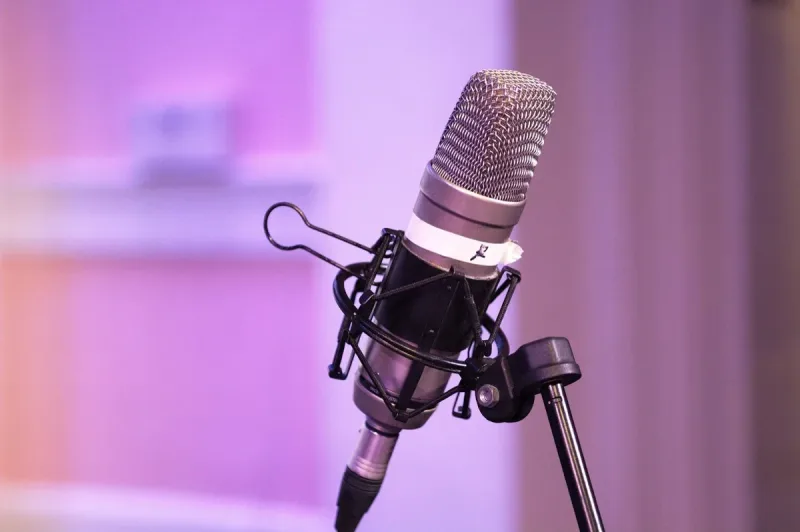 roundup
 Looking for the best aux microphone for gaming or streaming? We ranked 10 options by voice clarity and value, from boom mics to desktop condensers.
 roundup
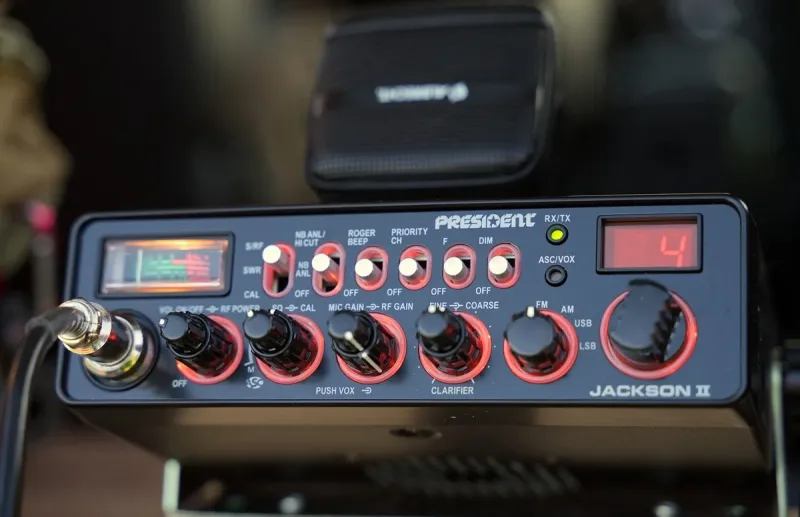
 Your stock CB mic probably isn't cutting it. We tested 9 best CB microphones from Astatic, Cobra, and RoadKing to find the clearest transmitters.
 roundup
 Capture group vocals clearly, not as a muddy wall of sound. We tested 10 choir microphones, from overhead condensers to pencil mics, for worship and stage.
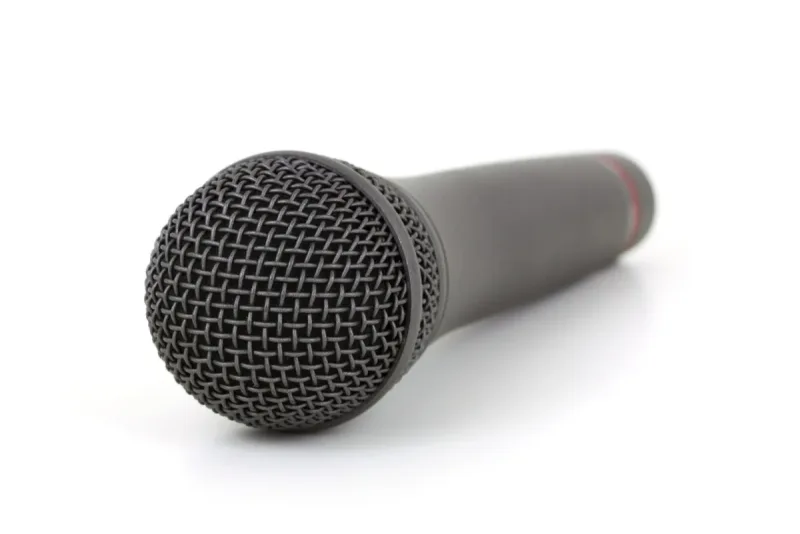 roundup
 We tested 10 echo microphones for kids and picked the ones with the best sound effects, LED lights, and durability for hours of singing fun.
 roundup
 Analog microphones deliver warm, natural sound that digital mics struggle to match. We reviewed 10 options for studio recording, from condensers to lavs.
 roundup
 You don't need a full-size machine to sing your heart out. We tested 11 mini karaoke microphones that are compact, affordable, and surprisingly powerful.
 roundup
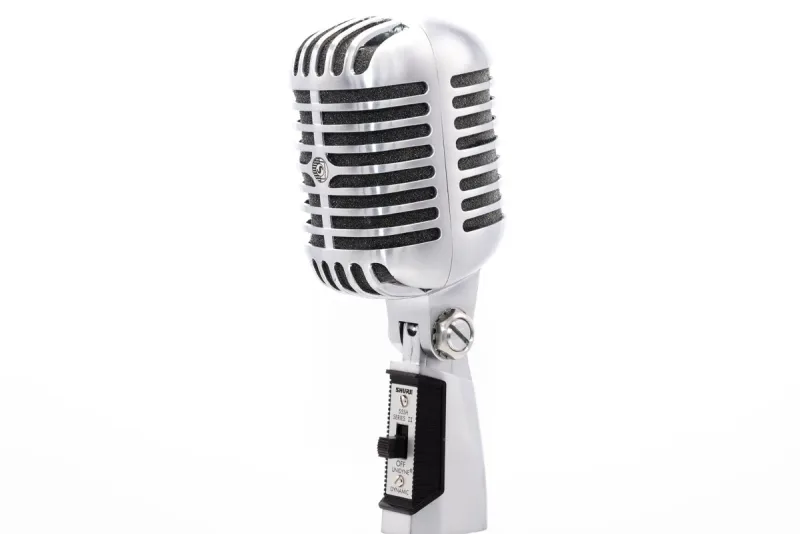
 We tested 10 retro-styled 1940s microphone models that bring wartime-era elegance to your stage. Find out which ones pair vintage looks with modern sound.
 roundup
 Great sound on a budget is possible. We found 9 of the best microphones under $100 that punch above their price for podcasting, vocals, and streaming.
 roundup
 We reviewed 10 podium microphones for clear, professional lectern audio. Find the best gooseneck and clip-on mics for speeches and conferences.
 roundup
 Want that classic radio broadcaster look? We reviewed the best 1930s microphone clones that nail the vintage vibe and still sound great for live shows.