
Anyone who’s spent time recording dialogue, interviews, or vlog audio knows the truth: bad sound will kill a video faster than bad picture. Audiences will tolerate rough visuals if the voice is clean, but they’ll bail on crisp 4K footage the moment the audio turns muddy.
That’s where a directional mic earns its spot in your kit. Instead of grabbing every noise in the room, it zeroes in on what’s directly in front of it, which is exactly what you want when you’re shooting in a coffee shop, on a busy street, or anywhere with background chatter.
Build quality matters too. The metals, capsules, and shock mounts a manufacturer chooses will make or break how the mic actually performs in real shoots.
Picking the right one from the sea of options can be overwhelming, which is why I put together this shortlist of the ten directional mics I’d actually trust on set.
Quick Comparison Chart
| # | Product | Our Rating | ||
|---|---|---|---|---|
| 1 |  |
BOYA BY-MM1 Shotgun | ★★★★★ | Check Price |
| 2 |  |
BLUE YETI USB mic | ★★★★★ | Check Price |
| 3 |  |
Rode VideoMic Pro+ | ★★★★★ | Check Price |
| 4 |  |
MOVO-VxR10 PRO External microphone | ★★★★★ | Check Price |
| 5 |  |
BLUE SNOWBALL microphone | ★★★★★ | Check Price |
| 6 |  |
Audio Technica AT2020 microphone | ★★★★★ | Check Price |
| 7 |  |
RODE video microphone compact on-camera | ★★★★★ | Check Price |
| 8 | 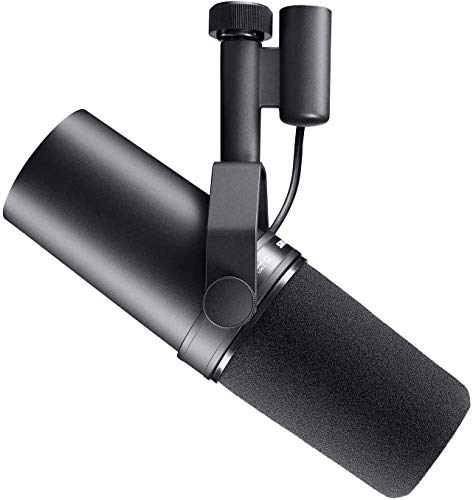 |
Shure SM7B Cardioid Microphone | ★★★★☆ | Check Price |
| 9 |  |
Sennheiser mkh 416 microphone | ★★★★☆ | Check Price |
| 10 |  |
RODE NT3GB microphone | ★★★★☆ | Check Price |
1. BOYA BY-MM1 Shotgun — Best Overall
BOYA BY-MM1 Shotgun
If you're looking for a portable, small and easy-use microphone, BOYA should be your choice.
Pros
- Universal 3.5mm TRS output fits smartphones, DSLRs, and camcorders
- Runs on plug-in power from your device with no battery required
- Weighs just 27 grams with a compact aluminum body for portability
- Includes foam windscreen and furry deadcat for outdoor shooting
- Supercardioid pattern focuses on subjects and rejects side noise
Cons
- Requires phantom power or battery, adding complexity
- Handling noise is amplified by the long tube body
The BOYA BY-MM1 is the one I’d hand to any creator who wants pro-level directional sound without learning a new workflow. It’s tiny, light, and takes zero setup.
Plug-and-play is the big win. No battery to kill mid-shoot, and no firmware to fight with.
The aluminum shell keeps it tough in a bag, and the kit includes a carrying pouch, shock mount, and furry windshield for when you’re shooting outside.
It’s aimed squarely at YouTubers, and that shows in the bundled TRS and TRRS cables (meaning the same mic plugs into a DSLR or a phone with no adapter hunting). The shock mount actually works too, cutting the vibration and cable rustle that usually ruin on-camera audio.
I’ve taken a BOYA to everything from market vlogs to forest trails, and it holds its own in all of them. The deadcat windshield is the real hero on breezy days, keeping voices clean while cheaper mics turn into wind turbines.
At this price, it’s basically a no-brainer purchase for anyone starting out.
2. BLUE YETI USB mic — Runner Up
BLUE YETI USB mic
This Blue Yeti microphone can record almost anything you can think of, and from any direction.
Pros
- Tri-capsule array supports four polar patterns for any recording scenario
- Onboard mute button and gain control provide hands-on studio flexibility
- Zero-latency headphone output lets you monitor recordings in real time
Cons
- Audio quality capped by USB bus power limitations
- Cable length restricts placement options without a USB extension
The Blue Yeti is the Swiss Army knife of the desktop mic world. It’ll record just about anything you point it at, and the plug-and-play simplicity means there’s no learning curve before your first session.
Sound quality is exceptional. The Yeti picks up the subtleties of speech so well that you often don’t need post-production polish to get a broadcast-ready result.
That’s why podcasters, vloggers, and streamers have kept it near the top of every list for years.
Blue ships it in several finishes (Cubano Gold, Shadow Grey, Red Onyx, and a vivid blue) so you can match it to your setup without compromising the look of your desk.
The size is deceptive. It looks compact but it’s heavy and stable, and the two pickup-pattern controls on the body let you flip between single-source cardioid mode and multi-person modes in seconds.
If you specifically need to capture sound from both sides of the mic instead of the front, a bidirectional microphone is built for that exact job.
Whether you’re flying solo or running a multi-person interview, the Yeti handles it gracefully.
3. Rode VideoMic Pro+ — Best Value
Rode VideoMic Pro+
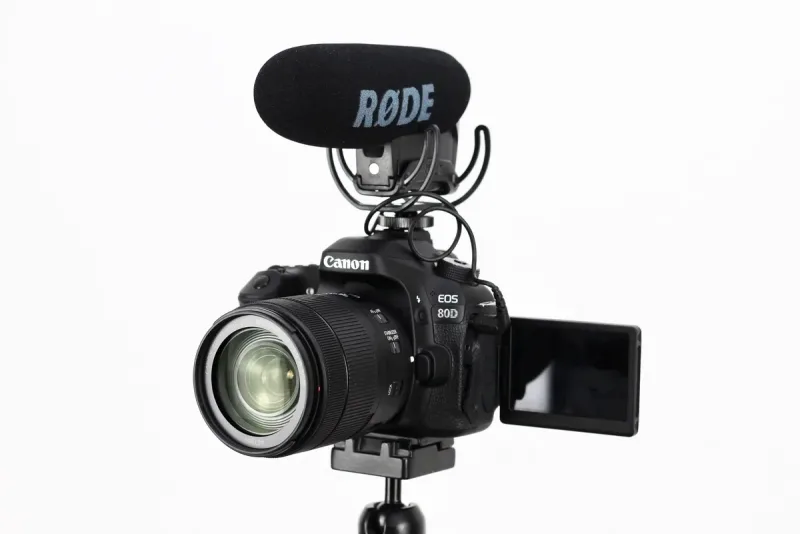
The Rode VideoMic Pro+ is a premium on-camera shotgun microphone with a built-in rechargeable battery, high-pass filter, and Rycote Lyre shockmount for superior audio.
Pros
- Built-in rechargeable lithium-ion battery with USB charging
- Selectable high-pass filter (75Hz/150Hz) and high-frequency boost
- Rycote Lyre shockmount reduces handling noise and vibrations
Cons
- Higher price point than budget on-camera mics
- Supercardioid pattern may be too narrow for some uses
When high-quality sound matters just as much as the visuals, the Rode VideoMic Pro+ is a fantastic choice for directional recording.
This premium on-camera shotgun microphone features a supercardioid condenser capsule with improved frequency response from 20 Hz to 20 kHz, capturing every detail in your recordings.
The integrated Rycote Lyre shockmount does an excellent job isolating the mic from handling noise and camera vibrations, while the selectable high-pass filter lets you cut out low-frequency rumble at either 75Hz or 150Hz.
You can also boost high frequencies to add clarity to vocals, which is great for interviews and vlogging.
The built-in rechargeable lithium-ion battery charges via micro USB, and you can also use standard AA batteries or power it continuously through USB for extended recording sessions.
A standout feature is the safety channel that records a second track at a lower level, protecting you from unexpected audio spikes.
It connects via a 3.5mm jack and mounts directly on your camera’s hot shoe, making it ready to capture audio wherever your creativity takes you.
4. MOVO-VxR10 PRO External microphone — Top Pick
MOVO-VxR10 PRO External microphone
This universal microphone is lightweight and is available at a very affordable price.
Pros
- Operates without batteries using plug-in power from your camera body
- Includes carrying case, shock mount, and two windscreens in the box
- Universal 3.5mm TRS connector works with any DSLR or mirrorless camera
Cons
- Build quality may not withstand heavy daily use
- Included accessories are basic and may need upgrading
The MOVO VxR10 Pro is a featherweight shotgun aimed at creators who want to escape the tinny audio their camera’s built-in mic delivers. It costs almost nothing, and the jump in quality is immediate.
A furry windshield ships in the box, which is exactly what you need when you’re shooting outdoors in anything more than a light breeze. Onboard controls and a headphone monitoring jack give you live feedback on your levels (a feature usually reserved for pricier mics).
The aluminum body feels solid, and the battery-free design means one less thing to forget on a shoot day. An integrated shock mount keeps handling noise at bay, and the 3.5mm TRS connector plays nicely with iPhones, Android phones, cameras, camcorders, audio recorders, tablets, and laptops.
A one-year warranty caps it off. For the price, it’s ridiculous how much functionality you get.
5. BLUE SNOWBALL microphone — Top Pick
BLUE SNOWBALL microphone
Blue has built a well-known and respected name in the world of microphones, and for a good reason as its offerings vary from entry-level to professional.
Pros
- True plug-and-play USB with no driver installation needed on Mac or PC
- Crystal clear condenser pickup ideal for YouTube voiceovers and narration
- Dual capsule design captures vocals and adds narration to home movies and podcasts
Cons
- Documentation lacks detailed setup guidance for beginners
- Frequency response may not suit all voice types equally
Blue has earned its reputation fair and square, with a lineup that stretches from entry-level USB mics all the way up to studio-grade workhorses. The Snowball sits comfortably in the “beginner with great taste” tier.
It’s a reliable first mic for streaming, podcasting, or video voiceover work. The build is solid, the capsules are clean, and the sound comes through natural rather than overly processed.
The Snowball offers three selectable patterns via a simple slider on the back: cardioid, omnidirectional, or cardioid with a 10 dB pad for loud sources. That’s more pattern flexibility than most budget mics give you.
Visually, it’s iconic. The orb shape is available in black or white, with a plastic shell exposing a metal grille on each end, plus the familiar Blue logo on the front.
A status LED on the top lights up the moment the USB connection is live.
Compatibility covers Windows 7, 8, 10, and Mac OS 10.4.11 and later. Just make sure you’re running USB 1.1/2.0 or newer with at least 64MB of RAM (which is basically every computer made in the last two decades).
The chassis is solidly built and detaches for easy transport. For best results, sit about five to six inches from the mic and angle slightly off-axis.
6. Audio Technica AT2020 microphone — Worth Considering
Audio Technica AT2020 microphone
First of all, the price and quality are great; it contains more steps to get audio to your computer than a simple plug-and-play mic.
Pros
- Bundle includes XLR cable, pop filter, and studio accessories at a special price
- Balanced XLR cable for connecting to any professional recording interface or mixer
- Sonic Sense extended one-year warranty covers manufacturing defects
Cons
- Audio quality capped by USB bus power limitations
- Cable length restricts placement options without a USB extension
The Audio-Technica AT2020 nails the price-to-quality ratio. It’s an XLR mic, so there’s a bit more setup involved than a plug-and-play USB option, but the audio payoff is significant.
It’s aimed at professionals and serious hobbyists who want genuinely clean sound for voice-over and podcasting work and don’t mind using an interface. It’s one of the few mics at this price point that delivers studio-quality sound, which is why it lives permanently on our best microphone under $100 list.
Tonally, it captures every subtle inflection in a voice, and it’s also surprisingly good for acoustic guitars and similar instruments. The pivoting stand mount holds the mic rock-steady wherever you need it positioned.
Build quality is tank-like. You can knock this thing around in a studio environment without worrying, and it holds up through years of heavy use.
The cardioid pattern locks tight on sources in front and rejects anything behind.
Frequency response runs from 20 Hz to 20 kHz, which is as wide as you’d ever need. It handles everything from whispered narration to loud vocal performances, but you’ll want a decent pop filter if you’re recording close.
7. RODE video microphone compact on-camera — Worth Considering
RODE video microphone compact on-camera
The covering of this microphone is all metal, and it has a very solid feel, including a suitable long cable which is perfect for plugging into your camera without flopping and rolling over.
Pros
- Rycote Lyre shock mount and deluxe furry windshield included for outdoor use
- Battery-free design runs on plug-in power from your camera body
- Compact all-metal build designed to improve audio quality of your video recordings
Cons
- Right-angle adapter not included for tight spaces
- Braided sleeve can fray at stress points over time
The shell is all metal, feels solid in hand, and the cable is long enough to plug into your camera without curling up in your way. Little details like that add up when you’re shooting all day.
Power comes from the camera’s mic input (plug-in power), so you never have to worry about forgetting a battery. At 0.8 inches wide and 3.3 ounces, the whole mic is so light you basically don’t notice it on top of a rig.
Recordings come out crisp and mostly transparent, and the physical controls on the body are easy to manipulate even mid-shoot. The shock mount keeps audio rock-steady when the camera is moving, with no mechanical thumping bleeding through.
This is the ideal companion for vloggers, run-and-gun filmmakers, and travel videographers who want something compact that still beats the pants off their camera’s built-in mic. It’s also a great step-up mic for newer YouTubers who want a more natural, less aggressively focused sound thanks to its cardioid polar pattern (picks up the front, rejects the sides).
The selectable 80 Hz high-pass filter is a lifesaver outdoors, cutting traffic rumble and HVAC hum before they ever reach your file. Pair that with the gain pad, and you’ve got a remarkably flexible little mic that never needs a battery.
8. Shure SM7B Cardioid Microphone — Worth Considering
Shure SM7B Cardioid Microphone
This is a high-level microphone; it's not for those making their first trial into the recording world.
Pros
- The wide-ranged, flat frequency response gives clean, natural reproduction of music and speech
Cons
- Build quality may not withstand heavy daily use
- Included accessories are basic and may need upgrading
The Shure SM7B is not a beginner’s mic. It’s a legend, used in pro studios around the world, and to get the best out of it you’ll need a good preamp and some patience.
Build and performance are first-rate. The internal shielding kills electromagnetic hum, and the built-in shock mounting blocks mechanical noise from sneaking into your recordings, which is why professional musicians have trusted it for decades.
The SM7B ships with one of the best integrated pop filters in the business. Get as close as you want, and it’ll handle your plosives without breaking a sweat.
There’s also an external windscreen for even more protection during close-mic work, so hissing, lisping, and pop noises are essentially gone.
Shure includes two cases in the box (one for the mic, one for the windscreen) and connects via standard XLR.
The audio is flawless and crystal clear. This is the same mic used to record some of the biggest pop songs in history, including Michael Jackson’s “Thriller,” and once you plug one in, it’s easy to hear why.
When you buy the SM7B, you’re getting a complete package (pop filter, windscreen, mounting hardware), so you’re not nickel-and-dimed on accessories. The flat, wide frequency response and cardioid pattern make it ideal for vocal and instrument recording in any serious studio setup.
9. Sennheiser mkh 416 microphone — Worth Considering
Sennheiser mkh 416 microphone
This microphone is a professional's favorite since its release, especially with the rise of Youtube and podcasts.
Pros
- Handles adverse climatic conditions including extreme humidity and temperature
- Interference tube principle provides highly focused supercardioid directivity
- Noise level weighted per CCIR 468-3 standard at just 24 dB for quiet recordings
Cons
- Documentation lacks detailed setup guidance for beginners
- Frequency response may not suit all voice types equally
The Sennheiser MKH 416 has been a working professional’s favorite for years, and it exploded in popularity once YouTube and podcasting took off. It’s the mic you hear in countless film, TV, and radio productions.
Under the hood, it’s a compact pressure-gradient mic with a short interference tube. The supercardioid/lobe pattern combined with the MZW415 windscreen delivers high directivity, extremely low self-noise, strong feedback rejection, and crisp consonant articulation (which is why it handles the worst exterior filming conditions without flinching).
It’s one of the best voice-over mics on the market, full stop. This is why the MKH 416 shows up on our most expensive microphones list despite being worth every penny.
“Ultra-directional” is the key phrase. It reaches farther down a narrow pickup zone than a standard condenser, rejecting sound from the sides and rear at about 120 degrees.
It also uses RF biasing instead of DC biasing, which is part of the magic behind its legendary low self-noise.
If you record voice-over from scripts, this is the mic you want. You can sit slightly farther from the capsule without room noise creeping in, and the included pop filter handles plosives cleanly so you spend less time rolling back takes.
The Sennheiser microphone has built its popularity for years, it’s used in every aspect such as film, television, radio, and outside recording activities.
It has also been gaining popularity as a voice-over microphone as it provides high-quality sounds.
The MKH416 is perfectly designed to perform well in outdoors recording, holding all features to give you a flawless record.
Despite its somewhat narrow polar pattern, it offers a good range of recording space.
Rejecting background and unnecessary noise preserves clarity and brightness.
Thanks to its compact design, that makes it easy to set up and use when you’re on the go.
10. RODE NT3GB microphone — Worth Considering
RODE NT3GB microphone
With the RodeNTG, you can go anywhere; it's the perfect option when recording in demanding environments where condensation is an issue.
Pros
- Virtually zero handling noise thanks to internal shock suspension design
- High sensitivity level captures subtle audio details at a distance
- Professional-grade condenser capsule built for demanding field recording
Cons
- Mounting thread size may differ from your existing gear
- Performance varies depending on the quality of your audio chain
The Rode NTG3B goes places other mics can’t. It’s designed specifically for challenging environments, and RF bias technology makes it almost entirely resistant to moisture, which is huge when you’re shooting in humidity or rain.
The body is solid brass with your choice of anti-glare nickel plating or matte black. Despite the metal construction, it weighs just 163 grams, so hauling it to a location won’t wear out your grip or your bag.
Performance is where the NTG3B really shines. High sensitivity means it outputs a strong signal without leaning hard on preamp gain (which keeps noise low), and the off-axis response is so consistent that you barely need to worry about angle when pointing it.
You get a gentle rise at high frequencies and clean, rumble-free lows.
The balanced output does a great job of minimizing handling noise, and the combination of long cable runs, low self-noise, and a sensitive condenser element keeps recordings completely hiss-free. That’s exactly why news anchors have been relying on this mic for years.
A water-resistant aluminum storage cylinder, pouch, windshield, and mic clip are included with the RODE NTG-3.
The NTG3B can be compatible with all sorts of audio recorders, mixer adapters, and field recorders, as well as built-in preamps on many camcorders and cinema cameras, because of its 3-pin XLR output and compliance with 44 to 52 VDC phantom power.
NTG3B has a strong windscreen to reduce unwanted wind noise from breezes, fans, heaters, and air conditioners.
For maximum reduction of handling noise and wind noise in indoor or outdoor environments, consider the Rode Blimp furry windshield and shock-mount suspension system (available separately).
Frequently Asked Questions
What is the difference between a shotgun mic and a cardioid mic?
A shotgun mic has a very narrow pickup pattern that focuses on sound directly in front of it, making it ideal for film and video work. A cardioid mic has a wider pickup area that captures more of the surrounding sound, which works better for vocals and podcasting.
How far away can a directional microphone pick up sound clearly?
Most directional microphones work best within 3 to 6 feet of the sound source. Beyond that distance, even the tightest shotgun mic will start picking up room reflections and ambient noise that degrades audio quality.
Do I need phantom power for a directional microphone?
It depends on the type. Condenser directional mics typically require 48V phantom power from an audio interface or mixer.
Dynamic directional mics and battery-powered shotgun mics do not need phantom power at all.
Final Thoughts
That’s my shortlist. When you’re picking a directional mic, the right answer almost always depends on the shooting environment, your specific recording goals, your existing devices, and your budget.
There are more worthy options out there than can fit on any single list, so take your time and match the mic to how you actually work, not just to what’s on sale.
If I had to pick just one to recommend, I’d still point most people toward the Blue Yeti. It’s flexible, forgiving, and sounds great out of the box for a surprisingly wide range of use cases.
Once you’ve got a directional mic that actually captures what you’re saying, everything else (editing, mixing, audience growth) gets a whole lot easier.
The BOYA BY-MM1 Shotgun wins our top pick because it's compact, requires no battery, and works with smartphones, DSLRs, and camcorders straight out of the package. For those who need more versatility across vocals, instruments, and podcasting, the Blue Yeti USB mic is a worthy runner-up with its tri-capsule array and multiple polar patterns.