
I picked up the Shure 520DX Green Bullet a while back, and here’s my honest take on it.
Most of us know that fat, hooting blues harp tone when we hear it. Those warm, distorted harmonica lines have defined the sound of blues and early jazz for almost a century, and a huge chunk of that sound comes from one mic: this one.
If you play harmonica, you’ve probably tried a few different mics trying to chase that vibe. And with a hundred options out there, figuring out which one actually gets you closest can feel impossible.
Shure 520DX Green Bullet Microphone Review
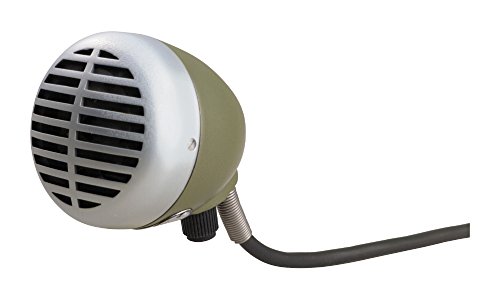
Shure 520DX Green Bullet Microphone
Classic omnidirectional dynamic microphone designed for harmonica players. Features built-in volume control, vintage green bullet design, and durable construction that has stood the test of time since the 1940s.
Pros
- Built-in volume control knob for live adjustments
- Iconic vintage design that looks great on stage
- Excellent harmonica tone with warm, classic sound
- Durable construction that lasts for decades
- Affordable price point for professional quality
Cons
- Cable connection only, no wireless option
- Not ideal for instruments other than harmonica
Here’s why the Shure 520DX Green Bullet deserves a spot on your short list.
Why Shure 520DX Green Bullet Microphone?
When you’re buying gear, brand track record matters. I tend to trust companies that have been grinding away at the same craft for decades, and Shure is about as long-tenured as they come.
The 520DX Green Bullet is a genuine classic. Harmonica players recognize it by sight, and it’s been turning up on records since the forties.
Shure’s been making microphones and audio gear since 1925, which means they’ve had a full century to iron out the kinks. When a company sticks around that long in a business this competitive, it’s usually because they actually deliver.
Today, Shure sets the bar for pro audio reliability across the industry. Back when they introduced their first model, they were one of very few companies treating microphone design as serious engineering rather than afterthought hardware.
The 520DX is part of that heritage: durable, tonally distinctive, and built to last decades of hard use. The price-to-quality ratio has always been one of Shure’s strengths, and this mic is no exception.
My honest recommendation when shopping for any mic: check out the manufacturer’s history first. A company that’s been in the game for almost a century will usually have a product lineup deep enough to cover just about any use case you can think of, and the 520DX is one of those products that’s built around actually listening to what players want.
Quick Spec
- Brand Name: Shure
- Color: Green
- Weight: 26 ounces
- Polar Pattern: omnidirectional
- Easy to hold
- Harmonica microphone
- Easily stands on a microphone stand
- Cable connection
- Volume knob
- Vocal Microphone
After Unpacking
Mine showed up in a plain cardboard box about the size of a standard mailer, and the mic itself is surprisingly light. Comfortable to cup in one hand for long stretches, which is exactly what you want when you’re playing harp through it.
The included cable is nothing fancy, just a middle-of-the-road length that works fine out of the box. The moment I held it, that gray-and-green vintage aesthetic hit harder than photos suggest.
It really does look like something pulled off a 1950s record sleeve.
Obviously you can use it for vocals, though the 520DX isn’t really tuned for clean singing. Some people also use it on drums for a very specific lo-fi effect.
The drum sound is fun and full of character from behind the kit, but I’ll be straight: from a producer’s chair, getting a polished mix out of it takes extra work compared to a conventional drum mic. It’s got personality, not neutrality.
When this mic first showed up in the late 1940s, it genuinely changed how blues artists approached their sound. For small studios or an open stage, it’s a great option, particularly if you’re scouting a cheap recording microphone that delivers character instead of clinical accuracy.
You can pull a wide range of tones out of it with just your hand position and cupping technique, and it’s available worldwide through most major retailers. That said, I’d strongly suggest trying one yourself before committing.
The 520DX has a very specific flavor, and it either clicks with you or it doesn’t.
Structure of the microphone
For harp players chasing dynamic control, the 520DX is a pretty compelling pick. The signature feature is the built-in volume knob at the base of the mic, which is exactly where you want it during a live set.
Players don’t stay at one volume through an entire performance, so having that knob right where your pinky can reach means you’re riding levels on the fly without ever dropping the mic or touching your amp. Solo passages, backing hooks, whatever.
You adjust as you go.
The knob responds instantly with zero lag, which sounds like an obvious feature until you’ve used cheap mics where the pot is gritty or slow. Consistent, predictable volume control is the foundation of good harp tone, especially with an overdriven amp downstream.
One thing I appreciate is how well the 520DX tracks the dynamics of a live room. Solo spots, loud band sections, quiet intros, it handles the range without losing its character.
Beyond harmonica, you can absolutely experiment with it on other sources. People use it for guitar amps, lo-fi vocals, and even distorted beatbox recordings.
It’s not a neutral studio tool, it’s a flavor generator, and that flavor is part of the appeal.
Advantages
Searching online for harp mic reviews turns up a flood of opinions and sponsored noise, which makes it hard to sort the genuine praise from the filler content.
With the number of choices out there, it pays to be clear about your own needs first. Are you tracking in a home studio?
Gigging in bars? Recording demos for friends?
The answer changes what actually matters.
Keeping up with every new mic release is exhausting, and honestly, most of the new stuff isn’t trying to do what the 520DX does. You probably already know the gear lingo and the basics, but information overload is real.
With that out of the way, here are the things I actually like about this mic.
Volume control knob
The base-mounted volume knob lets you adjust output on the fly during a live set. You can raise or lower levels without taking your hands off the mic, which is a real advantage for solo performers and anyone providing backing harmonica.
Vocals
The 520DX responds instantly to volume changes, keeping your tone consistent across different performance settings. It handles both studio dynamics and live stage volume swings well, making it a reliable choice for musicians who need predictable sound night after night.
Performance-wise, the 520DX holds its own against much pricier competition. It’s not a universal tool, but within its lane, it’s as good as anything in the category.
Disadvantages
There’s real heritage here, and that’s worth a lot. But the 520DX was first released in the forties, and a few design choices haven’t really changed since, which means you’re buying into some genuinely vintage limitations.
Cable connection
The hardwired cable is reliable and locks in securely, but I’m still putting it in the disadvantages column. Hardwired cables mean you can’t swap them easily when they fail, and they always do eventually.
The cable quality itself is middle-of-the-road. A notch above the cheapest competitors, but nothing to write home about.
And the fact that there are basically no accessories in the box feels a little dated in an era where even budget mics come with clips, stands, and pouches.
One more thing: if you really crank the volume knob and push the signal hard, you can catch some echo artifacts bleeding through. It’s rare and most owners never notice, but it’s worth mentioning.
Other music instruments
Harmonica is where this mic shines, but step outside that lane and the cracks show quickly. On flute, forget it.
The tonal character just isn’t flattering.
Guitar through a 520DX sounds murky rather than clean. Drums are fun but a nightmare to tame across a long tracking session, and trying to use it for anything modern and polished goes against everything this mic was designed for.
It’s a specialist’s tool. For harmonica, you’ll sing its praises.
For literally anything else, you’ll wish you’d bought something else.
Individual experience
If you’re a working musician, gear quality has to be a priority because your gear determines your sound and your livelihood. What’s right for one player isn’t right for another, and the 520DX is no exception.
I always think about gear purchases the same way: buy the thing that will earn its cost back through use. If a mic makes your recordings better or your live shows more consistent, that’s an investment, not an expense.
The rest of this section is really just advice about how to think about gear spending. If a piece of equipment fits your workflow and makes your work better, it’s worth stretching the budget for it, sometimes even going over what you planned.
Once you know a piece of gear genuinely fits, you stop agonizing and start using it every day. One piece of advice though: if at all possible, test the mic before you buy it.
Even ten minutes with one in a shop will tell you a lot about whether you’ll love it or return it.
The 520DX covers a surprising range of tonal ground for a single-pattern vintage mic, which is part of why it’s stuck around so long.
Old jazzy souls
If you’ve been around the gear world for a while, you’ve probably heard the 520DX story already. The short version is that the style is vintage but it still plays nicely with modern gear.
Ever wondered what it’s like to record drums with one? In a word: unusual.
The sound is non-standard, characterful, and definitely not hi-fi.
But within its own aesthetic, there’s no real drop in quality. The 520DX hits a rare sweet spot between character and price.
You get a ton of personality for the money.
You don’t have to be a blues or jazz player to get something out of it, either. The mic will make your harmonica sound incredible, and for nostalgic or lo-fi projects, you can lean into its character without losing any sonic integrity.
Beginners choice
With a mic available on every corner of the internet these days, picking the right one is genuinely hard. Information overload is the thing that usually stops people from committing.
Producers, studio vocalists, live performers, they all ask the same question: is there one mic that does everything? Short answer, no, but the 520DX is exceptional at what it does.
We did our own research plus pulled in experiences from working players to put this review together, and you can also check out the legendary model on Shure’s website for full specs.
Hopefully this gives you a clearer picture and saves you from chasing the wrong mic for your situation.
Is it worth it?
If you’re the kind of buyer who’d rather pay once for something that lasts a lifetime, this mic fits that model perfectly. You buy it, you use it, and you don’t think about replacing it.
The 520DX has a way of pulling you back into the tone of old blues and jazz records, which is a dangerous thing if you love that sound. Knowing the history of this mic and Shure as a company, it makes sense that so many great records have been made with it, and that legacy carries through into whatever you create with it today.
It’s suitable for basically any form of music where its specific character fits, and operation couldn’t be simpler. Just plug it in and go.
The cable connects easily to any compatible amp or interface, which cuts out a lot of the hassle that comes with a new mic purchase. And once you own one, you’re probably set for years.
The money you put into it will earn its keep.
With so many mics out there, the decision comes back to your use case: studio only, live only, or a mix. If you know a harmonica player who doesn’t already own one, this is a killer gift.
Unexpected, but absolutely on target.
Harmonica microphone
Anyone who practiced in front of a mirror with a hairbrush as a kid knows the feeling of picking up a real mic for the first time. The 520DX captures that warm, harmony-rich harmonica tone better than almost anything else on the market.
You know how many of those classic tones still echo in modern music. They keep inspiring new players to write new songs, and a good mic is more than half of what it takes to put those ideas on tape.
With a tool like this in your hands, you can finally chase the show you’ve been thinking about for months. The quality is there.
The rest is on you.
Have you ever tried it on a baritone vocal? On a gritty guitar amp?
You can get surprisingly pro-sounding results out of unusual applications, and you don’t need a pile of extra gear to make it work.
Just play your harp. Let the tone flow through and see what comes out.
There’s no mystery here. The 520DX is built to fit the user, to last, and to do the job it was designed for.
That’s music that sticks around.
What others are saying?
We cross-checked our own take against reviews and comments from working musicians in our circle to put this piece together, and the feedback was surprisingly consistent.
The build and sound are genuinely good, in some cases great, and it’s the first thing most people notice when they pull one out of the box. One accordion player I know swears it produces the best tone he’s ever captured on his instrument, which I’d never have predicted on paper.
Everything just seems to sound a little better running through it. Based on the experience of players who’ve owned theirs for forty-plus years, this thing is practically indestructible.
Once you learn how to use it, you realize it barely wears out physically, and it keeps its tonal character for decades.
Expert reviewers also consistently highlight the build quality and thoughtful design, and a lot of users appreciate that the mic is available worldwide and easy to replace or repair.
Think of a studio mic the way you’d think of a mattress. If the mattress is uncomfortable, you don’t sleep, and if your mic is wrong for the source, your recording suffers.
A good mic is fundamental to a good recording, full stop.
If you’re planning to invest in a harp mic that’ll outlast the amp you pair it with, the Shure 520DX Green Bullet is hard to top. It lasts, and it’s worth owning.
Why is the SHURE 520DX Green Bullet the right choice for you?
Every player needs to test a mic for themselves. It doesn’t matter whether you’re buying online or walking into a shop.
Using a mic is a personal experience, and you have to trust your own ear to know if it fits.
One important caveat: no single mic works for every voice or every playing style. Spend enough time with the 520DX and you’ll realize how comfortable it is in your hand, how easy it is to grip without fatigue, and how little storage space it takes up.
You can mount it on any standard stand, plenty of setup tutorials exist online, and it’s available worldwide through major retailers like Amazon. It’s affordable and genuinely easy to use, with only a couple of settings to learn.
For the price, this mic is kind of revolutionary. It’s been used worldwide with overwhelmingly positive feedback across decades of use.
Whether you’re playing for fun or making a living with it, the 520DX sits at a price point that doesn’t hurt to pay. The hardwired cable connection is stable and dependable, which matters when you’re on stage and one flaky contact can kill your set.
Pour jazzy notes through it and you get the kind of tone that’s made generations of records. We love mics and we love music, and our goal is to help working players find the right gear without wading through sales copy.
Producers, session vocalists, live performers, they all ask the same thing: is there one mic that does everything? We hope this piece helps you figure out what’s actually right for you.
And for reliability, you never have to worry with Shure. They’ve been at the top of the pro audio game for almost a century.
Frequently Asked Questions
Is the Shure 520DX good for anything besides harmonica?
It’s primarily designed for harmonica, and that’s where it really shines. You can use it for vocals and even some drum recording to get a lo-fi, vintage sound.
But for clean studio recording of guitars or other instruments, you’ll want something else.
Does the Shure 520DX need phantom power?
No. It’s a dynamic microphone with a high-impedance output, so it doesn’t need phantom power. Just plug it in and play.
It uses a standard 1/4-inch connector.
How durable is the Green Bullet microphone?
Very durable. Shure has been making this mic since the 1940s, and users report them lasting decades.
The metal shell takes a beating without issue, though the cable quality is average and may need replacing over time.
Final Thoughts
Trends come and go, but the 520DX has outlasted most of them and still holds its own against modern competitors.
A mic like this isn’t the cheapest option, but the build, the materials, and the durability absolutely earn the price. If you’re setting up a studio from scratch and you have any interest in harmonica or lo-fi character, the Green Bullet deserves a slot in your collection.
This isn’t the kind of purchase where cutting corners pays off. Whether you’re an amateur or a working pro, this mic can stay in your setup for decades without complaint.
A mic like the 520DX lasts for decades, and so does the music you make with it.
The Shure 520DX Green Bullet is the gold standard for harmonica players who want that warm, classic blues tone without breaking the bank. Its built-in volume control and rugged build mean it handles live gigs just as well as studio sessions, and the omnidirectional pickup captures every nuance of your playing. If you play harmonica and want one mic that will last you decades, this is the one to get.