
In audio gear, price and quality usually track together. The most expensive microphones aren’t always the best for every situation, but when you want the absolute top of the line for music, speech, or broadcast, the price tag usually reflects what’s inside.
Recording needs have exploded in the last few years. Podcasts, virtual meetings, online classes, and remote interviews have turned a lot of people into reluctant audio engineers, and suddenly that stock laptop mic just isn’t cutting it anymore.
Before jumping into the top 10, a quick primer. Mics broadly fall into two camps, and it matters for understanding why the prices below look the way they do.
Condenser mics make up the bulk of this list. They’re more sensitive, capture finer detail, and are the go-to for vocal studios and classical recording, which is why they typically cost more.
Dynamic mics are the other camp: more rugged, less sensitive, and usually cheaper, though a few high-end dynamics on this list prove price isn’t everything.
Quick Comparison Chart
| # | Product | Our Rating | ||
|---|---|---|---|---|
| 1 |  |
Sennheiser Pro Audio TLM 107 Studio set | ★★★★★ | Check Price |
| 2 |  |
AKG Pro Audio C414 XLS | ★★★★★ | Check Price |
| 3 |  |
Shure KSM44A/SL Multi-Pattern Large Dual | ★★★★★ | Check Price |
| 4 |  |
Neumann TLM 102 MT | ★★★★★ | Check Price |
| 5 |  |
Sennheiser MD 441-U | ★★★★★ | Check Price |
| 6 |  |
Electro-Voice RE20 Broadcast | ★★★★★ | Check Price |
| 7 |  |
Aston Microphones Spirit Large Diaphragm | ★★★★★ | Check Price |
| 8 |  |
CAD Audio Equitek E100S | ★★★★☆ | Check Price |
| 9 | 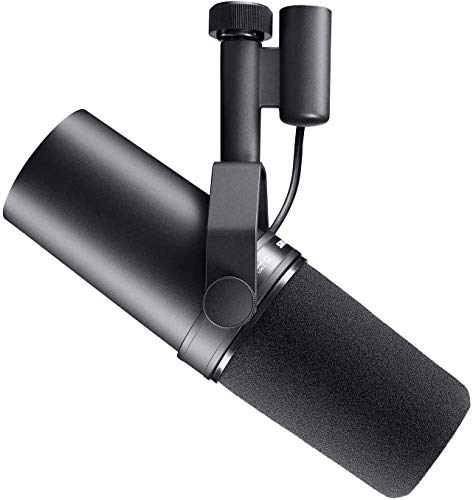 |
Shure SM7B Cardioid Dynamic Microphone | ★★★★☆ | Check Price |
| 10 | 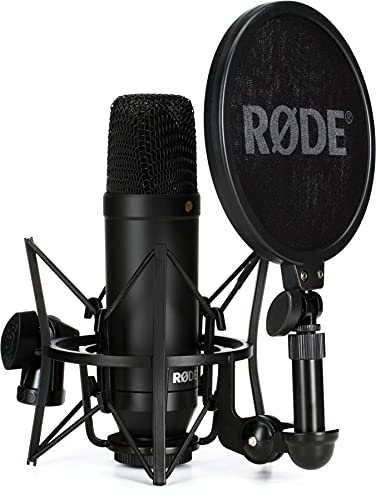 |
Rode NT1KIT Cardioid | ★★★★☆ | Check Price |
1. Sennheiser Pro Audio TLM 107 Studio set — Best Overall
Sennheiser Pro Audio TLM 107 Studio set
Starting with the priciest in the market, the TLM 107 microphone from Sennheiser is the go-to in terms of quality.
Pros
- Five selectable polar patterns adapt to any recording scenario
- It does not lose its settings when the power goes off
- Well designed shock-mounts that minimize mechanical vibrations
- Allows recording in any set-up using its five polar patterns
- Can be positioned discretely as all displays are automatically switched off after 15 seconds
Cons
- Documentation lacks detailed setup guidance for beginners
- Frequency response may not suit all voice types equally
Starting at the top: the Sennheiser TLM 107. It’s one of the most expensive mics on this list, and also one of the most versatile.
If you can only buy one, this is the one that’ll cover the widest range of recording situations.
The TLM 107 uses a double diaphragm capsule, which turns it into a high-resolution transducer capable of capturing percussion transients and subtle vocal overtones most mics smear. It hands you a clean, uncolored signal that gives you room to shape the sound in post.
Five selectable polar patterns are the headline feature. Whether you’re tracking vocals, drum overheads, an acoustic guitar, or a group of backup singers in a single room, you can dial in the right pattern without swapping mics.
If your work is genuinely varied, this is the one. Triple selectable high-pass and pad settings make it easy to drop on almost any source and get a usable signal fast.
It runs on standard +48V phantom power and has a joystick control interface (which is as cool as it sounds) for cycling polar patterns on the fly. Frequency response stretches smoothly up to around 8kHz with no harsh peaks.
A small detail I appreciate: the nickel finish offers noticeably better grip than the glossy black version. If you handle your mics a lot during setup, the nickel option is the safer bet.
2. AKG Pro Audio C414 XLS — Runner Up
AKG Pro Audio C414 XLS
Second in rank comes the C414 XLS from AKG.
Pros
- Nine polar patterns give unmatched flexibility for studio engineers
- Electromagnetic and electrostatic interference rejection
- Overload warning through the LED display
- Elastic suspension system to lower vibration noises from the chassis
- Handles vocals, instruments, and room ambience with equal precision
Cons
- Mounting thread size may differ from your existing gear
- Performance varies depending on the quality of your audio chain
The AKG C414 XLS has been a studio staple for decades, and the current version gives you more polar patterns than almost any other mic on the market. If versatility is your top priority, stop here.
It ships with nine total polar patterns: omnidirectional, figure-8, cardioid, wide cardioid, hypercardioid, plus four intermediate options that let you blend between them. That flexibility alone rivals the Sennheiser TLM 107.
Inside, the transducer is a large dual-diaphragm, edge-terminated design tuned to sound like the legendary C414 B-ULS. That lineage matters.
Engineers have been recording hit records with variants of this mic since the 70s.
The overload warning system lights up the LED display the instant the mic detects clipping, which is a nice safety net during tracking. There’s also a lock mode to prevent accidental setting changes mid-session.
Dynamic range sits at 134dB, with three attenuation levels (-6, -12, -18 dB) and three switchable bass cut filters (40, 80, 160 Hz) to handle proximity effect and subsonic rumble. Max SPL tops out at 158dB, which is loud enough to mic a kick drum or a guitar cabinet without flinching.
The rugged metal body shields against electromagnetic and RF interference and takes rough handling in stride. It looks and feels like a professional tool, because that’s exactly what it is.
3. Shure KSM44A/SL Multi-Pattern Large Dual — Best Value
Shure KSM44A/SL Multi-Pattern Large Dual
Third, on the list is the KSM44A by Shure.
Pros
- The pre-amplifier is discrete, transparent, and super fast in transient response - it has no crossover distortions
- Reduces inter-modulation and harmonic distortions
- Premium standard electronic parts and gold-plated connectors
- Three switchable polar patterns cover cardioid, omni, and figure-8
- Transformerless design delivers a cleaner, more transparent signal path
Cons
- Warranty coverage is limited to manufacturing defects only
- No dedicated carrying solution included for transport
The Shure KSM44A lands at number three, and honestly could move up or down depending on what you’re recording. It’s a condenser with three polar patterns: bidirectional, omnidirectional, and cardioid.
The body features two externally biased one-inch diaphragms in a modern design that looks great sitting on a stand. It’s purpose-built for high-end studio work and professional stage performances.
Its versatility covers almost every common studio task: broadcast, voice-over, lead and background vocals, acoustic instruments, brass, kick drums, and orchestral ensembles. Very few mics nail that full range.
Two one-inch 2.5-micron gold-layered diaphragms give it a wide, natural frequency response with fast transient detail. The Prethos advanced pre-amp circuit drops self-noise to an impressively quiet 4dB.
For extreme SPL sources, a switchable 15dB pad prevents clipping and damage. Shure tests their gear to military durability standards, which is why you still see original SM-series mics working 40 years later.
The KSM44A has real heft, and because it’s so sensitive, you’ll want to spend some time experimenting with polar patterns, room treatment, and placement to get the best out of it. A three-position switch on the front selects polar pattern, and a rear switch controls low-frequency rolloff.
It’s designed for +48V phantom power but still works on supplies as low as +11V (with reduced sensitivity and headroom).
4. Neumann TLM 102 MT — Top Pick
Neumann TLM 102 MT
Like Sennheiser, this is another quality product from Neuman that is more affordable.
Pros
- Large-diaphragm microphone
- A small presence boost above 6 kHz
- Can handle high maximum pressure levels of up to 144 dB
- Compact form factor fits into tight mic positions other large-diaphragms cannot
- The circuitry has no transformers
Cons
- Build quality may not withstand heavy daily use
- Included accessories are basic and may need upgrading
Neumann has a reputation bigger than almost any other mic maker on the planet, and the TLM 102 MT is their affordable way in. Don’t let “affordable” fool you.
It sounds like a mic that costs twice as much.
Its compact size tricks a lot of people into underestimating it until they hear it. That’s usually the moment they pull out a credit card.
Neumann designed the TLM 102 by deliberately removing features most people never touch: no low-cut switch, no pad, no pattern selector. Cardioid only, no frills.
What’s left is pure sonic character.
That’s the one big difference from the TLM 107: the 102 is fixed cardioid. If you mostly track vocals or a single instrument at a time, you won’t miss the extras.
Visually it’s gorgeous. The shiny grille ring and balanced proportions make it a statement piece on any desk.
An elastic suspension built into the housing tames handling and structure-borne noise.
The large diaphragm handles up to 144dB SPL, so loud sources aren’t a problem. It excels on vocals, spoken word, and most instruments, which makes it a great pick for home studios that want something serious without committing to the full TLM 107 price.
Available in nickel or matte black.
5. Sennheiser MD 441-U — Top Pick
Sennheiser MD 441-U
It's no secret that the Sennheiser brand is an industry leader in terms of price and innovation in sound engineering.
Pros
- Pristine vocal clarity from a large-diaphragm dynamic capsule
- 5-position bass rolloff and treble boost switches
- Supercardioid pattern rejects feedback and room noise
- Studio workhorse trusted for decades in broadcast and music
Cons
- Documentation lacks detailed setup guidance for beginners
- Frequency response may not suit all voice types equally
Sennheiser has been an industry leader for seven decades, and the MD 441-U is a great example of why that reputation holds up. It’s on this list twice for a reason.
Earlier I mentioned that some dynamic mics cost more than many condensers. The MD 441-U is the textbook case.
It’s a dynamic mic with condenser-level detail, and it wears that price tag without apologizing.
If you want a dynamic mic with exceptional quality and versatility, this one is worth the extra dollars. Engineers have actually found that it captures bass-baritone vocals in noisy rooms better than many condensers, which is unusual to say the least.
It’s not just a vocal mic, though. It works equally well for voice acting and instrument recording.
And if your room has rough acoustics, the supercardioid pattern rejects so much ambient sound that treatment becomes less of a concern.
A single polar pattern (supercardioid) keeps things simple, but there are five low-frequency options and two high-frequency options, so you can tailor the tonal character on the fly. Proximity effect is unusually subdued for a dynamic, so you don’t get the usual bass boom when singing close.
High SPL sources come through cleanly without distortion, and the internal shock suspension (critically damped, with an electromagnetic hum-compensating backing coil) is one of the most sophisticated in any dynamic mic. The body is all metal with a nickel-plated finish, available in black leatherette or grey.
6. Electro-Voice RE20 Broadcast — Worth Considering
Electro-Voice RE20 Broadcast
The Electro-Voice RE20 is an industry-standard broadcast dynamic microphone trusted by radio stations and podcasters worldwide.
Pros
- Variable-D technology eliminates proximity effect
- Internal pop filter reduces plosive sounds
- Wide frequency response for natural vocals
Cons
- Requires a strong preamp for best results
- Heavy build at over 1.5 pounds
The Electro-Voice RE20 has been a broadcast industry staple for decades, and there’s a good reason why you’ll find it in radio stations around the world.
What sets the RE20 apart is its Variable-D technology, which virtually eliminates the proximity effect that plagues most dynamic mics when you get close to them.
This means you get consistent, natural-sounding audio at 2 inches or 6 inches from the capsule.
The built-in pop filter does a solid job of taming plosives without needing an external screen, keeping your setup clean and simple.
With a frequency response of 45 Hz to 18 kHz, the RE20 captures vocals with a warm, full-bodied character that sounds polished right out of the box.
The humbucking coil rejects electromagnetic interference from nearby monitors and other electronics, which is critical in a studio environment.
At over 1.5 pounds, the RE20 is a tank, but that rugged steel construction means it can handle years of daily use without showing wear.
You will need a quality preamp or audio interface with enough gain to drive this mic properly, as it has a relatively low output level.
7. Aston Microphones Spirit Large Diaphragm — Worth Considering
Aston Microphones Spirit Large Diaphragm
Its elegant wave pattern is a unique design feature that will attract you not only to touch and feel this microphone but also to learn more about it.
Pros
- Switchable cardioid, omni, and figure-8 polar patterns
- Unique wave-form stainless steel body doubles as a pop filter
- Works equally well on vocals, guitars, and drum overheads
- Studio-grade performance at a mid-range price point
Cons
- Warranty coverage is limited to manufacturing defects only
- No dedicated carrying solution included for transport
The Aston Spirit has one of the most recognizable shapes in modern studio gear. That wave-pattern body isn’t just for looks.
Aston designed it to stop you in your tracks, and it works.
There’s something about the Spirit that makes you want to record with it. The brand pitches the whole experience as a blend of passion, performance, and emotion, and while that sounds like marketing copy, it actually lands when you pick one up.
As one of the newer designs in the pro audio world, the Spirit packs a switchable three-pattern selector: figure-8, cardioid, and omnidirectional. The wave-shaped mesh head is the signature feature, and it’s both beautiful and functional.
That wavy head is shock-resistant. If you knock the mic, the mesh flexes and springs back instead of cracking.
It also helps reject off-axis artifacts, which keeps the signal cleaner in untreated rooms.
Inside sits a one-inch gold-evaporated capsule that delivers warm, smooth tone. The Spirit is versatile enough for instruments, voice-over, ambient recording, and foley work, though it really shines on vocals and acoustic guitar.
The built-in pop filter uses a woven stainless steel mesh that’s more effective than most external filters I’ve tried. Sound is natural, open, and transparent, with none of the harshness that plagues some cheaper condensers when you push them at high SPL.
Bonus points: Aston uses eco-friendly packaging.
8. CAD Audio Equitek E100S — Worth Considering
CAD Audio Equitek E100S
Very few microphones have a super-cardioid feature, and that's why we are including the CAD E100S in the list.
Pros
- Lowest self-noise of 3.7 dB
- Has a proprietary circuitry that enables high performance
- Ruler-flat frequency response captures the source without coloration
- Rich proximity effect adds warmth and depth to close-miked vocals
Cons
- Build quality may not withstand heavy daily use
- Included accessories are basic and may need upgrading
The CAD E100S is one of the few condenser mics with a supercardioid pattern, which is unusual enough to earn it a spot on this list. That pattern cuts spill during close-miking better than a standard cardioid.
Beyond the pattern, the E100S boasts the lowest self-noise floor on the market. If absolute quiet matters for your recordings (voice-over, classical, ASMR), this is the one to watch.
CAD has been building pro audio gear in the US for over 85 years, and they’ve carved out a reputation for delivering world-class performance at prices that undercut European competitors. The E100S is basically CAD’s answer to Neumann, at a fraction of the price.
The nickel-plated body feels substantial, and the self-noise spec (under 3.7dB) is genuinely hard to beat. A large-diaphragm capsule gives it that warm, vintage character most engineers chase.
Frequency response runs from 80Hz to 4kHz, and it handles up to 150dB SPL without distortion. A bootstrapped full-differential quadra-FET circuit keeps distortion low and sensitivity high.
It’s versatile enough for instruments, ambient recording, foley, and voice, with excellent phase behavior on multi-mic instrument setups. The built-in high-pass filter sits at 80Hz, with a 10dB pad for hot sources.
9. Shure SM7B Cardioid Dynamic Microphone — Worth Considering
Shure SM7B Cardioid Dynamic Microphone
Not every buyer will have phantom power and that is where the Shure SM7B comes to meet that needs.
Pros
- Does not need phantom power
- Shields against electromagnetic hum
- Comes with a replacement cartridge
Cons
- Heavier than condenser alternatives of similar size
- Not ideal for capturing quiet or subtle sound sources
Not every buyer has access to phantom power, and that’s where the Shure SM7B shines. It’s a dynamic mic through and through, so it’s happy to connect to almost any mic preamp without special requirements.
If phantom is on the chain, it won’t damage the SM7B, but you don’t need it to operate. If you’re building a rig focused on speech, podcasting, streaming, or music vocals (rather than quiet acoustic sources), this is the kind of mic that just works.
The SM7B has the classic broadcast mic look you’ve seen behind radio DJs, podcasters, and even Michael Jackson when he tracked “Thriller.” The graphical display on the back shows you the current response setting at a glance, and the bass rolloff and presence boost switches let you shape the sound for different voices.
Internal air suspension kills mechanical noise and handling vibration, and the built-in pop filter is effective enough that you won’t need to buy an external one. An A7WS windscreen accessory ships in the box for warmer close-talk work and additional plosive protection.
The yoke mounting with captive stand nut lets you reposition the mic easily whether you’re seated or standing, and the XLR connection is bulletproof. A smooth, flat frequency response gives speech and music a natural sound that needs almost no EQ to sit well in a mix.
10. Rode NT1KIT Cardioid — Worth Considering
Rode NT1KIT Cardioid
If your work involves rugged handling of microphones, for instance, outdoor recordings, then the Rode NT1KIT will serve you well.
Pros
- Robust design and wear resistance
- 10 year extended warranty
- Weighs just 440 grams so it won't stress boom arms or lightweight stands
- Excellent surface mount electronics
Cons
- Mounting thread size may differ from your existing gear
- Performance varies depending on the quality of your audio chain
If your work involves rough handling (outdoor recordings, field interviews, location shoots), the Rode NT1KIT is built to survive it. Rode backs it with a 10-year warranty after registration, which alone makes it one of the better investments on this list.
Grab two and you’ve got a killer stereo microphone setup for immersive tracking.
The double lyre suspension system is one of the best in any affordable condenser, and the military-grade ceramic coating shrugs off marks and scratches. The body is aluminum with a nickel plating for corrosion resistance.
The SMR removable metal pop filter isn’t just pretty. It’s highly effective against plosives, easy to rinse clean, and built to last as long as the mic itself.
The NT1KIT is a lovely fusion of classic design and modern innovation. The sonic character nods to vintage microphones while delivering ultra-low noise and modern reliability.
Inside, a redesigned one-inch capsule with a gold-plated membrane drives a cardioid polar pattern. Rode’s isolation tech brings self-noise down to an incredibly quiet 4.5 dBA, making this one of the quietest studio mics available at any price.
It runs on standard 24V or 48V phantom power.
Frequently Asked Questions
Why are some microphones so much more expensive than others?
The price difference comes down to build quality, the number of polar patterns, diaphragm design, self-noise levels, and the precision of internal components. High-end mics like the Neumann TLM 107 use hand-tuned capsules and offer multiple polar patterns that cheaper mics simply cannot match.
Is an expensive microphone worth it for a home studio?
It depends on your goals and the rest of your signal chain. If you already have a treated room and a quality audio interface, a premium mic will make a noticeable difference in clarity and detail.
But if your room acoustics are untreated, you are better off improving your recording environment first.
Do expensive microphones last longer than budget ones?
Generally, yes. Premium microphones use higher-grade materials, tighter manufacturing tolerances, and better shielding, which means they hold up longer under regular use.
Many professional mics like the Sennheiser MD 441-U and Electro-Voice RE20 have been studio staples for decades because of their durability.
Final Thoughts
Once you start climbing the pro-audio price ladder, the choices feel endless. What you’re really paying for, though, comes down to a few specific things.
The biggest factor is polar pattern flexibility. A single-pattern cardioid mic is the cheapest option, while a nine-pattern monster like the AKG C414 XLS sits at the top.
Every pattern adds capsule complexity, tuning work, and cost.
Self-noise, sensitivity, diaphragm design, and overall build quality fill in the rest of the price gap. Pay attention to specs, not just brand names.
Do your homework before committing. A premium mic is a multi-decade investment in most cases, and picking the wrong one for your needs is an expensive mistake.
Know of an expensive mic I should’ve included here? Let me know in the comments and I’ll take a look.
The Sennheiser Pro Audio TLM 107 Studio Set justifies its premium price tag with five switchable polar patterns, retained settings through power cycles, and shock mounts that minimize mechanical vibrations. If you want even more versatility, the AKG Pro Audio C414 XLS offers nine polar patterns and electromagnetic interference rejection for the ultimate studio workhorse.