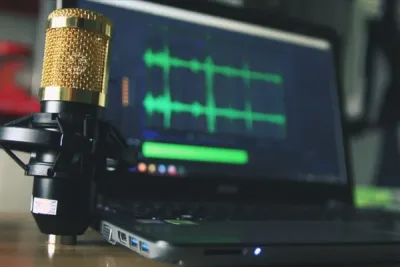


A supercardioid microphone is a variation on the classic cardioid design with a tighter pickup pattern, picking up sound from a narrower set of angles and rejecting more of what’s around it. That makes it a favorite for live sound, broadcast, and anywhere feedback is a concern.
Every microphone is tuned to hear sound from certain directions. Omnidirectional models pick up sound from all directions at once, unidirectional models capture from a single direction, and bidirectional mics listen in two opposite directions.
Each pattern has its place.
The biggest differences between mic types come down to three things: the technology driving them, the microphone capsules inside, and their directional pattern. Beyond those, there are a handful of other characteristics worth thinking about before you buy.
Quick Comparison Chart
| # | Product | Our Rating | ||
|---|---|---|---|---|
| 1 |  |
Rode NTG4 | ★★★★★ | Check Price |
| 2 |  |
Rode NTG3B | ★★★★★ | Check Price |
| 3 |  |
Audio Technica AT875R | ★★★★★ | Check Price |
| 4 |  |
Sennheiser MKH416-P48U3 | ★★★★★ | Check Price |
| 5 |  |
Shure Beta 87A | ★★★★★ | Check Price |
| 6 |  |
Sennheiser E945 | ★★★★★ | Check Price |
| 7 | 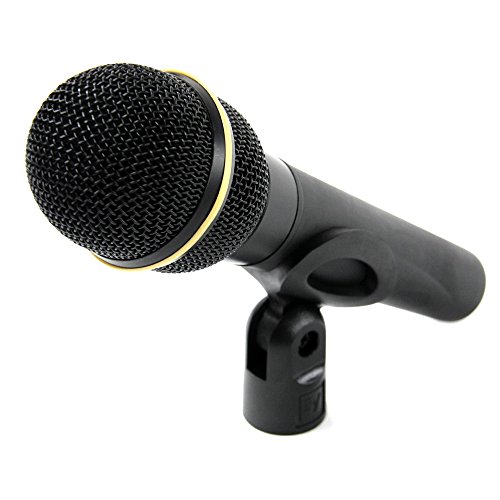 |
Electro-Voice 767A | ★★★★★ | Check Price |
| 8 |  |
Sennheiser MKH50 P48 | ★★★★☆ | Check Price |
| 9 |  |
AKG D5 Supercardioid Dynamic Microphone | ★★★★☆ | Check Price |
| 10 |  |
Shure Beta 58A | ★★★★☆ | Check Price |
1. Rode NTG4 — Best Overall
Rode NTG4
Rode NTG4 is one of the latest shotgun super-cardioid microphones that come with numerous features.
Pros
- Internal rechargeable battery eliminates phantom power dependency
- Digital switching for high-pass filter and pad settings
- Pairs well with boom poles for film and broadcast work
- Natural high-quality sound with solid off-axis rejection
Cons
- Requires phantom power or battery, adding complexity
- Handling noise is amplified by the long tube body
The Rode NTG4 is one of the more recent shotgun supercardioid mics from Rode, and the feature list is genuinely impressive for the price. It ships with a generous accessory bundle: a foam windshield, microphone clip, leatherette pouch, and a USB charging cable, so you can start recording the day it arrives.
Sound quality is well balanced, and the NTG4 does a great job of shutting out ambient noise, particularly wind. Its microphone sensitivity is tuned with pro-level work in mind.
As with any shotgun mic, the final results depend on microphone placement and how close the capsule sits to your subject. This model handles up to 135 dB of maximum sound pressure, so loud sources aren’t a problem.
The narrow pickup and excellent off-axis rejection make it a natural fit for outdoor and field use. A built-in rechargeable lithium battery keeps it running for over six days on a single full charge in continuous use.
Light users who only run it five hours a day can push that out to a full month between charges.
The box includes both a USB cable for charging and an XLR connector for hooking it up to your recorder or interface.
2. Rode NTG3B — Runner Up
Rode NTG3B
Rode NTG3B comes with a carrying case, a standard microphone adaptor, a foam windshield, and an aluminum carrying case that acts as a weather protector.
Pros
- Professional sound quality
- Crisp high-frequency response adds sparkle and definition to vocals
- Perfect sensitivity, low noise
- Ships in a rugged waterproof case that protects the mic during transport
- Excellent for humid areas with RF-biased design
- Competitive price point for a broadcast-grade shotgun mic
Cons
- Boom arm sags under the weight of heavier microphones
- Folding mechanism adds wobble compared to fixed stands
The Rode NTG3B ships with a full accessory bundle, including a carrying case, standard mic adaptor, foam windshield, and a rugged aluminum carrying case that doubles as weather protection. A tight-fitting Rode RM5 microphone clip is also included.
Build quality is solid. There are no switches or buttons on the mic body, which keeps things simple and reduces the chance of accidental bumps during a recording session.
Sound quality is clean and balanced, and the NTG3B handles RF interference from nearby electronics like phones better than most shotgun mics. That’s huge on modern sets where everyone has a cell phone in their pocket, and it also helps reduce microphone buzzing during recordings.
Max SPL lands at 81 dB, and the frequency response is essentially flat with a subtle brightness boost that adds clarity to dialog and vocals. The mic handles wide sound effects capture well, too.
As a condenser, the NTG3B needs 48 V phantom power, and you’ll need to pick up an XLR cable or mount separately since those aren’t in the box.
3. Audio Technica AT875R — Best Value
Audio Technica AT875R
Audio Technica AT875R is a shotgun supercardioid microphone small in diameter.
Pros
- One of the most affordable shotgun mics in its class
- Tight supercardioid pattern rejects side noise effectively
- Only 6.93 inches long, fits on camera rigs without bulk
- All-metal body handles daily use on film and video sets
Cons
- Length makes it awkward to mount on smaller camera rigs
- Proximity effect is minimal, reducing vocal warmth up close
The Audio-Technica AT875R is a compact shotgun supercardioid mic with a small diameter body that makes it easy to rig on a camera without throwing off your balance. Its directional characteristics are genuinely strong, giving you solid rejection of noise coming from off-axis.
The short, durable build handles rough treatment well, which matters on busy film and video sets. It uses an XLR output and runs off phantom power, so you don’t have to babysit batteries or deal with low-charge warnings in the middle of a shot.
Out of the box you get a standard foam windscreen, a stand clamp, and a mounting adaptor for threaded stands. You’ll need to supply your own XLR cable since one isn’t included.
Dynamic range is impressive, and the AT875R produces rich, clear audio that punches above its price. A fixed 12 dB/octave roll-off helps cut low-frequency rumble, which is a common pain point for directional mics in outdoor or noisy environments.
All told, it’s a budget-friendly option that works well for outdoor videographers, lecturers, and conference setups where clarity matters more than having the absolute fanciest gear.
4. Sennheiser MKH416-P48U3 — Top Pick
Sennheiser MKH416-P48U3
Midrange flat, the sound quality of Sennheiser MKH416-P48U3 is top-notch; it's neither too bright nor too dull.
Pros
- Industry standard for film and TV voiceover recording
- Midrange-flat response avoids harsh or dull tonality
- Rugged all-metal build survives years of professional use
- Excellent at rejecting ambient noise in noisy locations
- Pairs with most pro preamps without impedance issues
Cons
- Build quality may not withstand heavy daily use
- Included accessories are basic and may need upgrading
Midrange flat, the sound quality of Sennheiser MKH416-P48U3 is top-notch. It’s neither too bright nor too dull.
The hyper-cardioid polar pattern enables it to produce tight recordings that disseminate all unnecessary background noises.
Its frequency pattern has been tailored with precision.
Therefore, the sound produced is very clean, without blemishes but so long as you don’t go too much off-axis.
It also offers rich low ends.
Its rejection capability good, as it eliminates surrounding unnecessary noises.
It is a good choice for indoor or outdoor use, such as most documentaries, tv shows, and filmmaking.
This is a phantom-powered microphone that doesn’t require batteries.
Overall, the MKH 416’s short interference tube, high immunity to humidity due to its RF condenser design, high directivity, low self-noise, high consonant articulation, and feedback rejection, make it a real pearl.
What’s more, MKH 416 can handle difficult conditions without any difficulty.
5. Shure Beta 87A — Top Pick
Shure Beta 87A
Shure Beta 87A is a supercardioid microphone that produces high-quality sound with details and clarity.
Pros
- Natural, clear, and detailed sounds
- A balanced frequency response
- Perfect noise-reduction system
- Hardened steel mesh grille withstands heavy touring
Cons
- Documentation lacks detailed setup guidance for beginners
- Frequency response may not suit all voice types equally
Shure Beta 87A is a supercardioid microphone that produces high-quality sound with details and clarity.
Its dynamic range is very wide. It can handle weak and powerful or extensive sounds without any distortion.
It’s a highly versatile unique microphone that doesn’t require any sophisticated setup, unlike other studio microphones.
The microphone’s capsule can provide low noise preamplified sounds and electrical stuff.
Its internal shock protection reduces background noises, while meshes act as a windscreen and an effective pop filter.
It can record sounds from a high-pressure environment.
To get a very brittle sound, if your voice is thin, you’ll have to lower the microphone.
The frequency response is about 10kHertz.
6. Sennheiser E945 — Worth Considering
Sennheiser E945
Sennheiser E945 is one of the best super-cardioid microphones that works well with vocals.
Pros
- Clear and professional sound
- Tight supercardioid pattern rejects stage noise from monitors and amps
- Affordable price for its quality
Cons
- Mounting thread size may differ from your existing gear
- Performance varies depending on the quality of your audio chain
Sennheiser E945 is one of the best super-cardioid microphones that works well with vocals.
It delivers perfect stability regardless of the weather or environment.
This supercardioid microphone features finely calibrated, defined, and dynamic natural sound.
Likewise, it offers insulation from other on-stage signals.
Excellent sound quality, superior feedback rejection, and reliability are also features of this microphone.
For that reason, the manufacturer offers a 10-year warranty on the product.
Overall, according to users, the microphone produces a clean and clear sound, while breathing noises are most often completely eliminated.
Thus, post-processing becomes reduced to removing mistakes.
For that reason, supercardioid Sennheiser microphones should be every podcaster’s first choice!
Yet, this microphone is also perfect for onstage performances.
7. Electro-Voice 767A — Worth Considering
Electro-Voice 767A
The Electro-Voice is singers' first choice.
Pros
- Studio-grade sound quality captures every nuance of the performance
- Delivers professional-grade performance at a fraction of premium mic prices
- Excellent on stage and in studio
- Great gain before feedback
- Exceptional vocal clarity cuts through dense live mixes with ease
Cons
- Warranty coverage is limited to manufacturing defects only
- No dedicated carrying solution included for transport
The Electro-Voice is singers’ first choice.
It offers amazing vocal clarity on the stage.
Besides, the supercardioid pickup pattern limits interference from other onstage sound sources.
Thus, a performer can take it off the stand without the audience hearing it or noticing a difference.
For that reason, this microphone is just the right choice for every singer.
Designed for lead vocalists, it works equally well on stage and in the recording studio.
The large-diaphragm dynamic capsule produces a rich and detailed frequency response while minimizing handling noise.
8. Sennheiser MKH50 P48 — Worth Considering
Sennheiser MKH50 P48
Sennheiser MKH 50 P48 is a supercardioid professional condenser microphone designed for spot capturing in recording and sound reinforcement.
Pros
- Amazing sound quality and tonal accuracy
- Frequency-independent directional characteristics
- Rich low end and linear response
- Low-frequency roll-off switch
- RF-biased works in high humidity
Cons
- Requires phantom power or battery, adding to setup complexity
- Highly sensitive to plosives without a pop filter
Sennheiser MKH 50 P48 is a supercardioid professional condenser microphone designed for spot capturing in recording and sound reinforcement.
It is specifically designed for soloists or applications that need a high degree of side-borne sound muting and feedback rejection.
Actually, it’s great for capturing vocals and instruments.
It has frequency-independent directional characteristics.
Its wide frequency response and high sensitivity produce pristine audio sharpness, regardless of the source.
The Sennheiser MKH 50 P48 also has a low-frequency roll-off switch to minimize noise and a pre-attenuation switch that prevents distortion if you decide to place the microphone near high transient signals.
This model requires +48V phantom power,
It has the very least amount of off-axis coloration and the sounds produced are more natural and less distorted.
Not only it maintains the clarity of high sounds but also keeps the high-quality audio output of lows.
9. AKG D5 Supercardioid Dynamic Microphone — Worth Considering
AKG D5 Supercardioid Dynamic Microphone
AKG D5 Supercardioid Dynamic Microphone is a budget-friendly microphone.
Pros
- Pro-grade supercardioid at an entry-level price point
- Balanced frequency response
- Excellent gain before feedback minimizes stage bleed
- Easily cuts through the mix on loud stages
- Rugged die-cast body built for nightly gigging
- Includes stand adapter and zippered carry pouch
Cons
- Heavier than condenser alternatives of similar size
- Not ideal for capturing quiet or subtle sound sources
AKG D5 Supercardioid Dynamic Microphone is a budget-friendly microphone.
Nonetheless, it has all the features present in much more expensive models and works just as well.
With an integrated pop filter that reduces noise, pops, and wind, it is great for lead and backing vocals, as well as musical instruments such as guitars, horns, and string instruments.
It produces clear and crisp sounds as its supercadioid polar pattern and dual shock mount suppress high feedback and handling noise.
AKG D5 uses a supercardioid polar pattern to pick up sounds in front and at the rear of the microphone while offering great feedback resistance and better background sound rejection than a cardioid mic.
The package comes with an XLR connector, SA61 stand adapter, and a microphone bag.
However, the bundle also includes a Blucoil 10-FT balanced XLR cable that connects the microphone to an audio interface, mixer, or preamp.
The Bluecoil is protected with a high-density PVC jacket, which preserves the audio signal, while the OFC wire guarantees the best possible conductivity.
A Blucoil pop filter windscreen also blocks the air from the user’s mouth and scatters the remaining air pressure.
Its unique design reduces the energy of plosives/hard consonants such as p and b.
Consequently, by the time the recorder has captured a performer’s vocals, the audio output remains without hisses or popping sounds.
Overall, AKG D5 is a really good and budget-friendly microphone suitable for on-stage performances and in-studio recordings.
10. Shure Beta 58A — Worth Considering
Shure Beta 58A
This Shure Beta 58A supercardioid microphone has a frequency response tailored for vocals.
Pros
- Excellent gain before feedback on high-volume stages
- Frequency response tailored specifically for lead vocals
- Neodymium magnet delivers strong output without preamp strain
- Pneumatic shock mount system reduces handling noise
- Steel mesh grille with hardened finish survives drops
Cons
- Mounting thread size may differ from your existing gear
- Performance varies depending on the quality of your audio chain
This Shure Beta 58A supercardioid microphone has a frequency response tailored for vocals.
It has brightened midrange and bass roll-off to control proximity, a uniform pattern for high gain before feedback, and superior rejection of off-axis sound.
Its hardened steel mesh grille, great for on-stage performances, resists wear and abuse, while the superior shock mount system reduces the transmission of mechanical noise and vibration.
This microphone is designed for professional sound production and studio recording, which makes it a great choice for vocalists and professionals.
Also, the package contains an A25D adjustable stand adapter that features slip-in microphone mounting.
The stand is unbreakable and adjustable through 180 degrees with standard 5/8”-27 thread.
a 95A2050 5/8” to 3/8” thread adapter, and a 26A21 storage bag.
In other words, this is a really good, sturdy, and high-quality supercardioid microphone.
Frequently Asked Questions
What is the difference between cardioid and supercardioid microphones?
A supercardioid mic has a tighter, more focused pickup pattern (about 115 degrees) compared to a standard cardioid (about 131 degrees). This means supercardioids offer better side rejection but do pick up a small amount of sound from directly behind, so monitor placement matters.
Are supercardioid microphones good for live vocals?
Yes, supercardioid mics are excellent for live vocals because their narrow pickup pattern isolates the singer’s voice from stage monitors and other instruments. Models like the Shure Beta 58A and Sennheiser E945 are specifically designed for high-volume live performance environments.
Where should I place stage monitors when using a supercardioid mic?
Stage monitors should be placed at the sides (roughly at the 127-degree and 233-degree null points) rather than directly behind the mic. Unlike cardioid mics that reject sound best from directly behind, supercardioid mics have their maximum rejection at the sides.
Final Thoughts
We’ve covered mic directionality in detail here, along with the key differences between cardioid and supercardioid designs. To recap: a supercardioid mic has a narrower pickup pattern with its sound rejection nulls at 127 and 233 degrees from the on-axis direction.
Regular cardioid mics, by contrast, pick up sound from a wider window, roughly -90 to +90 degrees off-axis. That means a supercardioid gives you a tighter pickup angle of about 115 degrees, which is ideal for isolating a single source in a noisy environment.
Most handheld mics you encounter day-to-day are cardioid because they work well across a wide range of situations. When you need more focus, the 10 supercardioid picks above are the ones worth considering.
The Rode NTG4 wins with its internal rechargeable battery, natural high-quality sound, and decent noise rejection that makes it perfect for film, broadcast, and live use. If you need an even more rugged option with professional-grade waterproofing for outdoor shoots, the Rode NTG3B is a premium runner-up with clean highs and perfect sensitivity.