
Picking up a phone call or joining a Zoom meeting through your AirPods only to hear “I can’t hear you” derails your entire day. It kills meetings and stalls conversations before they even start.
When your AirPods microphone is not working, it’s almost never a hardware failure. The fixes are surprisingly simple, and we’ll go through all 11 below, starting with the ones most likely to work.
Why Your AirPods Microphone Stopped Working
In most cases, earwax clogging the mic mesh, a drained battery, or a dropped Bluetooth connection is the culprit.
AirPods use tiny MEMS microphones behind mesh grills at the bottom of each earbud. Anything that blocks those openings or disrupts the wireless signal chain can kill mic output.
The most common culprits:
- Debris buildup. Earwax, dust, and pocket lint clog the microphone mesh.
- Low battery. AirPods prioritize playback over mic input when charge drops below a certain threshold.
- Bluetooth drops. Interference from nearby devices or a corrupted pairing profile can sever the mic link.
- Outdated firmware. Apple pushes firmware updates that fix known mic bugs.
- Software conflicts. An iOS or macOS glitch can block mic routing through your AirPods.
- Water exposure. AirPods are water-resistant but not waterproof, and moisture inside the mic housing causes intermittent failures.
How to Fix Your AirPods Microphone
If your AirPods microphone is not working, start with fix number one and work your way down. Most people don’t make it past step four before the mic starts working again.
1. Test Which AirPod Has the Problem
Open the Voice Memos app on your iPhone and record a short clip with only the left AirPod in. Then do the same with just the right one.
If one side sounds clear and the other is muffled or silent, you’ve narrowed it down to a single earbud. That tells you whether a quick cleaning or settings tweak will do the job.
2. Charge Your AirPods Fully
This one catches people off guard. When battery drops below 10 percent, AirPods can shut off the microphone entirely just to keep audio playback alive.
Pop both AirPods into the charging case and give them at least 15 minutes. Open the case lid near your iPhone to check. A popup shows each earbud’s charge and the case.
3. Clean the Microphone Mesh
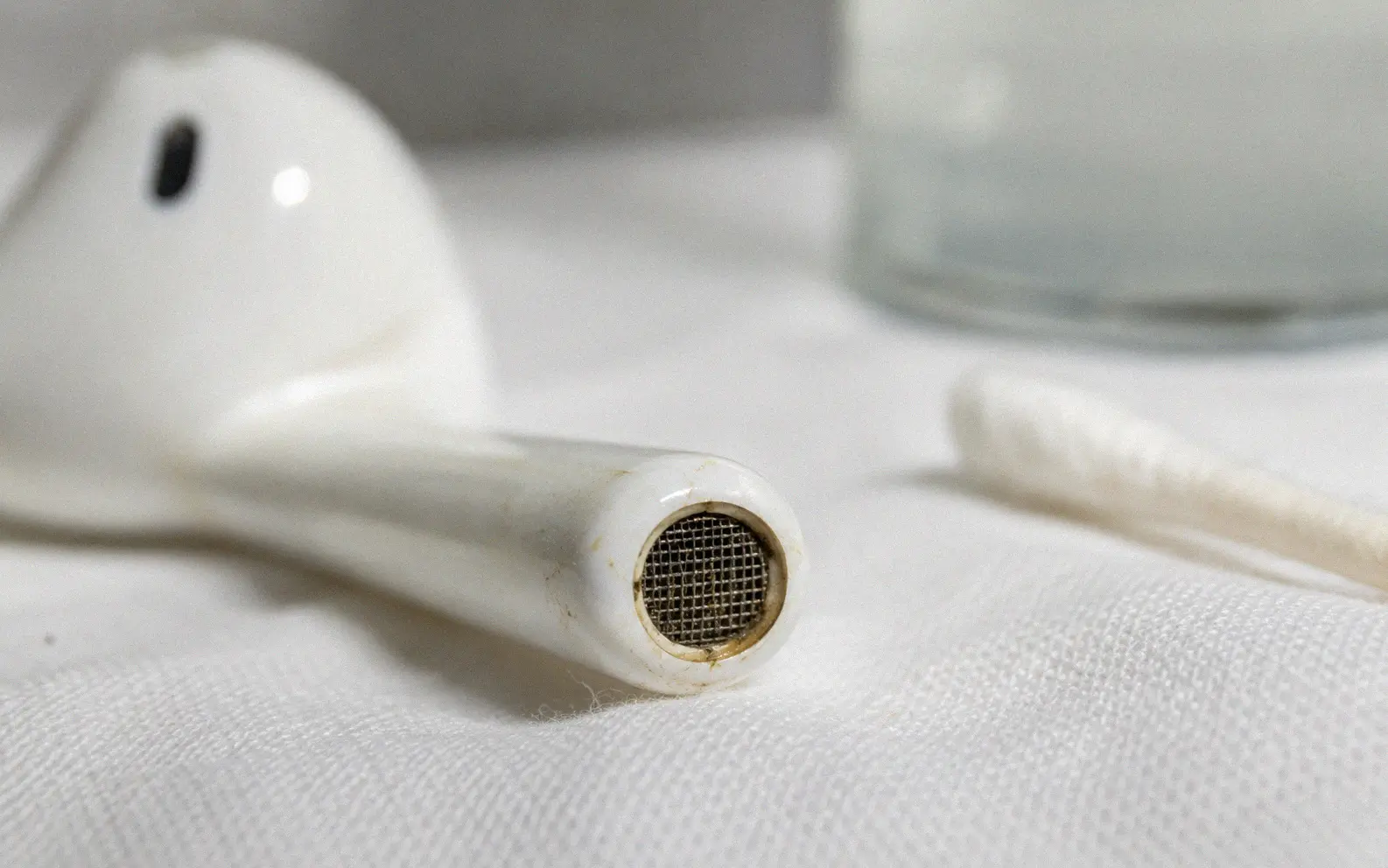
Every AirPod has a small mesh grill at the bottom that covers the microphone. Earwax, skin oils, and lint collect there faster than most people realize.
Dampen a cotton swab with isopropyl alcohol and gently wipe the mesh. A soft-bristled toothbrush helps with stubborn gunk, but avoid pushing anything sharp into the opening. You’ll tear the mesh.
4. Adjust the Microphone Settings
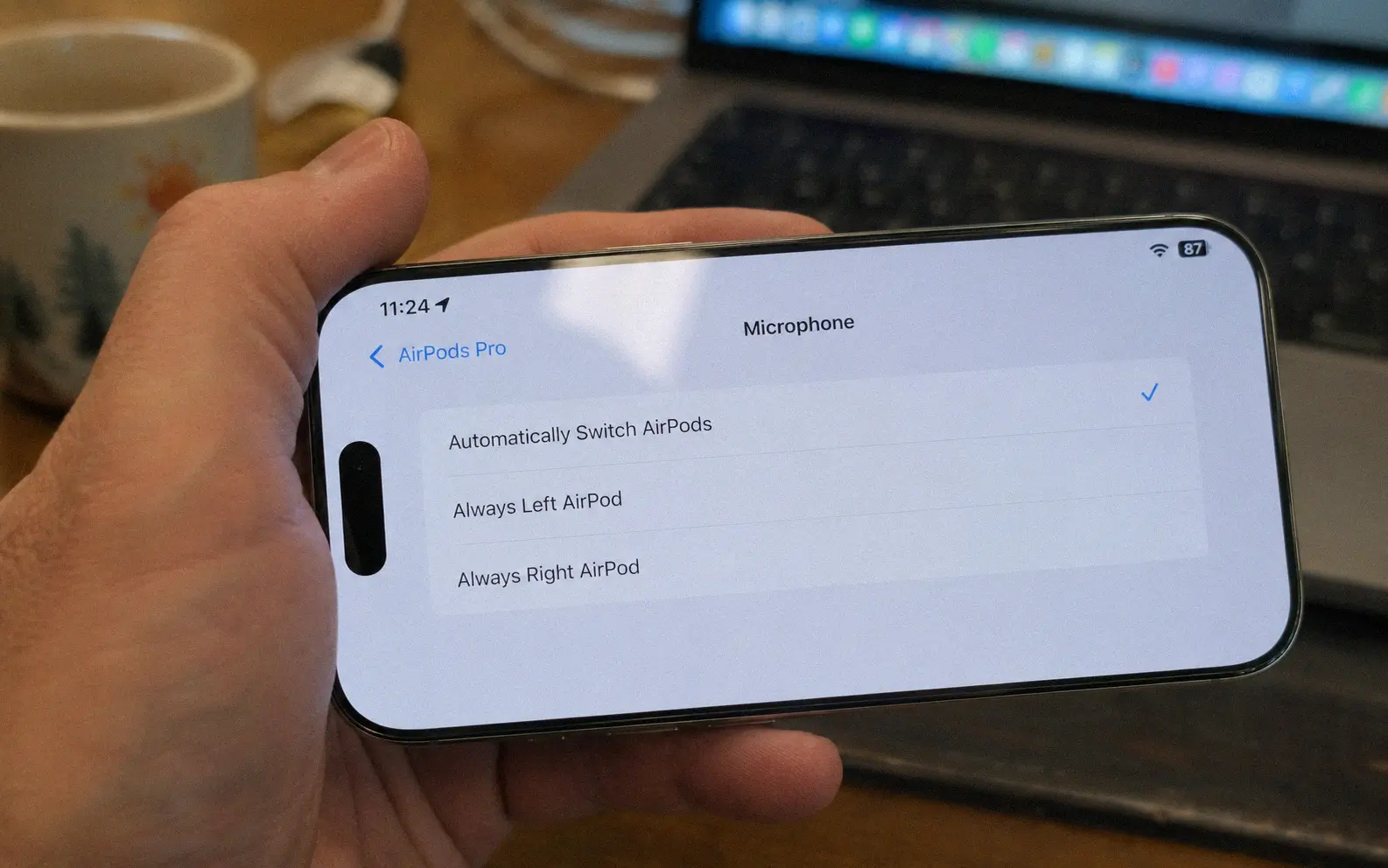
AirPods let you assign the active mic to one earbud or have them switch automatically. A wrong setting makes it seem dead when it’s just off on the side you’re wearing.
- Open Settings > Bluetooth on your iPhone.
- Tap the i icon next to your AirPods.
- Select Microphone.
- Choose Automatically Switch AirPods.
If one side is faulty, set it to always use the working earbud. Understanding how microphone sensitivity works can help you narrow down the cause.
5. Disconnect and Reconnect via Bluetooth
A stale or corrupted Bluetooth pairing is behind a surprising number of AirPods mic failures. Forgetting the device and re-pairing forces a fresh handshake.
- Go to Settings > Bluetooth and tap the i next to your AirPods.
- Tap Forget This Device.
- Place both AirPods in the case and close the lid.
- Reopen the lid near your iPhone and follow the on-screen pairing prompt.
6. Turn Off Automatic Ear Detection
Automatic Ear Detection uses sensors to pause audio when you remove an AirPod. Sometimes these sensors misread and disable the microphone while the earbuds are in your ears.
- Go to Settings > Bluetooth and tap the i next to your AirPods.
- Toggle Automatic Ear Detection off.
- Test the microphone on a call or in Voice Memos.
If the mic works with it off, the sensors need cleaning or the earbud needs replacing.
7. Restart Your iPhone, iPad, or Mac
A full restart clears temporary software glitches that block mic routing.
On iPhone X or later: Hold the side button and either volume button until the power slider appears. Slide to power off, then hold the side button to restart.
On Mac: Click the Apple menu and select Restart.
Reconnect your AirPods after booting. If you notice crackling audio after reconnecting, that points to a separate issue.
8. Update AirPods Firmware and iOS
Apple pushes AirPods firmware updates that patch known bugs, including mic issues. The catch: they only install automatically under very specific conditions.
To check your firmware version:
- Connect your AirPods and go to Settings > Bluetooth.
- Tap the i next to your AirPods.
- Note the Firmware Version number.
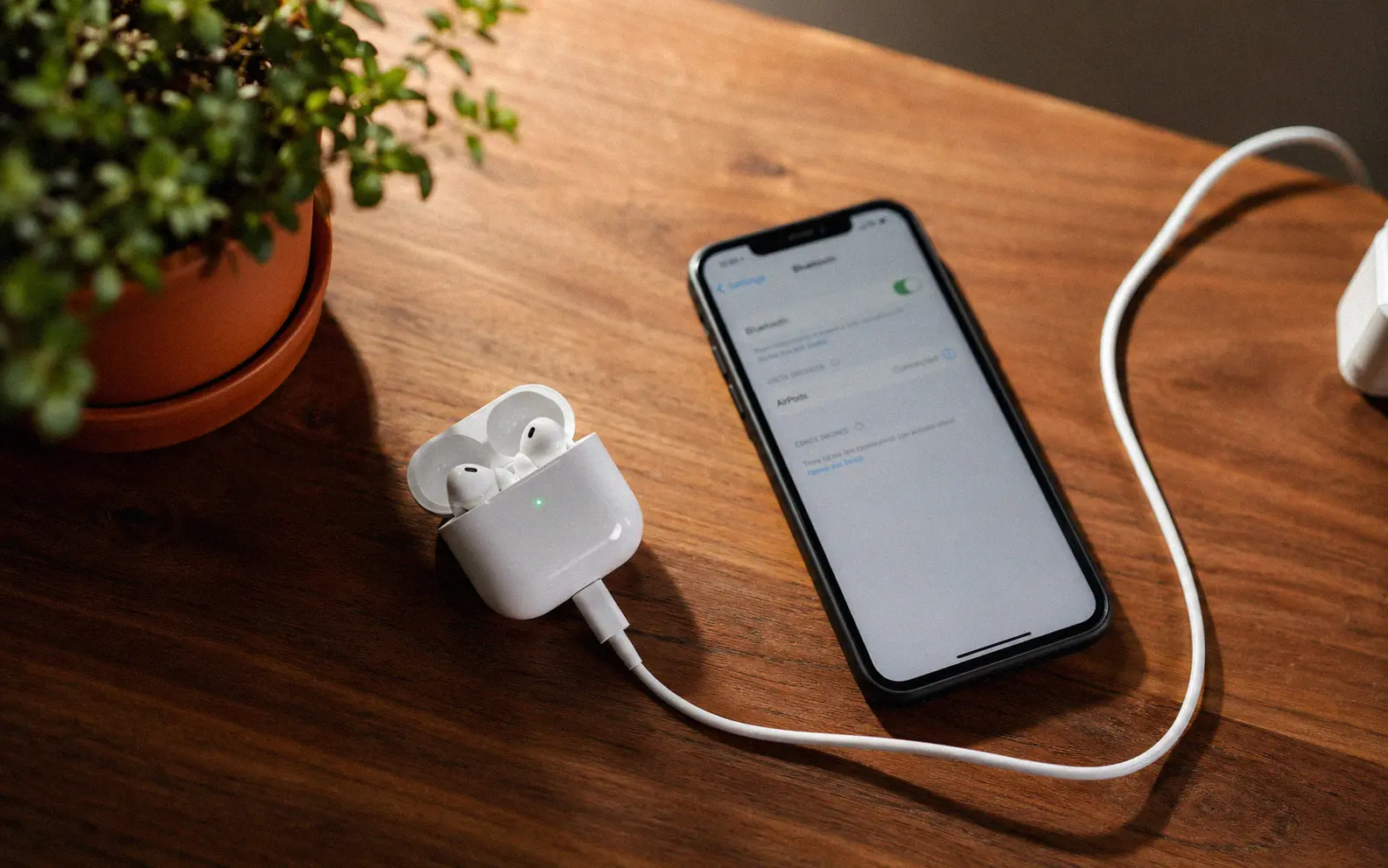
To trigger an update, put them in the charging case, plug it into power, and leave it near your iPhone with Wi-Fi for 30 minutes. Update iOS via Settings > General > Software Update too.
9. Reset Your AirPods to Factory Settings
A factory reset wipes all pairing data and puts your AirPods back to square one. It’s the most effective software fix when nothing else has worked.
- Place both AirPods in the case and close the lid for 30 seconds.
- Open the lid.
- Press and hold the setup button on the back of the case for 15 seconds until the light flashes amber, then white.
- Close the lid and re-pair with your device.
You’ll need to re-pair every device you previously connected to these AirPods.
10. Reset Network Settings
Corrupted network configs can mess with Bluetooth audio routing. Fair warning, this wipes all saved Wi-Fi passwords, VPN profiles, and Bluetooth pairings, so treat it as a last resort.
- Go to Settings > General > Transfer or Reset iPhone.
- Tap Reset > Reset Network Settings.
- Enter your passcode to confirm.
Reconnect your AirPods and test the mic. If you experience buzzing or static after reconnecting, that suggests wireless interference rather than a settings problem.
11. Check for Physical or Water Damage
AirPods carry an IPX4 water resistance rating, enough for sweat and light splashes but not submersion. If yours went through a wash cycle, moisture inside the mic housing is the likely culprit.
Common signs that water is the reason your AirPods microphone is not working: intermittent cutouts, muffled audio that gets worse over time, and a mic that works on one side but goes silent on the other. Let them air dry for at least 24 hours before retesting.
When to Contact Apple Support
If you’ve tried everything above and the mic still won’t cooperate, you’re likely dealing with hardware failure. A damaged MEMS microphone or corroded connection needs professional repair.
Check your warranty status on Apple’s coverage page. AirPods purchased within the past year fall under the standard warranty, and AppleCare+ extends coverage to two years with accidental damage protection.
Apple offers single-earbud replacements at an Apple Store or authorized service provider, which costs way less than a whole new pair. If you’re also getting high-pitched feedback, mention that to the technician. It can point to a specific hardware fault.
Frequently Asked Questions
How do I check if my AirPods microphone is working?
Open the Voice Memos app on your iPhone and record a clip while wearing your AirPods, then play it back to check clarity. You can also ask Siri a question, and if Siri responds correctly, the mic is working.
Why can nobody hear me on calls with AirPods?
The most common causes are a dirty mic mesh, low battery, or a Bluetooth pairing glitch. Charge your AirPods fully, clean the mic openings with isopropyl alcohol, and reconnect through Bluetooth settings.
Do AirPods microphones wear out over time?
The MEMS microphones inside AirPods are durable, but the mesh covering them collects earwax and debris that degrades mic quality over time. Cleaning the mesh every few weeks keeps performance consistent.
Can the AirPods microphone fail on just one side?
Yes, and it’s common. If only one AirPod’s mic sounds muffled or silent, debris in that earbud’s mesh or a wrong mic setting is usually to blame. Use the Voice Memos test from fix one to confirm.
Do these fixes work for AirPods Pro and AirPods 3?
Every fix here applies to all AirPods models, including AirPods Pro, AirPods Pro 2, AirPods 3rd generation, and the original AirPods. The settings menus and reset steps are identical across the lineup.
Final Thoughts
An AirPods mic that quits mid-call feels like a hardware emergency, but it almost never is. Dead batteries, gunky mesh grills, and stale Bluetooth pairings are behind the vast majority of failures.
Start at fix one and work your way down. Most people are back on calls by step four. If nothing sticks after a factory reset and network wipe, Apple’s single-earbud replacement program is a lot cheaper than buying a new set.