
Picture a Sunday service where the pastor’s voice trails off three rows back. That’s exactly what a bad church microphone (or no mic at all) sounds like, and it’s why the right setup matters more than most people realize.
Modern mics have come a long way, and there’s now a specific tool for every job inside a sanctuary, from handheld vocals to discreet lavaliers clipped under a robe. Pick wrong, and you’ll fight feedback all morning; pick right, and the congregation stops thinking about the sound entirely.
I’ve tested dozens of options for worship spaces over the years, and the ten mics below are the ones I keep coming back to. Here’s how they stack up.
Quick Comparison Chart
| # | Product | Our Rating | ||
|---|---|---|---|---|
| 1 |  |
USB Streaming Podcast PC Microphone | ★★★★★ | Check Price |
| 2 |  |
Wireless Bluetooth Microphone | ★★★★★ | Check Price |
| 3 | 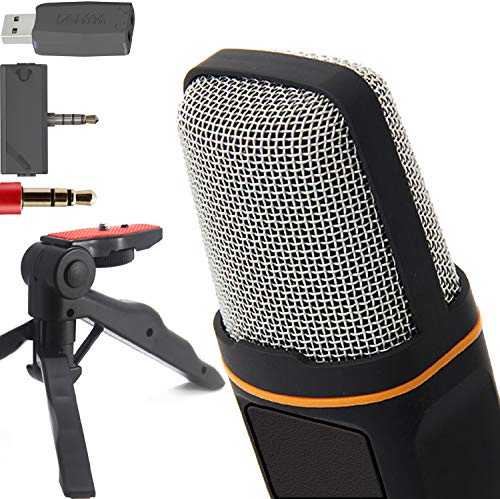 |
Professional Cardioid Condenser | ★★★★★ | Check Price |
| 4 |  |
Professional 8 Channel UHF Wireless | ★★★★★ | Check Price |
| 5 |  |
USB Condenser Desktop Microphone | ★★★★★ | Check Price |
| 6 |  |
Premium Condenser Microphone | ★★★★★ | Check Price |
| 7 |  |
Racbubei Wireless Microphone System | ★★★★★ | Check Price |
| 8 | 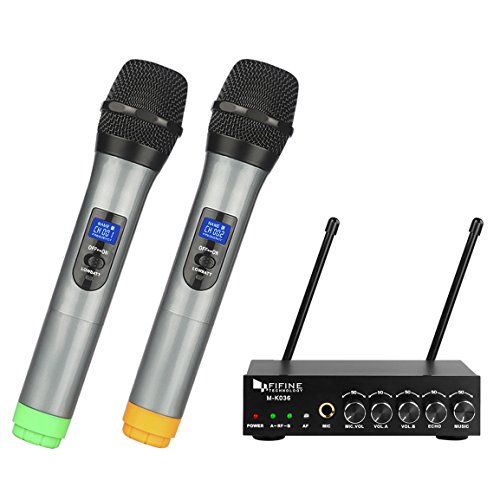 |
UHF Dual Channel Wireless Handheld | ★★★★☆ | Check Price |
| 9 |  |
Compact UHF Wireless Microphone System | ★★★★☆ | Check Price |
| 10 |  |
Cardioid Dynamic Vocal Microphone | ★★★★☆ | Check Price |
1. USB Streaming Podcast PC Microphone — Best Overall
USB Streaming Podcast PC Microphone
This microphone provides you with the best sound quality.
Pros
- Plug-and-play USB works on Mac and Windows with zero drivers
- Compatible with mobile phones via a simple OTG adapter
- Cardioid condenser capsule captures sermons with natural clarity
Cons
- Gain control depends on software settings rather than hardware knobs
- Not compatible with most PA systems or mixers without adapters
Sound quality is where this mic earns its top spot. A 24-bit/192 kHz sample rate means recordings come through crisp and detailed, and the 30 Hz to 16 kHz frequency response covers pretty much every voice in your worship team without coloring the tone.
Plugging it in is almost embarrassingly simple. Connect the USB to your PC, and you’re ready to record (no drivers, no fuss).
The cardioid pickup pattern is the star here, grabbing whatever’s right in front of it while rejecting the shuffle and cough noise behind it, similar to how a boundary microphone works its zone.
That isolation is a huge deal in a church. You want the preacher, not the HVAC unit kicking on mid-sermon.
The kit also ships with everything you need to get started: a table clamp, mic stand, anti-wind foam cap, pop filter, and a USB A-to-B cable. Each piece actually pulls its weight in taming vibration and plosives.
For the price, it’s a serious value. I’d buy it again without hesitation.
2. Wireless Bluetooth Microphone — Runner Up
Wireless Bluetooth Microphone
This microphone comes with the USB connector type.
Pros
- Bluetooth connectivity lets the pastor move freely on stage
- Built-in volume and playback buttons for hands-free control
- Available in multiple colors to match church decor or robes
Cons
- Rechargeable batteries lose capacity over time
- Range decreases significantly through walls and obstacles
If wires are what’s holding your service back, this Bluetooth mic is the fix. It’s battery-powered, pairs with pretty much any phone or laptop, and can double as a radio microphone when you need mobile reach.
The design is genuinely comfortable to hold (nothing fussy), and the feature list keeps stretching. You can use it as a player, recorder, or speaker thanks to the built-in Bluetooth module.
The 2600mAh 18650 lithium cell takes a fast charge and delivers long run times, and the multi-protect circuitry keeps it from overheating or over-draining.
There’s also a micro SD slot up to 32GB, which is handy when you want to play backing tracks without tethering to a phone. Bluetooth range tops out around 10 meters, so if the pastor tends to wander deeper into the aisle, the wired option is right there as a fallback.
Two connection modes means fewer panic moments before a service. Fire up a singing app, connect via Bluetooth or cable, and you’ll hear clean audio wherever you set up.
3. Professional Cardioid Condenser — Best Value
Professional Cardioid Condenser
This microphone offers USB connection types and only allows USB for the connection.
Pros
- Clear digital stereo sound output through USB to any laptop
- Multi-purpose capsule handles sermons, worship, and announcements
- Budget-friendly price makes it accessible for smaller churches
- Cardioid pattern focuses on the speaker and rejects room echo
Cons
- Driver support may vary across operating systems
- Cannot be used with standalone audio recorders
USB is the only way in with this one, but that’s also what keeps the price down. Power comes over the cord, sensitivity is high, and the cardioid pattern locks onto whatever’s in front while pushing back room noise (it behaves a lot like a hanging microphone aimed at a focused zone).
The grip is comfortable, and plug-and-play means no driver headaches. Laptops, desktops, Android phones, and iPhones all recognize it immediately.
Setup takes minutes, not hours, which is a relief for volunteer tech teams. It even plays nicely with tablets and the Xbox 360 if you want to repurpose it mid-week.
The bundled tripod adjusts for whatever angle you’re working with, and I’ve had clean results recording video voiceovers from about ten feet out.
4. Professional 8 Channel UHF Wireless — Top Pick
Professional 8 Channel UHF Wireless
This microphone has an XLR-connector type.
Pros
- 8 wireless handheld mics serve pastors, worship leaders, and choir
- LED audio signal indicators show levels for each channel
- UHF band provides crystal-clear sound without interference
Cons
- Battery life may not last through extended multi-hour events
- Signal can drop in environments with heavy RF interference
For larger churches running full worship teams, this eight-pack is the obvious pick. You get XLR output, an omnidirectional polar pattern, and eight handhelds that can run at the same time on independent channels.
The whole bundle weighs in at 6.4 pounds.
Each mic handles a different role: pastor, worship leader, backing vocals, announcements. No more swapping a single handheld back and forth between people (which always goes wrong at the worst moment).
Going wireless is the real win. Nothing tangles on stage, and the UHF system reaches up to 164 feet without stumbling on typical RF noise, so audio stays clean for a full sanctuary.
The receiver is nicely thought out. Dual rotating antennas detach when you need to transport it, and each channel has its own volume trim so you can match the quieter vocalists to the louder ones.
The LCD is crisp and barely warms up.
Mixed output connectors plus balanced XLR jacks mean it’ll drop into whatever board you’re already running.
5. USB Condenser Desktop Microphone — Top Pick
USB Condenser Desktop Microphone
The connector type of this microphone is a 3.5mm jack.
Pros
- 3.5mm jack connects directly to any laptop, mixer, or PA system
- Supreme sound clarity projects sermons across the sanctuary
- No expertise required to set up and start using immediately
Cons
- Gain control depends on software settings rather than hardware knobs
- Not compatible with most PA systems or mixers without adapters
The connector type of this microphone is a 3.5mm jack.
It offers a connection with a USB and an auxiliary input jack.
This microphone’s hardware platforms are PCs, tablets, and smartphones. You can also use Android devices.
No specific software or expertise is required to use this microphone system professionally.
You can connect the desktop to the computer jack and then select it as a desktop microphone.
This operation will instantly permit you to use this as a microphone.
The use of this microphone as a desktop microphone isn’t limited to just PCs and laptops, you can also use it on your android, iPad, iPhone, and all other android phones as well.
This microphone isn’t directly pluggable for MacBook users, they would have to buy an external USB to ensure its use on the desktop.
The regular tablets, phone users have to connect the 3.5 jack to the adapter cable.
This microphone offers a good frequency range that is limited between 100 Hz and 16 kHz.
Due to its unique pattern, it pickups only crystal clear voices and original vocals.
This heart shape pattern also reduces the additional background noises.
It offers a capacity of 270-degree to fold the metal tripod stand.
There is an audio patch cable added to the microphone where you can easily connect the microphone if there is only one jack in your device.
This microphone has a dual-layer pop filter, which makes the recording quality more transparent.
The purpose of this dual-layer pop filter is to protect the direct sound from unwanted background noises.
It provides an adjustable and manageable distance between the filter and the microphone.
6. Premium Condenser Microphone — Worth Considering
Premium Condenser Microphone
The connections of this microphone are USB and XLR.
Pros
- Adjustable gain level adapts to quiet prayers and loud worship
- Dual USB and XLR connections work with any church sound system
- Studio-quality condenser capsule delivers professional sermon audio
Cons
- Audio quality capped by USB bus power limitations
- Cable length restricts placement options without a USB extension
Connectivity is this mic’s real superpower. USB, XLR, and 3.5mm are all on the menu, and power runs through a standard cord.
The unidirectional polar pattern keeps its focus on whatever’s right in front of it, and the 20 Hz to 20 kHz range handles everything from a whispered prayer to a full-voice sermon.
Build quality feels balanced and intentional rather than cheap, and the internal audio circuit does a nice job ignoring anything off-axis. The cardioid pickup quietly strips out background rumble so only the intended vocal actually makes it to the recording.
A 2.48V phantom supply keeps the condenser capsule happy when it’s routed to an audio card. It plays well with most music-recording accessories, and the universal XLR I/O connects in-line with a live card on a single channel.
You can drop in different sound cards or run through an external USB card if you want extra flexibility.
Eight electronic sound effects and three scene modes are built in, which is more than most people need, but nice to have for special services. It works with Mac, iOS, Windows, and Linux.
A couple of setup notes: if your laptop only has one USB port, use the included 7.1 USB sound card adapter. And if you’re working with a single 3.5mm audio jack, the Y-splitter in the box is what you want.
7. Racbubei Wireless Microphone System — Worth Considering
Racbubei Wireless Microphone System
The Racbubei UHF dual wireless microphone system features auto-connect technology, a rechargeable receiver, and 200ft range for church services.
Pros
- Dual wireless handheld mics for pastor and worship leader
- Auto-connect technology pairs transmitter and receiver instantly
- 200ft operating range covers large sanctuaries and fellowship halls
Cons
- Not compatible with phones or computers directly
- Receiver battery lasts about 6 hours
The Racbubei wireless microphone system comes with two UHF cordless handheld mics and a rechargeable receiver, making it a great fit for church services where both the pastor and a worship leader need wireless mics.
The auto-connect technology syncs the frequency between the transmitter and receiver automatically, so there’s no manual channel hunting.
With a 200ft operating range, you can move freely throughout the sanctuary without losing signal, which is perfect for pastors who like to walk among the congregation.
The metal construction gives these mics a solid, professional feel, and the rechargeable receiver charges in about 2-3 hours for up to 6 hours of use.
The system is compatible with powered speakers, karaoke machines, amplifiers, mixers, and audio interfaces through its 6.35mm plug.
The package includes 2 handheld microphones, 1 receiver, 2 anti-slip rings, 2 mic covers, a USB charging cable, and a manual.
8. UHF Dual Channel Wireless Handheld — Worth Considering
UHF Dual Channel Wireless Handheld
The connector type of this microphone is a 6.35 mm jack.
Pros
- Dual-channel UHF system supports two speakers simultaneously
- Adjustable echo effects enhance vocal presence in large rooms
- Compact receiver saves space on the church sound equipment shelf
Cons
- Battery life may not last through extended multi-hour events
- Signal can drop in environments with heavy RF interference
You’ll find a 6.35mm jack on the receiver and a fully wireless UHF link between the mics and the base. No cables running across the platform.
The system runs off four AA batteries, which is a genuine relief for portable churches or anyone who hates fighting with power strips. Pop them in and you’re live.
The unidirectional polar pattern stays focused on whatever’s in front of it, and the all-metal chassis tips the scales at about 1200 grams.
Signal-to-noise ratio hits 95 dB, and the operating range is roughly 80 feet (plenty for most sanctuaries). Because it’s UHF rather than VHF, you’ll rarely run into the kind of drop-outs that plague cheaper 2.4 GHz systems.
Up to three vocalists can share it during a service.
There’s also a ¼-inch port for an add-on wireless mic if you need a fourth channel, though that mic is sold separately. Each channel has its own volume trim, so you can balance levels right on the receiver without a full mixer in the chain.
The all-metal receiver handles interference better than the plastic knock-offs you see online. The bundle ships with a 1/4-inch audio cable (39 inches), a 3.5mm cable (59 inches), and an RCA audio cable, plus two handhelds, the receiver, and a power cord.
An instructional video and responsive support round out the package.
9. Compact UHF Wireless Microphone System — Worth Considering
Compact UHF Wireless Microphone System
The connection of this church microphone is a USB and XLR connector.
Pros
- UHF wireless range fills medium-sized sanctuaries reliably
- Budget-friendly system with professional-grade audio quality
- USB and XLR dual outputs connect to modern and legacy PA gear
Cons
- Slight latency compared to wired alternatives
- Receiver adds an extra piece of gear to manage
The connection of this church microphone is a USB and XLR connector.
The power sources of this microphone are electricity and batteries.
Hardware requirements offered by this microphone are just PC and it offers two channels.
This microphone system has a feature of the Belt-Pack.
The availability of a UHF audio signal in this microphone can quickly transmit the signals.
The audio signal’s performance is very well in this microphone as it provides a crystal clear sound.
It provides noiseless, precise, and direct sound because it can reduce unnecessary and unwanted background sounds that cause difficulty in hearing the actual audio.
It gives perfect reproduction of sound just opposite to VHF units.
This one’s a dual-channel portable system that handles small-to-medium sanctuaries without breaking a sweat. You can pick from multiple frequencies, the dual antennas extend range significantly, and the audio it captures stays clean and directional.
The receiver runs off USB, while the transmitters use 2 AA batteries each (nothing exotic). A digital LCD on the base makes level-checking painless, and the desktop control layout is simple enough that you can hand it off to a volunteer without a tutorial.
The compact tabletop design fits on a crowded sound cart, and the AF/RF signal indicator gives you instant confidence the link is live. Each channel has independent volume trim, so you can balance a quieter speaker against a louder one on the fly.
You get a ¼-inch unbalanced output and a three-pin XLR balanced input (2 XLR), which together cover most of the wiring situations you’ll run into. That flexibility is what makes this set genuinely useful across different applications, from weddings to weeknight services.
The bundle includes two belt-pack transmitters, two lavalier mics, two headsets, four AA batteries, and a USB cable.
10. Cardioid Dynamic Vocal Microphone — Worth Considering
Cardioid Dynamic Vocal Microphone
The weight of this microphone is 0.66 pounds with a unidirectional polar pattern.
Pros
- Built-in pop filter reduces plosives during close-up preaching
- Cardioid pattern delivers focused vocals and rejects feedback
- Industry-proven dynamic element handles loud worship singing
Cons
- Proximity effect adds bass that may need EQ correction
- Limited high-frequency response above 15kHz
This one’s light in the hand (0.66 pounds) and runs a unidirectional polar pattern. Frequency response covers 50 Hz to 15 kHz, which is plenty for a focused vocal sound without picking up the low-end room rumble you’d rather leave out.
Connections are classic XLR, no USB nonsense. It plugs into any board or mixer you’d expect to see in a church setup.
A brightened midrange keeps proximity effect under control, which matters when a preacher drifts in close. The built-in spherical windscreen tames pops, and the pneumatic shock-mount quiets down handling noise.
Combined with the cardioid pickup, it zeroes in on the voice and ignores the room.
Frequently Asked Questions
What type of microphone is best for a church pulpit?
A cardioid condenser microphone on a gooseneck mount works best for pulpit use because it picks up the speaker’s voice clearly while rejecting room echo and congregation noise. Wireless handheld or headset mics are a better choice if the pastor moves around during the service.
How do I reduce feedback in a church sound system?
Start by positioning speakers in front of the microphones and angling them toward the congregation, not the stage. Using cardioid or supercardioid mics also helps since they reject sound from the sides and back, and keeping the mic close to the speaker’s mouth lets you use lower gain settings.
Can I use the same microphone for sermons and worship music?
You can, but it’s not ideal since sermons and music have very different audio requirements. A dynamic mic like the Shure SM58 handles loud worship vocals well, while a condenser mic captures the nuances of spoken sermons better.
Many churches use separate mics for each purpose.
Final Thoughts
There’s no shortage of mics online, and it’s genuinely easy to get lost in the noise. The ten picks above cover the styles and price points most churches actually need, from simple plug-and-play USB options to full eight-channel wireless systems.
Whether it’s a weekly sermon, a wedding ceremony, or a welcome speech, the right mic disappears into the background and just lets the voice come through. That’s really the whole job.
Pick the one that matches your room, your budget, and the way your service flows, and you’ll stop thinking about audio for a long time.
The USB Streaming Podcast PC Microphone earned our top pick for its plug-and-play simplicity across Mac and Windows, broad compatibility with mobile phones via adapter, and reliable sound quality for sermons. If you want wireless freedom for moving around the sanctuary, the Wireless Bluetooth Microphone connects via Bluetooth and offers easy volume control right on the mic.