
Picking the right radio microphone makes an outsized difference in how your show sounds. The wrong mic muddies a voice-over or live stream no matter how good your processing chain is, while the right one makes even a basic setup sound professional.
These mics are built to clean up and amplify the human voice, which is why they dominate radio stations and home studios alike. The good news is that modern options cover both high-end and budget-friendly price ranges, and the performance gap keeps closing every year.
A solid radio mic works equally well for live broadcasting and pre-recorded audio, and you’ll hear the difference on voice-overs and talk segments right away.
Quick Comparison Chart
| # | Product | Our Rating | ||
|---|---|---|---|---|
| 1 |  |
Electro-Voice RE20 Microphone | ★★★★★ | Check Price |
| 2 |  |
Neumann TLM 103 Microphone | ★★★★★ | Check Price |
| 3 |  |
Behringer B-1 Microphone | ★★★★★ | Check Price |
| 4 | 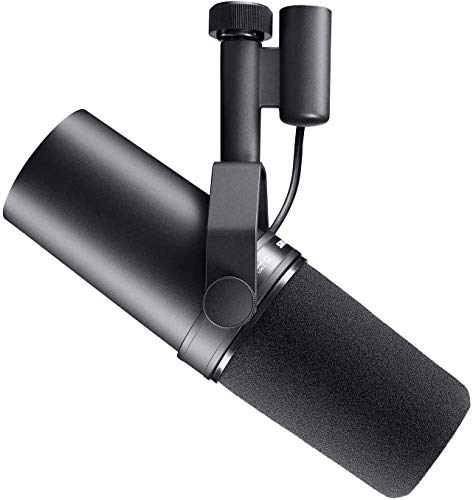 |
Shure SM7B Microphone | ★★★★★ | Check Price |
| 5 | 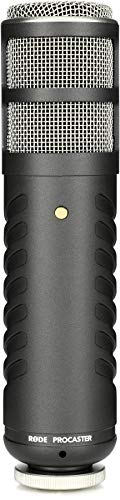 |
Rode Procaster Microphone | ★★★★★ | Check Price |
| 6 |  |
Blue Blackout Spark SL Condenser | ★★★★★ | Check Price |
| 7 |  |
Heil Sound PR40 | ★★★★★ | Check Price |
| 8 | 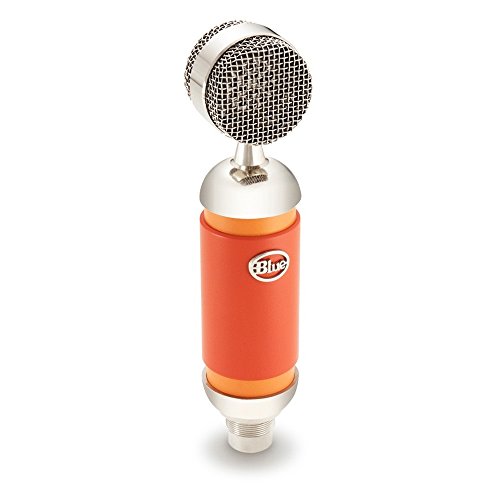 |
Blue Spark Microphone | ★★★★☆ | Check Price |
| 9 |  |
RODE PodMic USB Dynamic Broadcast | ★★★★☆ | Check Price |
| 10 |  |
Rode NT-USB-Mini Microphone | ★★★★☆ | Check Price |
1. Electro-Voice RE20 Microphone — Best Overall
Electro-Voice RE20 Microphone
Starting with the radio microphone with a rich and refined sound, here's the Electro-Voice radio microphone that comes with a bunch of features.
Pros
- It works fabulously with background noise isolation
- Also, it has a sturdy and compact feel to suit varied environments
- The mic is suitable for reducing proximity effects vibration-induced noise
Cons
- Documentation lacks detailed setup guidance for beginners
- Frequency response may not suit all voice types equally
Leading things off with genuine broadcast pedigree, the Electro-Voice RE20 has been a studio staple for decades for good reason. Its Variable-D design seriously reduces proximity effect, which means you can work the mic close without the low end ballooning every time you lean in.
The 45 Hz to 18 kHz frequency response is flat and forgiving, handling deep voices and bright ones with equal ease. Internal shock mounting keeps handling and vibration noise out of the signal, which is a huge win if your desk doubles as a drum pad when you get animated.
The steel-cased body feels indestructible and the compact profile looks at home anywhere from a bedroom booth to a full commercial studio. If you’re going fully modern, pairing it with a digital microphone interface is another solid route.
The built-in pop filter does real work, so you can skip the big foam ball unless you’re right up on the grille. It handles high SPLs without breaking a sweat, which matters if you’re a loud talker or host guests who are.
Yes, it’s not cheap, and no, it won’t be the right call for a brand-new podcaster. But for anyone who’s been at this a while and wants a mic that will still be in service years from now, the RE20 is worth every penny.
2. Neumann TLM 103 Microphone — Runner Up
Neumann TLM 103 Microphone
With a worthy frequency range that covers the complete audible spectrum, the Neumann TLM Microphone is the right investment to make.
Pros
- It has remarkably low self-noise
- It also has an extensive frequency range
- It serves as an excellent microphone for lead vocals and acoustic instruments
Cons
- Mounting thread size may differ from your existing gear
- Performance varies depending on the quality of your audio chain
If you want a mic that covers the full audible spectrum and holds onto the natural character of your voice, the Neumann TLM 103 earns every dollar it costs. The single cardioid capsule delivers a three-dimensional sound while preserving the warmth and pitch of whoever’s talking.
Build quality is exactly what you’d expect from Neumann: rugged, precise, and meant to last. It’s ideal for lead vocals and acoustic instruments on top of straight-up speech, thanks to a flat frequency response that records everything lucidly without imposing its own color on the source.
The transformerless circuit helps keep radio-frequency interference out of your audio, which matters if you’re running in a busy radio studio or near other electronics. Combine that with unusually low self-noise plus high SPL handling, and you’ve got a mic that belongs in a professional environment without apology.
The large wire mesh grille shields the capsule and knocks out pop noises before they become a problem. It ships in satin nickel or matte black finishes, and the box includes the SG 103 swivel mount in a wooden jeweler’s case, a nice touch that fits the price bracket.
3. Behringer B-1 Microphone — Best Value
Behringer B-1 Microphone
It's a high-quality microphone that works like a treat and is particularly proper for those looking for a radio microphone on a budget.
Pros
- It comes with a roll-off low-frequency switch that lessens low-end sound at 75Hz
- Also, it's quite versatile for the recording that includes spoken word to string quartets
- The affordable price range
Cons
- Warranty coverage is limited to manufacturing defects only
- No dedicated carrying solution included for transport
The Behringer B-1 is a standout for anyone trying to stretch a modest budget, and it punches noticeably above its weight class. Build quality matches the price in all the right places: nickel-plated brass frame, rugged construction, and a feel that suggests it’ll survive plenty of use.
You also get a suspension cage to block vibrations during sessions, plus a selectable frequency filter so you can adapt to different rooms and use cases. The large diaphragm puts out clean, detailed audio that works well on voice, acoustic instruments, and overhead duty.
Despite the bargain price, it’s comfortable taking the lead role in a broadcast or sitting in as a supporting mic for more delicate sources. A windshield and shock mount are included for extra protection, and Behringer even throws in a padded aluminum carrying case, which is rare at this price.
The transformerless FET input keeps low-frequency distortion to a minimum, and the B-1 handles high-SPL sources like drums without breaking up. For what it costs, it’s one of the most versatile and capable budget large-diaphragm condensers you can buy.
4. Shure SM7B Microphone — Top Pick
Shure SM7B Microphone
The Shure SM7B Microphone is legendary and has a fresh, lucid, and balanced bass.
Pros
- It has a pop filter plus a windscreen
- It also has smooth highs and rich lows
- It provides ease of use, with high-end features
Cons
- Build quality may not withstand heavy daily use
- Included accessories are basic and may need upgrading
The Shure SM7B Microphone is legendary and has a fresh, lucid, and balanced bass.
It’s a decent microphone because of the capacity to achieve crystal clearness across a vast frequency response rate.
The mic regularly allows professional sound quality and keeps it impeccable, even if the vocals are loud and varied.
The irritating electromagnet hum is absent in the Shure SM7B, with the shielding that’s present in the microphone.
For professionals, the high-pass frequency response minimizes low-frequency electronic noises and vibrations from nearby equipment, making post-production easy and time-saving.
Further, the microphone is more reasonable than high-end radio mics.
A long-lasting, all-metal build makes it pleasing to the eye in the studio, along with the ability to withstand the harsh handling.
This microphone further yields good sound isolation making its noise rejection capabilities best for live recording, in particular. On a tighter budget?
Our cheap recording microphone guide has solid picks that won’t empty your wallet.
Also, the microphone has two alterable switches that include a bass roll-off, and the other one is a mid-range emphasis better known as presence boost.
The mic resembles a professional-grade microphone with a sleek design and features.
It’s a worthwhile investment when seeking a professional-grade, high-quality component radio mic in the studio.
5. Rode Procaster Microphone — Top Pick
Rode Procaster Microphone
This is the ultimate microphone for recording as well as for radio use and it allows the best results to emerge with the continued usage.
Pros
- It comes with a 10-year extended warranty with registration over a 1-year warranty
- It also has a zero-latency headphone jack so there's no delay or echo
- The advantage of recording in almost any environment and this includes crowded places
Cons
- Documentation lacks detailed setup guidance for beginners
- Frequency response may not suit all voice types equally
The Rode Procaster is one of those mics that rewards time behind the capsule: the more you use it, the more you appreciate how much it does right. It’s purpose-built for voice and broadcast work, so it covers podcasting, vodcasts, voice recognition, YouTube, and corporate video without missing a step.
The broadcast-style body and forward-facing grille look like they belong in a real radio booth, and the signal has strong low-mids, confident mids, and an engaging presence in the top end. If setup simplicity and clean audio are priorities, the Procaster is hard to beat at the price.
Included accessories are genuinely useful: a zip pouch, a built-in pop filter, and a durable ring mount. Rode consistently delivers quality that outpaces its price point, and this mic is no exception.
Even in a noisy room or with close mic placement, plosives and pops stay out of the recording. It’s one of those broadcast mics that needs hardly any post-production to sound finished.
Rounding it out, you get balanced low-impedance output plus internal shock mounting to dampen handling noise, and Rode extends the warranty to 10 years once you register the mic, which is as generous as it gets.
6. Blue Blackout Spark SL Condenser — Worth Considering
Blue Blackout Spark SL Condenser
Blue's Blackout Spark SL delivers broadcast-quality vocals with a large-diaphragm cardioid capsule and built-in high-pass filter.
Pros
- Large-diaphragm cardioid capsule for rich vocals
- Built-in high-pass filter and -20dB pad
- Includes shockmount and protective case
Cons
- Requires phantom power
- Picks up room reflections in untreated spaces
Blue’s Blackout Spark SL brings classic charm with a genuinely useful feature set, and the dark-on-dark finish looks great under any studio lighting. The large-diaphragm cardioid capsule handles vocal work with a warm, slightly smoothed character that’s flattering to most voice types.
An elastic shock mount and proper mic holder come in the box, and the nickel-plated brass body feels as rugged as it looks. The head basket leaves extra space around the capsule, which gives the Spark SL a distinct sonic signature that’s airy without being hyped.
The mic picks up fine detail and captures pitch variations accurately, so whatever you put in front of it ends up sounding like itself rather than a processed version. The built-in high-pass filter plus a -20 dB pad expand what you can comfortably record, from soft-spoken voice work to loud sources.
Sound quality aside, the versatility is what earns its place on this list. It works well on vocals and acoustic instruments alike, and pairs nicely with any standard interface.
If you want the opposite flavor — something pencil-thin for instrument detail — a small diaphragm condenser is the other side of that coin.
Build and sound together make this a dependable all-rounder that belongs in any serious studio. If you want one phrase for it: beautiful mic, real features, and genuinely studio-grade results.
7. Heil Sound PR40 — Worth Considering
Heil Sound PR40
An excellent choice for podcast creation, Heil Sound PR40 has magnificent rear rejection that allows proximity with another mic, not causing undesired noises and vibrations.
Pros
- It copes fine with high-frequency detail
- Also allows a multi-mic setup
- It's an all-rounder and saves time post-production
Cons
- Warranty coverage is limited to manufacturing defects only
- No dedicated carrying solution included for transport
An excellent choice for podcast creation, Heil Sound PR40 has magnificent rear rejection that allows proximity with another mic, not causing undesired noises and vibrations.
Ranging with features such as low self-noise and clearer audio, it goes well with bass instruments and spoken words.
It also gets a big thumbs up for the reason that it does not allow glassy grittiness and allows smoothness on highs without any loss of temporary detail.
A superior quality preamp is advisable to make the mic sound great and make the most of the microphone in terms of tonality, including versatility.
Also, the end address capsule offers an off-axis noise decrease, making it perfect for most users.
This microphone has a lot to contribute to a beginner, and it’s one microphone that can sustain a lot of use.
It has a low-frequency response and comes with a dual pop screen frame that guarantees that breath blares don’t hit the diaphragm straight.
The build quality of the mic is a favorite characteristic, yet it does its best in ignoring ambient noise.
It comes decked up in a shielding case and an appealing finish does the best to place it in any environment.
There are almost no dynamic mics that have sound quality as great as PR40 for applications.
It’s the preferable radio mic for talk-show hosts and voice-over applications, considering the diverse variety of features it offers.
8. Blue Spark Microphone — Worth Considering
Blue Spark Microphone
Available at an entry‑level price and stylish design, the Blue Spark Microphone is a show-stealer in the category of radio mics.
Pros
- The microphone comes with a three-year warranty
- It comes with goodies such as a custom shock mount and a pop filter with a recording guide
- The stylish look and feel
Cons
- Build quality may not withstand heavy daily use
- Included accessories are basic and may need upgrading
For an entry-level price and some genuine style, the Blue Spark is a standout in the radio mic category and still holds up well against much pricier options. The -20 dB pad helps keep vocals clear, and the high-pass filter tames rumble from room noise or loud environments.
At 327 grams, it feels reassuringly solid in the hand without feeling bulky, and the sound quality is a real pleasure for a budget large-diaphragm condenser. Worth noting: shifting the capsule by even an inch or two changes the character of the source noticeably, so it pays to experiment with positioning early on.
Compatibility covers iOS and Windows, and the burnt-orange finish is a welcome break from the usual matte-black studio aesthetic, no compromise on features to get there. The focus button sits in a slightly awkward spot behind the shock mount, but once you know where it is, switching modes is quick and silent.
Low noise, high efficiency, and quick response during tracking make this one a favorite for its price range. It handles vocals and instruments alike, and the bright color is just a nice bonus when you’re staring at the same gear every day.
9. RODE PodMic USB Dynamic Broadcast — Worth Considering
RODE PodMic USB Dynamic Broadcast
A complete package in itself, the Audio-Technica AT2035 provides outstanding versatility with its extended dynamic range.
Pros
- The package includes a microphone with a noise damper
- It also has a shock mount and a storage pouch
- Besides, the build quality is a steal deal coupled with the low self-noise
Cons
- Cable quality could be better
- Instructions could be more detailed
A complete package in itself, the Audio-Technica AT2035 provides outstanding versatility with its extended dynamic range.
The matte black finish and controls offer the mic a professional yet classic look and feel with pad and low-cut switches at the bottom of the back of the microphone.
It has a signal-to-noise ratio, sensitivity, and noise level as good as pricey and other competent microphones in the market.
The microphone has a switchable high-pass filter of 80Hz with a 10dB pad to chop down the low-end frequencies and is super-helpful to record vocals.
It catches a decent measure of the mid-to-high frequencies and has low self-noise, and the presence of a low-cut switch helps eliminate undesired noise such as the lower rumblings that ruin recordings.
Audio Technica AT2035 has a standard shock mount too, and this is worth more than the amount it costs.
The build is of metal, and this gives it a stable base that lasts longer and is super-reliable in the long-run.
However, a good-quality preamp is a must for this microphone.
The radio mic is also capable of handling 148 decibels that indicates that it can take care of almost any loud vocal or any instrument as well.
With all these advantages, the mic has a shock mount that hangs the mic from a network of elastic bands that keep low-frequency noise at bay.
As a first large-diaphragm, this one is a microphone belonging to the category that is not worth missing.
10. Rode NT-USB-Mini Microphone — Worth Considering
Rode NT-USB-Mini Microphone
It's sleek and smart because of the steel and strengthened nylon resin covered with the matte black coating and astonishingly reliable because of the build quality.
Pros
- It has a crisp, sharp, and DSP-free mic signal
- The integrated interface and monitoring are a delight
- It also has a built-in pop shield and desktop stand too
Cons
- Audio quality capped by USB bus power limitations
- Cable length restricts placement options without a USB extension
The Rode NT-USB Mini mixes steel and reinforced nylon resin under a matte black coating, and the build quality punches above its compact size. Reliability feels rock solid, as you’d expect from Rode.
Since there’s no DSP applied to the audio signal, you’re getting a clean, unprocessed feed, which is exactly what serious podcasters want. A built-in pop filter tames plosives, and zero-latency monitoring lets you hear yourself in real time without the awkward echo that trips up newcomers.
Rode includes a one-year warranty out of the box that extends to two years once you register the mic on their site.
The mic has a pair of discrete LEDs at the front that validates the USB activity to make it attractive and user-friendly.
The good also includes the portable form-factor and its functionality in voice-overs and recording instruments.
It’s crucial to notice that recordings are fresh, clear, perfect for podcasting when the mic is at a distance of approximately four to six inches.
However, the mic lacks a mute button and that requires a little attention when recording or with live streamings.
Without cutting corners on the design, the build of the radio microphone is sturdy and compact with an accessible form factor.
The added benefit is the ease of operation that the Rode microphone allows.
Frequently Asked Questions
What is the best type of microphone for radio broadcasting?
Dynamic microphones with a cardioid pattern are the most popular choice for radio because they reject background noise and handle close-proximity vocal work beautifully. The Electro-Voice RE20 and Shure SM7B are industry standards you will find in professional radio stations worldwide.
Do I need an audio interface for a radio microphone?
If you are using an XLR dynamic or condenser mic, yes, you will need an audio interface or mixer to connect it to your computer. Some radio mics like the Rode NT-USB Mini connect via USB and bypass the need for an interface entirely, making them a simpler option for beginners.
How close should I sit to a radio microphone while recording?
For most broadcast-style dynamic mics, staying 2 to 6 inches from the capsule gives you the best balance of warmth and clarity. Getting too close creates a boomy proximity effect, while sitting too far away introduces room noise and thins out your voice.
Final Thoughts
Shopping for a radio microphone means weighing a handful of things at once: frequency response, noise rejection, size, and the kinds of sources you’re planning to record. None of those factors matter in isolation, and the right answer changes based on your setup.
The good news is that you have real options at every price point, and the accessories ecosystem is strong enough that you can dial in any of these picks to fit your workflow. Whatever you land on will shape how your voice-overs, recordings, and live streams come across, so take the time to pick something that fits your specific needs from the list above.
The Electro-Voice RE20 earns the top spot for its rich, refined sound, excellent background noise isolation, and a sturdy build that reduces proximity effect and vibration noise. If you want studio-grade clarity with remarkably low self-noise at a lower price, the Neumann TLM 103 is an outstanding runner-up for vocals and acoustic instruments.