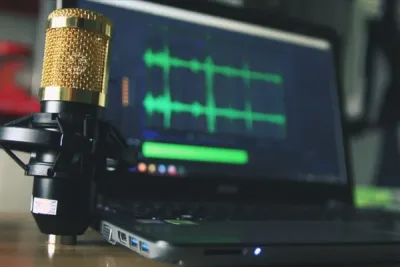

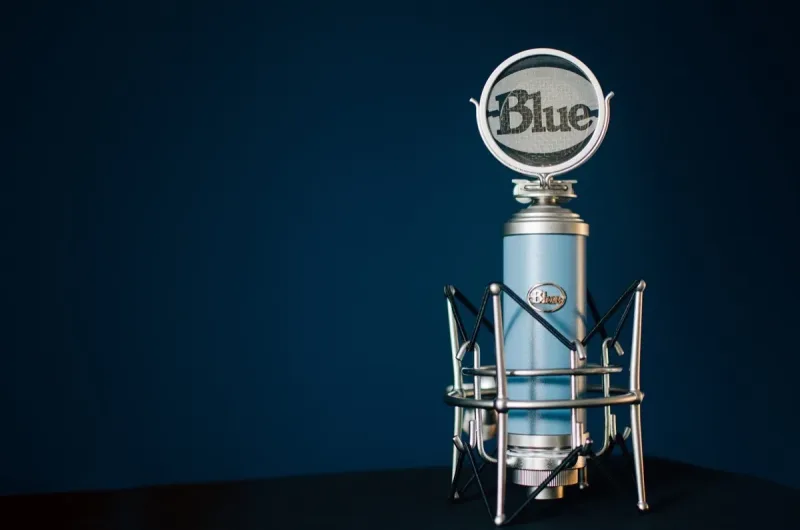
Clean sound and a low noise floor matter a lot whether you’re a YouTuber, a singer, a social media creator, a podcaster, or a voiceover artist, and a small diaphragm condenser mic is one of the fastest ways to get there.
Condenser mics pack most of the features an artist or engineer actually wants. They shine on instruments (brass, drums, strings, and pretty much anything else you can mic up) and they handle vocals with the kind of detail a dynamic mic simply can’t match.
Under the hood, a condenser uses a thin electrically conductive membrane mounted next to a solid backplate. When sound waves hit that membrane, it vibrates and converts the motion into an electrical signal with impressive accuracy.
That same electret condenser principle powers the tiny microphone modules used in electronics projects — hobbyists wire these miniature capsules to microcontrollers to build sound-reactive devices. Our Arduino microphone guide breaks down how those little capsules actually work in hobby circuits.
Because condensers have powerful built-in amplifiers, they need phantom power in the 44V to 52V DC range to operate, which most interfaces and mixers supply as 48V phantom.
Quick Comparison Chart
| # | Product | Our Rating | ||
|---|---|---|---|---|
| 1 |  |
C1000S | ★★★★★ | Check Price |
| 2 |  |
PRO37 | ★★★★★ | Check Price |
| 3 |  |
Lauten Audio LA-320 | ★★★★★ | Check Price |
| 4 |  |
Rode NT2-A | ★★★★★ | Check Price |
| 5 |  |
Blue Yeti Pro | ★★★★★ | Check Price |
| 6 |  |
AKG C414 XLII | ★★★★★ | Check Price |
| 7 |  |
Blue: Bluebird SL | ★★★★★ | Check Price |
| 8 |  |
Shure SM86 | ★★★★☆ | Check Price |
| 9 |  |
Audio-Technica AT2020USB+ | ★★★★☆ | Check Price |
| 10 |  |
Neumann TLM-102 | ★★★★☆ | Check Price |
1. C1000S — Best Overall
C1000S
C1000S has a small aperture and it's a high-performance microphone that's best for recording voice and musical instruments.
Pros
- It has a convenient format for live vocal and studio use
- Powered up by phantom power or AA batteries
- Unique polar pattern converter
- A built-in boost adapter for settings of sound sources
Cons
- Documentation lacks detailed setup guidance for beginners
- Frequency response may not suit all voice types equally
The C1000S is a high-performance small-aperture mic that’s earned a serious reputation for voice and instrument recording alike. It runs off either two 1.5V AA batteries or 9-51V DC phantom power, so you’re covered whether you’re in a studio or out in the field.
The mic comes with three different frequency responses that can be activated via an included adapter, giving you the flexibility to match its tonal character to whatever source you’re recording. In the standard frequency range of 50 Hz to 20 kHz, the quality is consistently clean.
A switchable -10 dB bass cut keeps things distortion-free across a variety of situations, and the built-in polar converter lets you flip the pattern from hyper-cardioid to cardioid without needing a second mic. The capsule’s 6 mV/Pa sensitivity and 200-ohm impedance handle a load impedance up to 2 kilohms, which keeps it flexible with most preamps.
The matte black finish ships with wind protection, a soft cover, and a microphone holder in the box. An 80 Hz bass filter handles stage rumble, screen noise, and wind gusts, and the LED power indicator tells you at a glance whether the mic is on.
A protective cover extends the life of the unit and keeps dust and debris at bay, while the included mounting brackets give you a stable setup on any standard stand.
2. PRO37 — Runner Up
PRO37
PRO37 is a condenser microphone launched by Audio-Technica.
Pros
- It's a cardioid polar pattern
- Designed for acoustic and overhead instruments
- Gold-plated XLR acoustic connectors
- Corrosion-resistant finish protects the body in humid studio environments
Cons
- Humidity and moisture can damage the diaphragm over time
- Proximity effect can make bass overpowering at close range
Audio-Technica’s PRO37 is a genuine workhorse that shines in both studio and live contexts. It’s particularly strong on acoustic piano, overheads, guitar, and group vocals, which covers a lot of common recording scenarios in one mic.
The small-aperture cardioid capsule uses a low-mass element for quick transient response and a shape optimized for tight placement around instruments. At high SPLs, it holds its composure better than most mics in its class.
That cardioid pattern is a big part of why it works so well in busy rooms. It rejects noise and bleed from the sides and back of the capsule, so each source stays more isolated in the final mix.
Frequency response runs from 20 Hz to 15 kHz, which covers the bulk of what you’ll need.
Ruggedness is another strong suit. The PRO37 keeps performing in tough conditions with minimal distortion, making it a good choice for touring or outdoor setups.
Nominal impedance sits at 200 ohms, sensitivity is 7.9 mV/Pa, and it handles a max input of 141 dB SPL at 1 kHz, so extreme sources aren’t a problem.
Phantom power requirements run from 11 to 52 V at 2 mA, which means any standard interface will drive it without trouble. That makes it a natural pick for live performance, choral work, and similarly demanding environments where a reliable mic matters more than an exotic one.
A windproof foam screen keeps the capsule safe outdoors, and the gold-plated XLR connector resists corrosion from humidity and sweat. The box includes a 5/8-inch stand adapter, a wind protector, a soft carrying case, and a removable holder, plus an adapter for 3/8-inch European mounts.
3. Lauten Audio LA-320 — Best Value
Lauten Audio LA-320
It's a professional condenser microphone with a large-diaphragm.
Pros
- It has a low cut/high pass filter to eliminate muddiness and room rumble
- It has a high cut/low pass filter to eliminate rooms and sources
- It supports single pattern cardioid
Cons
- Self-noise floor is audible in very quiet recording environments
- Shock mount recommended to avoid stand vibration bleed
The Lauten Audio LA-320 is a professional large-diaphragm tube condenser that punches way above its price in terms of recording quality. It runs a dual-triode vacuum tube with a 1-inch gold-sputtered capsule, which is where that classic, vintage sound comes from.
Internally, you’re looking at high-end components you’d usually find in mics costing three times as much: a custom output transformer, a polypropylene capacitor, and a 12AX7 vacuum tube. The single-pattern cardioid capsule is paired with a 1-inch condenser element for that warm, detailed character.
The body itself is 8 inches long and 2 inches in diameter, with a chrome head basket and a black aluminum shell. Lauten ships the mic with a power supply, shock mount, and cables, so you’re ready to record right out of the box.
Two switches on the mic handle tone shaping. The low-cut/high-pass switch kicks in at 120 Hz to knock out rumble, and the high-cut/low-pass at 12 kHz tames vocal sibilance, cymbal sizzle, amp hash, and string jangle.
Between those two filters, you can sculpt a usable sound quickly.
Specs hold up against mics in a much higher price bracket. Nominal impedance is 200 ohms, sensitivity lands at 14 mV/Pa, frequency response runs 20 Hz to 20 kHz, and the mic offers 120 dB of dynamic range with 130 dB SPL handling and less than 17 dBA self-noise.
Tonally, the LA-320 gives you a 60 Hz bass boost, a gentle dip between 1.8 and 9 kHz, and a flat midsection from 200 Hz to 1.5 kHz. The net result is smooth and natural without feeling hyped.
It uses a 5-pin XLR connector instead of the usual 3-pin, and the dedicated power supply lets you select between different voltages depending on how you want to drive the tube.
4. Rode NT2-A — Top Pick
Rode NT2-A
The NT2-A is the product launched by Rode and it's among one of the best condenser microphones.
Pros
- Control of polar pattern, pad, and HPF
- Three-position polar pattern - cardioid, figure 8, or Omni
- Three-position high pass filter - flat, 40 Hz, 80 Hz
- Three-position pad - 10 dB, -5 dB, -0 dB
Cons
- Requires phantom power or battery, adding to setup complexity
- Highly sensitive to plosives without a pop filter
The NT2-A is the product launched by Rode and it’s among one of the best condenser microphones.
The NT2-A consists of an internal shock attached in a gold-sputtered capsule to avoid the noise and also has a metal body.
The microphone itself has very low self-noise which enhances the quality and helps to record nuances in its audio source.
For its operating purposes, it uses phantom power ranging from 24V - 48V and the output is a 3-pin XLR connection.
The mic has a sensitivity of -36 dB and 1 V/Pa with a maximum output level of 16.0 mV (1% THD into 1K ohm load and @1k Hz).
The nominal resistance is 200 ohms and the frequency is ranging from 20 Hz to 20k Hz.
The microphone is a 1-inch capsule mic for the studio, it contains variable high-pass, variable pad pass, and variable pick-up pattern filters.
A three-state switch is mounted on the body of the mic to provide the freedom of selecting a flat response to 40 Hz - 80 Hz high-pass filter, a pad adjustment between 0 dB, -5 dB, or -10 dB attenuation, and Omni or cardioid polar pick-up patterns.
These filters can eliminate the handling noise, rumble, or distortion produced by an electromagnetic field. This makes it a great choice for recording in untreated rooms.
The capsule is an Australian-based design and the manufacturing type is hf1 dual diaphragm.
The transient and frequency response of this microphone has been designed to meet today’s modern recording techniques.
But still, it has the smooth silky character of the mic from the ’50s and ’60s.
This feature gives the superlative and flexibility in audio characteristics that make the NT2-A best and a versatile condenser mic.
The package has a dust cover, SM6 shock mount, microphone cables, and a tutorial DVD.
5. Blue Yeti Pro — Top Pick
Blue Yeti Pro
It's a small diaphragm condenser mic that has both USB and XLR connections.
Pros
- Three condenser capsule arrays
- Four different pattern settings - Omni, stereo, cardioid, and bidirectional
- Zero-latency headphone monitoring
- USB and XLR breakout cable
Cons
- Gain control depends on software settings rather than hardware knobs
- Not compatible with most PA systems or mixers without adapters
The Blue Yeti Pro is unique on this list because it’s a small-diaphragm condenser with both USB and XLR connections, so it can grow with your setup. The onboard analog-to-digital converter captures up to 24-bit/192 kHz audio for detailed desktop recordings.
It’ll work just about anywhere: studio, home office, or the occasional field recording situation. Inside, three condenser capsules drive four different pickup patterns: omnidirectional, cardioid, bidirectional, and stereo.
Each pattern is tuned for a different scenario. Cardioid handles professional voice-overs, podcasting, instruments, and vocal tracking.
Omnidirectional captures a full 360 degrees and excels at conference calls, band rehearsals, and vocal groups. Stereo is the go-to for piano, duets, percussion, and acoustic guitar.
Bidirectional is tailor-made for two-person interviews and vocal duets.
On the XLR side, the included breakout lets you plug the Yeti Pro into pro preamps, mixers, and other studio gear. That dual-path flexibility is rare in this price class.
Zero-latency monitoring is another win. You can listen to yourself in headphones in real time without any delay, which makes tracking vocals a lot less confusing.
A volume knob on the mic handles monitoring levels directly.
Specs include a 24-bit sample rate, frequency response from 20 Hz to 20 kHz, and max SPL of 120 dB at 0.5% THD (1 kHz). Nominal impedance is 200 ohms and sensitivity lands at 1.5 mV/Pa at 1 kHz.
Power comes from USB (5 V, 500 mA) for the digital path or 48 V phantom on XLR. Blue ships the Yeti Pro with an adjustable desk stand, a 3-meter USB cable, and a 12-inch XLR breakout Y-cable, so you’re ready to plug into whatever rig you own.
6. AKG C414 XLII — Worth Considering
AKG C414 XLII
The C414 XLII is a multi-pattern condenser mic that offers nine choices of polar patterns for the best sonic capture.
Pros
- An LED indicator switching system
- Wide cardioid polar pattern
- Includes advanced accessories like shock mount and windscreen in the box
- Delivers the classic AKG C414 sound character in a pencil-style body
Cons
- Humidity and moisture can damage the diaphragm over time
- Proximity effect can make bass overpowering at close range
The AKG C414 XLII is a multi-pattern condenser that gives you nine selectable polar patterns for dialing in the exact sonic capture you want. All the controls can be disabled for permanent install or touring setups, which takes it beyond the studio and into the world of live and broadcast work.
A lot of engineers swear by it as a drum mic for overhead recording too.
Inside is a large-diaphragm multi-pattern capacitor element. The front side of the diaphragm is gold-plated, which prevents electrical shorting between the backplate and diaphragm at high SPLs.
A unique four-point capsule suspension plus a clever system for selecting patterns, filters, and pads round out the engineering.
A soft-touch rocker button ties the status LED, switching circuitry, and non-volatile memory together. That non-volatile memory stores settings even after the mic is unpowered, so your last configuration is ready to go when you plug it back in.
Five pickup patterns are available by tapping through the rocker button: wide cardioid, omnidirectional, cardioid, figure-eight, and narrow cardioid. A small green LED shows which pattern is currently active.
The pad switch offers 6, 12, and 18 dB settings, controlled by varying the polarizing voltage on the capsule. Because of the high impedance involved, switch changes take a moment to settle.
A bass-cut switch adds 40 Hz, 80 Hz, and 160 Hz options for taming proximity effect or room rumble.
The updated transformerless circuit extends the dynamic range, pushing headroom to 134 dBA and dropping self-noise all the way to 6 dBA. Phantom power runs 44-52 V at 4.5 mA, positive relative to the ground cable.
Sensitivity comes in at 23 mV/Pa, nominal impedance is 200 ohms, and recommended load impedance is 2.2 kilohms. Audio frequency bandwidth spans a clean 20 Hz to 20 kHz.
AKG ships it with an H85 universal shock mount, a metal case, a W414 windscreen, and a PF80 pop filter, which makes it one of the better-equipped mics out of the box.
7. Blue: Bluebird SL — Worth Considering
Blue: Bluebird SL
It's a highly versatile condenser and pressure gradient microphone.
Pros
- -20 dB pad and a high-pass filter for versatility
- A large-diaphragm cardioid capsule which is hand-built
- Best for home-studio interfaces (thunderbolt, USB)
Cons
- Self-noise floor is audible in very quiet recording environments
- Shock mount recommended to avoid stand vibration bleed
It’s a highly versatile condenser and pressure gradient microphone.
The bluebird SL has a gold-sputtered mylar diaphragm and a pressure gradient transducer in its capsule that provides high resonance at high frequency.
The sound balancing for the complete frequency spectrum is ensured by making use of the rear backplate.
It comes with a shock mount and wooden storage container to protect the audio from handling noise and low-end rumble.
The accuracy of the sound is maximized by class-A circuitry.
It’s perfect for electric & acoustic guitar, vocals, drums, and piano.
The frequency response of the mic is from 20 Hz to 20k Hz which enhances its use for several instruments with different tones and timbre.
The mic has a switchable -20 dB pad and 100 Hz high-pass filter to record a variety of sound sources with power and nuance.
The sensitivity of the mic is 28.5 mV/Pa at 1k Hz and an output impedance of 50 ohms.
Bluebird SL has a maximum SPL of 138 dB, sound to noise ratio is 82.3 dBA, the noise level is 11.7, and the dynamic range is 126.3 dB.
It has a pad of -20 dB and HPFof 12 dB per octave and 100 Hz.
It works brilliantly with USB audio interfaces and a home studio.
The microphone requires 48V dc phantom power to operate.
The dimensions of the mic are 222.5 mm x 47.5 mm.
In the package, there is a wooden box for storage and a shock mount alongside the mic.
8. Shure SM86 — Worth Considering
Shure SM86
Shure SM86 is one of the best condenser microphones and it's 100% optimal for vocals recordings.
Pros
- It's a clear and crisp sound
- Two-stage pop filter tames plosives without dulling high frequencies
- Tailored frequency response
Cons
- Requires phantom power or battery, adding to setup complexity
- Highly sensitive to plosives without a pop filter
Shure SM86 is one of the best condenser microphones and it’s 100% optimal for vocals recordings.
It’s perfect for stage performance and home studios.
The microphone is of a metal build and rugged with a two-stage pop filter, built-in shock mount to ensure the elimination of handling noise while performing and recording.
Shure SM86 uses an XLR connection and cardioid polar pattern.
It requires 11 V to 52 V of phantom power to operate.
The cardioid pickup pattern isolates the unwanted noises and main sound source which makes it ideal for in-ear monitors and stage monitors.
It has a unidirectional polar pattern.
There is an internal windscreen to protect the sound from the noise of breath sound and wind.
It has a high tailored frequency response between 15 Hz to 18k Hz and a maximum SPL (sound pressure level) of 124 dB.
The mic has a signal-to-noise ratio of 71 dB.
The load impedance is 600 ohms, and the output load is recommended to be as low as 150 ohms.
The sensitivity of the mic is -50 dB V/Pa - 3.15mV/Pa.
There is a 3 pin XLR connector for the mic.
In the package, there are these accessories: a 26A13 microphone bag, a 31A1856 5/8 inches to 3/8 inches adapter, and an A25D break-resistant microphone.
9. Audio-Technica AT2020USB+ — Worth Considering
Audio-Technica AT2020USB+
Audio-Technica AT202USB+ is a solid USB condenser microphone that offers an option of XLR connections.
Pros
- It has a cardioid polar pattern
- Runs on just 5V DC power so it works with battery-powered preamps
- It has zero-latency and volume control
- It's compatible with Windows 10, 7, Vista, and Mac
Cons
- Gain control depends on software settings rather than hardware knobs
- Not compatible with most PA systems or mixers without adapters
Audio-Technica AT202USB+ is a solid USB condenser microphone that offers an option of XLR connections.
It has a metal build and is rugged with a low mass diaphragm.
It has some amazing features of a mix control knob, pivoting tripod stand, and headphone jack.
The microphone offers award-winning and critically acclaimed studio-quality for songwriters/singers, podcasters, field recorders, home studio recorders, and voice-over artists.
The microphones have an analog and digital converter, and a 44.1/48k Hz sampling rate to ensure sound reproduction.
There is a mix of control that is used to blend pre-recorded audio and microphone signals.
There is a high output internal amplifier to deliver super clear and musical details.
It has a cardioid polar pattern and has a wide-angle of 120 degrees and offers brilliant off-axis rejection.
The frequency response ranges from 20 Hz to 20kHz.
The output power of the headphone is 130 mW at 1kHz, 32 ohms load, and 10% THD.
It needs 5V DC power to operate.
This mic is equipped with zero-latency technology to monitor the recording in real-time for an excellent result.
It has a nominal resistance of 200 ohms and a sensitivity of 7.9 mV/Pa.
In the box, there are these things: 5/8 inches -27 to 3/8 inches threaded adapter, mount stand for 5/8 inches-27, soft protective pouch, 10 USB cables, and a 2-year warranty.
The dimensions of the microphones are 6.38 inches in length and 2.05 inches body diameter.
10. Neumann TLM-102 — Worth Considering
Neumann TLM-102
Neumann TLM-102 is considered the Porsche of mics, it has amazing technology with advanced features.
Pros
- Transformerless output stage
- It equips an integrated pop shield
- Built-in treble boost adds presence and air to vocal recordings
Cons
- Mounting thread size may differ from your existing gear
- Performance varies depending on the quality of your audio chain
Neumann TLM-102 is considered the Porsche of mics, it has amazing technology with advanced features.
It’s a big deal in a small package and it has distortion-free sound even at high SPL(sound pressure levels).
It has the feature of plug and plays with treble boost for excellent sound, and is best and perfect for instrumentals and vocal recordings.
It has a special accent area ranging from 8k Hz to 12kHz which is perfect for the human voice.
In the overall mix, the sound has a noble presence, and recordings have silky elegance for large-diaphragm microphones.
In the mic, there is a separation for acoustic guitars and vocal sounds, it’s equipped with an integrated pop shield.
The TLM-102 can jump to dynamics without any distortion in the result, it also has a unique and latest technology of transformerless output stage.
This transformerless circuit gives a direct and clear sound just like an acoustic source.
Its transformation less output makes the microphone resist the electromagnetic fields and reduces transmission losses.
It’s best for recording in-home studios, instrumental recordings, loud signal sources like drums, winds, and amp instruments.
It’s a perfect package for singers and is easy to position.
It uses cardioid polar pattern settings and the sensitivity of the mic is around 11 mV/Pa with an impedance of 50 ohms.
The frequency range for the microphone is from 20 Hz to 20kHz and 132 dB of dynamic range.
The signal-to-noise ratio is 73 dB, and the maximum SPL is 144 dB.
It uses a phantom power of 44V - 52 V to operate.
In the package, there is a TLM-102 microphone, a stand mount, and cables.
Frequently Asked Questions
What is the difference between a small and large diaphragm condenser mic?
Small diaphragm condensers have a capsule under 1 inch and excel at capturing fast transients and high-frequency detail, making them ideal for acoustic instruments and overhead drums. Large diaphragm condensers (1 inch or larger) have a warmer, fuller sound that works beautifully for vocals and voiceover.
Do small diaphragm condensers need phantom power?
Most small diaphragm condensers require 48V phantom power from a mixer or audio interface. Some models like the AKG C1000S can also run on AA batteries, which is convenient for field recording or situations where phantom power is not available.
Can I use a small diaphragm condenser for vocals?
You can, but they are generally better suited for instruments. Small diaphragm condensers tend to produce a brighter, more detailed sound that can be less flattering on certain voices compared to large diaphragm models.
That said, they work great for vocal recordings where clarity and precision are the top priority.
Final Thoughts
There’s no shortage of advice out there when it comes to picking a condenser mic, but the right answer comes down to what you actually record and how. The picks above cover the best small-diaphragm condensers across every price range, so whatever your use case, there’s a mic on this list that fits it.
Take your time weighing the options, since a condenser is a piece of gear you’ll keep using for years, and the right one is worth spending a little extra to get.
The AKG C1000S wins for its unique polar pattern converter, dual power options (phantom power or AA batteries), and a format that works beautifully for both live vocals and studio recording. If you want a dedicated instrument mic with gold-plated XLR connectors and corrosion resistance, the Audio-Technica PRO37 is a reliable runner-up built for acoustic and overhead recording.