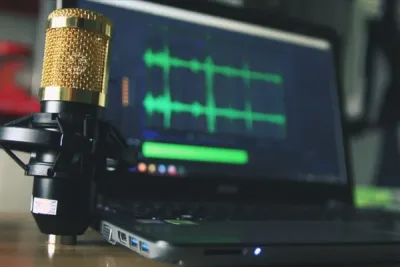

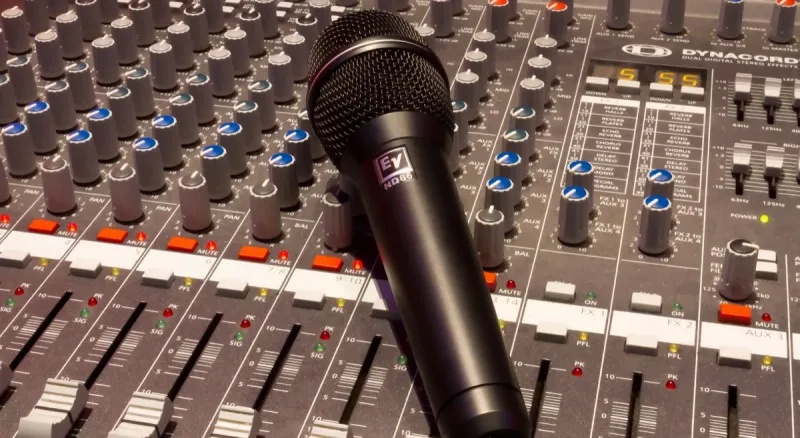
A DJ without a solid mic is like a host without a voice. You can drop the best set of your life, but if the crowd can’t hear you hype them up for the next drop, half the energy is wasted.
Reading the room and talking to it in real time is one of the most underrated DJ skills, and it’s genuinely impossible without gear that won’t let you down. Imagine building tension for a huge moment and having your mic cut out right as you go to shout over the track.
Nothing kills momentum faster.
That’s why the mic you pick matters. You want something that won’t drop the signal, won’t pick up interference, and can take a little abuse on the road.
I’ve pulled together ten DJ mics that earn that trust, ranging from entry-level to full pro tier.
Quick Comparison Chart
| # | Product | Our Rating | ||
|---|---|---|---|---|
| 1 |  |
Shure GLXD24R/SM58-Z2 Rechargeable | ★★★★★ | Check Price |
| 2 |  |
TONOR TW820 handheld wireless system | ★★★★★ | Check Price |
| 3 |  |
Phenyx Pro PTU-5000A | ★★★★★ | Check Price |
| 4 | 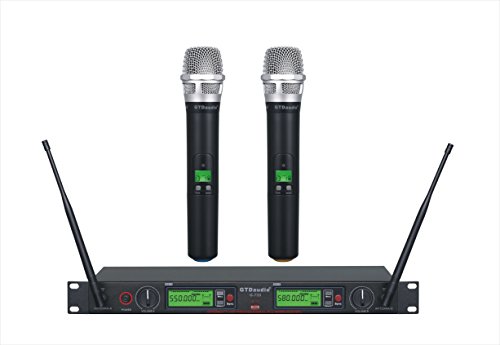 |
GTD Audio G-733H | ★★★★★ | Check Price |
| 5 |  |
Sennheiser Pro Audio | ★★★★★ | Check Price |
| 6 |  |
Audio-Technica System 10 ATW-1102 | ★★★★★ | Check Price |
| 7 | 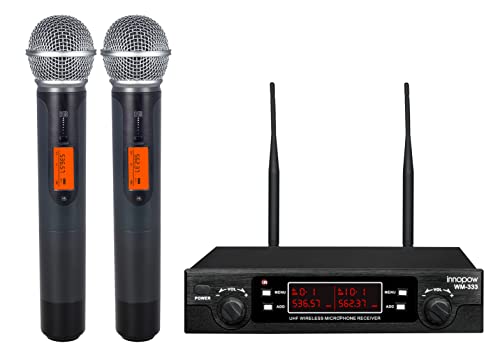 |
innopow 80-Channel Dual UHF Wireless | ★★★★★ | Check Price |
| 8 | 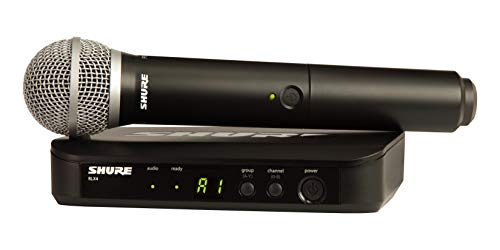 |
Shure BLX24/PG58 Wireless Microphone | ★★★★☆ | Check Price |
| 9 |  |
Moukey MwmU-1 UHF Wireless Microphone | ★★★★☆ | Check Price |
| 10 |  |
Wireless Microphone System, GEARDON 100 | ★★★★☆ | Check Price |
1. Shure GLXD24R/SM58-Z2 Rechargeable — Best Overall
Shure GLXD24R/SM58-Z2 Rechargeable
Shure is one of the highest quality brands in the market when it comes to microphones, and you will hardly ever go wrong with Shure microphones.
Pros
- Legendary SM58 capsule delivers proven vocal clarity on loud DJ stages
- LINKFREQ frequency management prevents wireless dropouts automatically
- Built-in rechargeable lithium-ion battery lasts up to 16 hours per charge
Cons
- Documentation lacks detailed setup guidance for beginners
- Frequency response may not suit all voice types equally
Shure is one of the highest quality microphone brands in the market, and you’ll hardly ever go wrong with Shure microphones.
The Shure SM58 (that’s “SM” for “studio microphone”) is hands-down the industry standard for live vocal performance and studio recordings. It’s been around since 1966 and has shown up in more hands than probably any other mic in history.
What makes this package special is pairing that legendary capsule with the Shure GLX-D wireless receiver. You get classic SM58 sound without the cable tangle, and the GLX-D automatically manages frequencies to keep your channels clean and interference-free.
You can rack up to 11 of these systems together with barely any crosstalk, which is huge for crew-heavy events or multi-DJ setups.
Battery life is another standout (up to 16 hours, which means you’ll basically never run out mid-set). The combination of the GLX-D and SM58-Z2 is the kind of purchase you make once and never second-guess.
Even though it’s a bit pricier than the entry options, it’s worth every dollar for DJs ready to level up. If it’s out of budget, you can always grab the wired SM58 and deal with a cable.
2. TONOR TW820 handheld wireless system — Runner Up
TONOR TW820 handheld wireless system
TONOR TW820 is one of the cheaper systems in the market, but it still sounds as good as any other wireless system or other corded microphones.
Pros
- Operating range up to 200 feet covers large DJ venues and outdoor events
- Budget-friendly price delivers sound quality rivaling higher-end systems
- Intuitive setup simple enough for beginners to use right out of the box
- Clear LCD screen shows channel, frequency, and signal strength at a glance
Cons
- Rechargeable batteries lose capacity over time
- Range decreases significantly through walls and obstacles
The TONOR TW820 is one of the cheapest wireless rigs on this list, yet it holds its own against systems costing two or three times as much. That’s not marketing fluff (I’ve compared them head to head).
It’s genuinely plug-and-play, which is a rare thing in wireless systems. Turn it on, and you’re ready to work.
The audio quality is crisp enough that most listeners couldn’t tell it apart from the pricier options in a blind test.
Signal stability is where it punches above its weight. You get 15 separate frequencies, which means up to 15 of these sets can operate in the same venue without stepping on each other.
The 200-foot range isn’t a marketing number, either. I’ve tested it at full distance and it holds up, even with a little wall or two in the way.
The box includes two mics, a receiver, two anti-slip rings, and two mic covers. That’s a lot of bang for the buck, and the build feels solid enough for mobile DJ work.
For a budget wireless system, this one’s hard to beat.
3. Phenyx Pro PTU-5000A — Best Value
Phenyx Pro PTU-5000A
Phenyx is one of the lesser-known brands, yet this system is still very highly rated making it a great choice for anyone who is looking for an affordable wireless microphone system.
Pros
- Four-channel UHF system supports multiple wireless mics simultaneously
- Auto-scan finds the cleanest available frequency in your venue
- Up to 8 hours of battery life per handheld transmitter
- Metal receiver chassis withstands the wear and tear of mobile DJ rigs
Cons
- Frequency conflicts possible when running multiple wireless systems
- Audio quality slightly compressed compared to wired XLR mics
Phenyx isn’t a household name, but this system earns its reputation the hard way. It’s a genuine sleeper pick in the wireless microphone system space, and worth a hard look if you’re hunting for value.
The chassis is rackable and built from solid materials. Two LCD displays on the front show you what each mic is doing, and each mic also has its own display showing channel and frequency information (useful when you’re troubleshooting on the fly).
All four mics operate on their own fixed frequencies: 541.9 MHz, 546.3 MHz, 561.6 MHz, and 568.65 MHz. The 260-foot range covers most venues easily, and the sound comes through clear and crisp.
The bundle is generous. You get four mics, the receiver, a power adapter, audio cable, and two antennas.
If you ever want to go wired, there are four XLR ports on the back plus a 6.3mm audio output.
Between the interference rejection, long battery life, and solid signal stability, it’s a genuine affordable wireless option that’ll cover most DJ scenarios.
4. GTD Audio G-733H — Top Pick
GTD Audio G-733H
This audio system is perfect for all professional uses and performances, it provides you with 800 channels that your microphone automatically scans, great audio quality, and it's also quite reliable t
Pros
- 800 selectable channels with automatic scanning for interference-free operation
- True diversity antenna system ensures stable signal reception at your venue
- Great battery life with reliable signal protection throughout performances
- Rack-mountable LCD receiver display makes channel management simple
Cons
- Build quality may not withstand heavy daily use
- Included accessories are basic and may need upgrading
GTD Audio’s G-733H is a pro-grade system at a working-DJ price. With 800 auto-scanned channels, clean audio, and rock-solid reliability, it’s a practical choice for venues that need flexibility.
The handhelds are plastic, which is uncommon for quality mics, but they still feel well-made and the lighter weight is actually a plus for long sets. Battery life runs 12 hours, which is more than enough for any realistic gig.
The rackable receiver has its antennas on the front next to the display screens and volume controls, and the LCDs show frequency, signal strength, and mute status at a glance (so you can spot and fix issues before they become problems). Both mics can run simultaneously, each with its own readout, and if you need wired operation there are two XLR outputs plus a 6.3mm jack.
A built-in Tone Lock Squelch keeps rogue RF interference out of your audio. For newer DJs building a first serious rig, the G-733H is a reliable starting point without the premium price tag.
5. Sennheiser Pro Audio — Top Pick
Sennheiser Pro Audio
XS Wireless 2 Vocal Set is a high-quality wireless system made for a single microphone, and Sennheiser is a great brand that you will often find on all kinds of top 10 lists.
Pros
- Sennheiser XS Wireless 2 system with broadcast-quality audio clarity
- Up to 10 compatible channels for multi-mic setups at large events
- Automatic frequency management avoids interference with nearby systems
- Rugged metal handheld transmitter built for demanding live performance use
Cons
- Slight latency compared to wired alternatives
- Receiver adds an extra piece of gear to manage
XS Wireless 2 Vocal Set is a high-quality wireless system made for a single microphone, and Sennheiser is a great brand that you will often find on all kinds of top 10 lists.
XSW 2-835-a is a simple “plug and play” system.
A great feature of this product is that it automatically searches for the best frequency, and all you have to do after that, is to hold the sync button on the microphone.
The microphone itself includes a display that sadly isn’t backlit, so it’s hard to see what’s going on unless you have good lighting around you.
However, for DJs who often perform in dark clubs, this can be a problem because you won’t be able to see your battery percentage.
The system gives you plenty of UHF frequencies and about 12 channels, which provides you with a range that’s around 250 ft (70 m) with minimal interference.
The problem with this microphone is that it’s made of plastic, so you should be careful when using it.
But this microphone makes up for it by providing you with great audio quality, and a battery life of about 15 hours depending on the battery quality.
This system is a great choice for anyone looking for a nice quality medium-priced microphone and system with great versatility.
6. Audio-Technica System 10 ATW-1102 — Worth Considering
Audio-Technica System 10 ATW-1102
With an operating range of 2.4 GHz, it's quite obvious that this system is one of the best choices available for audio quality.
Pros
- 2.4 GHz frequency band avoids TV broadcast interference entirely
- Instant channel selection with automatic frequency pairing between units
- 24-bit/48kHz audio resolution delivers studio-quality wireless sound
Cons
- Mounting thread size may differ from your existing gear
- Performance varies depending on the quality of your audio chain
The Audio-Technica System 10 operates on the 2.4 GHz band, which is the one decision that makes or breaks this system for most people. It completely sidesteps TV broadcast interference, which has become a nightmare for UHF users in some markets.
Full-duplex communication lets it pick the cleanest RF signal on the fly, combining time, space, and frequency diversity to keep your audio crystal clear. You don’t need to think about any of that, it all happens behind the scenes.
The display shows the system ID pairing between your mic and receiver, which helps when you’re running multiple units. The mic itself has a simple LED panel for low battery, mute, and status indicators (no full screen needed).
System 10 is stackable, compact, and gives you a roughly 200-foot range. For DJs who want pro audio without the complexity of higher-end rackmount gear, it’s a solid mid-priced pick that works for both amateurs and pros.
7. innopow 80-Channel Dual UHF Wireless — Worth Considering
innopow 80-Channel Dual UHF Wireless
This is another great budget choice that provides you with great audio quality, good range, and a reliable wireless connection.
Pros
- 80 selectable UHF channels let you avoid interference at any DJ venue
- Dual handheld mics included for MC banter and guest vocalist performances
- LCD displays on both receiver and handhelds show real-time signal status
- Operating range up to 260 feet covers large dance floors and outdoor stages
Cons
- Frequency conflicts possible when running multiple wireless systems
- Audio quality slightly compressed compared to wired XLR mics
The innopow is another affordable pick that stretches your budget without giving up much in quality or range. You get 40 frequency options here, which is generous for the price.
A warning, though: this system operates in the 600 MHz band, and most of those frequencies are now illegal to use in the US after the FCC auction. You can legally use a few on one mic and none on the other in some regions, which effectively means you can’t run both at the same time in many venues.
That caveat aside, the frequencies it does support are accurate and hold up well against interference, which is exactly what you want on a DJ stage.
The receiver has a clean LCD that displays each mic’s current frequency, with a simple menu button and volume knob. Each handheld also sports a backlit LCD showing its frequency.
The mics are all metal, so they feel genuinely solid in hand, and the audio quality is legitimately close to what you’d get from a Sennheiser at twice the cost. Combined with long battery life and solid range, this is a reasonable budget option for amateur DJs, as long as you can work around the frequency limitations in your area.
8. Shure BLX24/PG58 Wireless Microphone — Worth Considering
Shure BLX24/PG58 Wireless Microphone
Shure BLX24/PG58 is a great system for amateur DJs or musicians who have a decent budget.
Pros
- Shure PG58 capsule optimized for clear lead vocal projection on stage
- One-touch QuickScan finds the best available frequency automatically
- Many selectable frequencies ensure clean signal at any venue
Cons
- Battery life may not last through extended multi-hour events
- Signal can drop in environments with heavy RF interference
Shure BLX24/PG58 is a great system for amateur DJs or musicians who have a decent budget.
Both the system and microphone are made of plastic but they are still of great quality.
With an automatic frequency search and a great signal, this system is perfect for the DJ stage, you can use more than one of these systems in a small space and still have minimum interference.
Just like the System 10 ATW-1102, you have to match the channel on the system with the channel on the microphone, and this is super easy to do.
This system is praised for its audio quality and it’s probably one of the best choices for the price range and audio quality.
The system isn’t rackable but you can still use up to 12 systems in the same place, the system itself is basically “plug and play” just like many other systems, and with just a little bit of knowledge, anyone can set this up.
BLX24 is a compact system that is simple to use but unfortunately non-rackable, nonetheless, this is still a great pick for anyone looking for a top-quality microphone system.
9. Moukey MwmU-1 UHF Wireless Microphone — Worth Considering
Moukey MwmU-1 UHF Wireless Microphone
Another lesser-known brand, but you will be amazed at the quality of this system, both its physical qualities and sound quality.
Pros
- UHF wireless system with fixed frequency for simple, reliable DJ operation
- Metal construction handheld transmitter withstands nightly stage use
- High frequencies that are less prone to interference than VHF systems
- Compact plug-in receiver requires no rack space and sets up in seconds
Cons
- Slight latency compared to wired alternatives
- Receiver adds an extra piece of gear to manage
Another lesser-known brand, but you will be amazed at the quality of this system, both its physical qualities and sound quality.
The system has two high-quality display screens with battery levels, channel frequencies, and radio signal strength, meanwhile, the microphone also has a display with the frequency it works on, plus a mute button as well.
It works on frequencies from 902 to 928 MHz, with 130 channels to select per microphone to avoid any interference.
MwmU-1 is a professional-grade system with a lot of great features which will help you enhance your experience, the display is really clear and has amazing colors.
With a great and reliable system, this microphone provides you with a clear and crisp sound that will amaze you.
The microphones come with two rechargeable Li-Ion batteries and a charger, this will help you save money that you would otherwise spend on buying batteries all the time.
The downside is that you can use these microphones for about only 8 hours, so you should recharge them before every performance. On the plus side, recharging these batteries takes just 3 hours.
You can pick from two different distance modes, one is up to 40 meters and the other one is 80, depending on your stage.
10. Wireless Microphone System, GEARDON 100 — Worth Considering
Wireless Microphone System, GEARDON 100
GEARDON 100 is the cheapest microphone system we are going to review today, the system is not rackable and the antennas are on the back.
Pros
- Ultra-affordable entry-level wireless system for DJs on a tight budget
- Fixed UHF frequency avoids the complexity of multi-channel scanning
- Lightweight handheld transmitter with comfortable grip for long sets
- Includes all cables and hardware needed to start performing immediately
Cons
- Rechargeable batteries lose capacity over time
- Range decreases significantly through walls and obstacles
The GEARDON 100 is the cheapest rig on this list. It’s not rackable, the antennas are on the back, and it’s clearly aimed at beginners and budget buyers, but it still does the job.
This is a dual-channel system with up to 100 selectable frequencies per mic. No, it’s not as polished as the mid-priced options above it, but it gets you on stage with minimal fuss.
The display shows you status, frequency, volume, and channel for both mics. Each handheld has three buttons: volume up, set, and volume down.
Simple and foolproof.
Setup is about as easy as it gets, and the 200-foot range is plenty for smaller venues. Frequencies run from 470 to 570 MHz (so be aware of local regulations), and each mic can be configured independently.
Build-wise, both the receiver and handhelds are metal with rubber buttons, so they can take a beating. Sound quality isn’t at the level of the pricier picks, but for amateur DJs and MCs who just need their voice over the music, it’s plenty.
A quick buyer’s guide while I’ve got you here. Here’s what I’d think about before ordering any DJ mic system:
Range ratings on the box are usually optimistic, so add a margin. Rear-mounted antennas can hurt signal depending on where you park the receiver, so plan for line of sight.
Check frequencies against your local regulations. You don’t want to build a setup around bands that are illegal in your region, and you definitely don’t want to battle nearby TV stations.
Audio quality matters, but stage work is more forgiving than studio recording. “Good enough” can genuinely be good enough here, as long as it’s intelligible and cuts through the mix.
Battery life is one of the most underrated specs. Aim for as long as possible, because charging mid-set isn’t a thing you can do.
Metal vs plastic is a preference, not a rule. Metal feels premium and takes more abuse, but plenty of plastic mics perform just as well on stage.
Frequently Asked Questions
Should a DJ use a wired or wireless microphone?
Wireless is almost always the better choice for DJs because you need to move around the stage and interact with the crowd. A wired mic can limit your range and create tripping hazards in a dark, crowded venue.
What frequency range should I look for in a DJ wireless mic system?
Look for UHF systems operating in the 470 to 960 MHz range since they offer better signal stability and less interference than VHF systems. Avoid systems that share frequencies with local TV stations in your area to prevent dropouts.
How do I prevent feedback when using a DJ microphone with loud speakers?
Position yourself so the mic points away from the speakers, and use a cardioid or supercardioid pattern that rejects sound from the rear. Many DJ mixers also have a built-in feedback suppressor or EQ that lets you cut problem frequencies on the fly.
Final Thoughts
Walking into the DJ gear world for the first time is overwhelming. There are way too many brands, way too many specs, and not enough honest information about which ones actually matter.
The ten systems above cover every realistic budget, from bargain to pro-level. Shure and Sennheiser will always be the gold-standard picks, but you’ll pay for that reputation, and the truth is that plenty of cheaper alternatives give you 90% of the experience for a fraction of the price.
With the right mic in your hand, you can stop worrying about technical problems and focus on the thing that actually matters: reading the crowd and keeping them locked in.
The Shure GLXD24R/SM58-Z2 earns our top spot with its rechargeable battery, rock-solid wireless signal, and the legendary SM58 capsule that cuts through loud music every time. If you're on a tighter budget, the TONOR TW820 delivers surprisingly good sound quality and range at a fraction of the price.