
If you’re performing on a huge stage or shooting a subject from far away, a long-distance microphone is the only real option. When we’re talking about directional microphones in this context, we’re usually dealing with outdoor sound sources where there aren’t any noticeable reflections.
The main thing that matters is how far the source is from the mic. As distance grows, sound intensity drops off quickly, and longer ranges mean more interference from wind and ambient noise bleeding into your signal.
At roughly 100 meters, sound pressure drops by more than 40 dB compared to a 1-meter distance. A sound level of around 20 dB is below most ambient environmental noise, and standard microphones simply aren’t sensitive enough to cleanly pick that up.
That’s exactly why you need a long-distance microphone.
Quick Comparison Chart
| # | Product | Our Rating | ||
|---|---|---|---|---|
| 1 |  |
Sound shark Microphone | ★★★★★ | Check Price |
| 2 |  |
Technica AT875R | ★★★★★ | Check Price |
| 3 |  |
Rode NTG1 | ★★★★★ | Check Price |
| 4 |  |
Sennheiser MKH416 | ★★★★★ | Check Price |
| 5 |  |
Rode NTG5 | ★★★★★ | Check Price |
| 6 |  |
Rode Videomic Pro+ | ★★★★★ | Check Price |
| 7 |  |
Sennheiser MKE 600 | ★★★★☆ | Check Price |
| 8 | 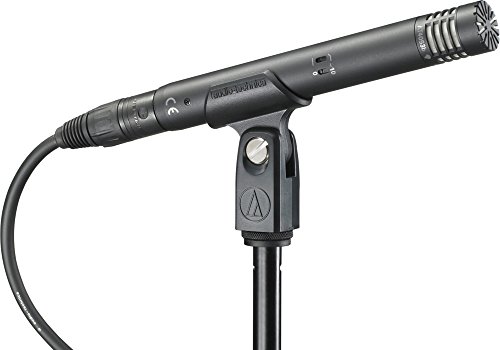 |
Audio Technica AT4053B | ★★★★☆ | Check Price |
| 9 |  |
Audio Technica AT4073a | ★★★★☆ | Check Price |
1. Sound shark Microphone — Best Overall
Sound shark Microphone
This is a parabolic dish that allows you to attach a microphone to it, it amplifies the sounds and narrows the pickup pattern of the sound.
Pros
- Parabolic dish amplifies sounds from 100+ feet away
- Wind-resistant design works outdoors without distortion
- Accepts any standard lavalier or shotgun mic attachment
- Flexible polycarbonate dish is durable yet lightweight
- Eliminates ambient background noise through focused pickup
- 30-day money-back guarantee included
Cons
- Phantom power may not supply enough current for power-hungry mics
- USB audio interface features lag behind dedicated interfaces
The Sound Shark is a parabolic dish you attach a microphone to. The curved surface focuses incoming sound waves onto the capsule, effectively amplifying what you’re aiming at while narrowing the pickup pattern dramatically.
It captures clean audio in pretty much any condition, whether it’s windy, stormy, rainy, or dead calm. The shape of the dish naturally blocks wind noise and a lot of the background sound you’d otherwise have to fight.
Drop an omnidirectional microphone into the Sound Shark and it essentially becomes a long-range mic, capturing sound from a tight 30 to 50 degree window. The concept is similar to the parabolic dishes used in TV broadcasts, which pick up targeted audio from a distance.
By design, it focuses on whatever’s directly in front and rejects what’s behind or to the sides. There’s also a custom accessory bracket that lets you mount add-ons like LED lights to the base of the parabolic collector.
Despite its reach, it’s small enough to sit right on top of a video camera or a light stand tripod. The build is flexible and durable, which makes it ideal for videographers covering weddings without interrupting the ceremony.
The bride and groom can exchange vows without wearing lapel mics because the Sound Shark captures their voices cleanly from a distance. It works just as well at other events where you need to grab audio from afar without the usual background noise.
One of the Sound Shark’s biggest strengths is the curved shield around the microphone. It rejects the noise behind you and delivers a stronger signal from the subject with much less background clutter.
The Sound Shark is honestly brilliant at what it does, and you can’t help but smile when you hear how clean the audio comes back.
2. Technica AT875R — Runner Up
Technica AT875R
Technica 875R is a short microphone of about 7 inches long with a small diameter.
Pros
- Only 7 inches long, one of the most compact shotguns made
- Excellent directional rejection at a budget-friendly price
- Low 14 dB self-noise keeps recordings clean
- Sturdy all-metal body built for daily field use
Cons
- Mounting thread size may differ from your existing gear
- Performance varies depending on the quality of your audio chain
The Audio-Technica AT875R is a compact shotgun about 7 inches long with a small diameter. It’s got strong directional characteristics and starts aggressively rejecting sound from around a 60-degree angle, which is exactly what you want outdoors.
It’s ideal as an on-camera mic and works happily on a tripod or boom pole, which makes it a strong pick as a microphone for filming. The AT875R is also one of the most affordable compact shotgun mics on the market, and the sound quality genuinely punches above the price tag.
I’d recommend it to anyone who needs a good long-distance mic on a budget.
If you’re pinched for cash but really need a solid shotgun, this is the one. The dynamic range delivers rich, clear sound, and the frequency response is well-balanced with a slight lift around 5 kHz that adds warm presence to vocals.
That means recorded vocals come through naturally, without harsh or distorted tones. A fixed 12 dB low-cut shelf from about 120 Hz down helps kill low-frequency rumble that tends to creep into directional mics.
The AT875R sounds close to a professional-grade shotgun, with essentially no audible hiss, thanks to how well it’s designed to reject surrounding noise. Build quality is surprisingly solid for the price.
It’s a no-frills design compared to Audio-Technica’s flagship shotguns, but it feels tough and can take real abuse in the field.
One thing to note: it uses an XLR output and needs phantom power, so you can’t plug it directly into a camera. Instead you’ll need a preamp, a Zoom recorder, or something similar that can supply 48V.
The box includes a basic foam windscreen that does a better job than it looks like it would. If you’re filming outdoors a lot and want real wind protection, consider picking up a Micover windscreen to put over it.
You also get a stand clamp and a mounting adapter for 3/8-16 threaded stands. And if this is your first XLR mic, you’ll need to buy a cable separately.
A Mogami is a solid choice.
3. Rode NTG1 — Best Value
Rode NTG1
This is an affordable and budget-friendly shotgun condenser microphone that offers the best audio quality.
Pros
- Budget shotgun condenser with broadcast-quality output
- Internal bass-cut filter eliminates wind and rumble noise
- Lightweight enough for boom pole use all day
- Wide 20Hz-20kHz frequency response captures full audio range
Cons
- Length makes it awkward to mount on smaller camera rigs
- Proximity effect is minimal, reducing vocal warmth up close
The Rode NTG1 is a budget-friendly shotgun condenser that delivers surprisingly great audio quality. It handles unwanted noise cleanly and stays affordable without sacrificing output.
Build quality is where the NTG1 really stands out. The rugged metal body can absorb plenty of abuse on a busy shoot and keep right on working.
At just 105 grams, it’s also light enough to boom for long stretches without wearing you out.
Core specs include a low-noise circuit, a supercardioid polar pattern, and that reinforced metal construction. It ships with a mic clip, a windshield, and a zip case, plus Rode gives you a 10-year warranty if you register the product.
The frequency response runs from 20 Hz to 20 kHz, so it picks up bass well. Low-frequency noise isn’t much of a concern either, since there’s a switchable 80 Hz high-pass filter built in.
That filter attenuates low frequencies, cutting things like wind, breath noise, and handling vibration from ruining your take.
A cable isn’t included in the box, so you’ll need to grab an XLR separately. The NTG1 runs on 48V phantom power, which most preamps and field recorders provide.
Worth noting: this mic is sometimes grouped with vintage-style reference mics because of how clean and classic it sounds.
4. Sennheiser MKH416 — Top Pick
Sennheiser MKH416
This is a professional microphone, it's a renowned industry-standard mic for filmmaking, voiceovers, documentation, and television.
Pros
- Industry-standard mic used on Hollywood film sets worldwide
- RF condenser design handles extreme humidity and weather
- Exceptional off-axis rejection for noisy outdoor environments
- Built like a tank with all-metal brass housing
Cons
- Base footprint takes up significant floor or desk space
- Height adjustment mechanism may loosen over time with heavy mics
The Sennheiser MKH416 is the industry-standard shotgun for filmmaking, voiceover, documentary, and broadcast television. Walk onto a Hollywood set and you’ll spot one on the boom pole.
It uses an RF condenser design with an externally polarized, high-quality capsule that holds up in extreme conditions, including heat, humidity, and harsh weather. The tone is rich, clean, and natural, which means your recordings need a lot less post-production work to sound finished.
The rejection pattern isn’t as tight as some shotguns, which gives it a genuinely perfect sweet spot for voice work. That makes it a dual-purpose mic.
I’m not exaggerating when I say the sound this thing produces is epic. The frequency response has been tuned with precision.
The midrange stays flat and natural, rivaling non-shotgun mics as long as you stay in the sweet spot, and it doesn’t color off-axis sound much because it’s actively rejecting it.
The audio coming out of this microphone is consistently clean across the entire spectrum, and the rich low end in particular is just stunning. The highs have a nice brightness with plenty of air and openness, which is what gives MKH416 recordings their signature “Hollywood” feel.
It’s highly sensitive, so you barely need any gain, and unless you’re in a completely soundproof room you’ll rarely hear any hiss. It rejects a reasonable amount of external noise, but don’t confuse that with having a super-tight pattern.
The MKH416’s directivity is closer to what a hyper-cardioid microphone sounds like indoors.
That dual-personality is what makes this a voice-over killer in addition to a great outdoor shotgun. Physically, it’s relatively compact at 250mm long and 19mm in diameter, weighing just 175 grams.
5. Rode NTG5 — Top Pick
Rode NTG5
The Rode NTG5 is a short, ultra-lightweight shotgun microphone with a revolutionary acoustic design featuring circular ports for unmatched transparency and natural sound.
Pros
- Ultra-lightweight at just 76g
- Extremely low self-noise (10 dBA)
- Smooth off-axis response keeps audio natural even when speakers move around
- Includes pistol grip shock mount
- Broadcast-quality clarity
- Tightly controlled frequency response
Cons
- Premium price point
- Requires phantom power
The Rode NTG5 is a short, ultra-lightweight shotgun microphone with a revolutionary acoustic design featuring circular ports for unmatched transparency and natural sound.
Weighing just 76 grams, the NTG5 is one of the lightest professional shotgun mics you can get, making it a breeze to use on long boom sessions without arm fatigue.
Its self-noise of just 10 dBA is impressively low, which means you get clean recordings even in quiet environments or when you’re capturing dialogue from a distance.
The tightly controlled frequency response delivers broadcast-quality clarity, while the smooth off-axis response means that sounds coming from the sides still sound natural rather than colored or harsh.
Unlike some shotgun mics that use traditional linear slots, the NTG5 uses a patented circular port design that provides more consistent directivity across the frequency spectrum.
This translates to a more natural, uncolored sound that requires less post-production work.
The kit includes the PG2-R Pistol Grip Shock Mount, WS10 Windshield, and a foam windshield, giving you everything you need for both indoor and outdoor recording right out of the box.
It requires 48V phantom power and outputs via a standard XLR connection, making it compatible with most professional audio equipment.
For filmmakers, documentarians, and broadcast professionals who need a reliable long-distance microphone that won’t weigh them down, the NTG5 is an outstanding choice.
6. Rode Videomic Pro+ — Worth Considering
Rode Videomic Pro+
Rode VideoMic Pro Plus is an upgraded adaptation of the VideoMic Pro, and the primary distinction is the size.
Pros
- High gain, high-quality sound
- Rechargeable, replaceable batteries
- Has a highly directional pickup pattern
- Ultra-low 14 dBA self-noise captures quiet sources without audible hiss
- Wide dynamic range handles everything from whispers to loud instruments
Cons
- Mounting thread size may differ from your existing gear
- Performance varies depending on the quality of your audio chain
The Rode VideoMic Pro Plus is an upgraded take on the original VideoMic Pro, and the most obvious difference is the size.
The Pro+ is bigger and heavier than its predecessor, and while many of the specs look similar on paper, the real-world difference in directionality is significant. The Pro+ rejects background noise much more aggressively while locking onto whatever is in front of it.
That upgrade isn’t free. The Pro+ is noticeably more expensive than the original VideoMic Pro, but I’d say it’s completely worth it.
Since not everyone is familiar with the older VideoMic Pro, let me run through the highlights and point out the small but meaningful improvements in the Plus version.
The VideoMic Pro+ has a self-noise of 14 dBA, which keeps hiss down when you’re in a quiet environment or can’t position the mic as close to your subject as you’d like. It also has an active amplifier circuit that can boost the output signal by up to 20 dB (roughly 10x the voltage).
Why does this matter? Short version: it’s a DSLR-targeted mic, and when you’re running it through a camera’s preamp, that built-in gain boost translates into significantly better sound quality because you’re relying less on the noisy camera preamp.
The mic includes a two-stage high-pass filter with 75 Hz and 150 Hz options, which is a genuinely useful feature. Without that filter, the mic could overload if you accidentally blew into it, and it also helps cut low-end rumble, vibration, and ambient noise.
One especially cool feature is that the mic automatically powers on when your camera does. It recognizes most cameras out there, though not every single one, so occasionally you may still need to flip the power switch manually.
All the mic’s controls are digital and remember their last state when you power-cycle the device, which is a small thing that makes a big difference in daily use. It uses a detachable 3.5mm TRS-TRS cable, which is a clear upgrade over the non-detachable cable on the older VideoMic Pro.
That matters not just because you can easily replace it, but because you can plug in a longer cable and use the Pro+ on a boom pole just like you would a full-size shotgun, no adapters required.
Not many people would think to use a DSLR mic on a boom, but it genuinely works, especially if you need to get a wider shot while keeping the audio clean. Interviews are a perfect use case, or any situation where you can’t physically get as close to the subject as you’d like.
This mic produces clean sound with very low 14 dBA self-noise, a wide 120 dB dynamic range, and a maximum SPL of 134 dBA.
7. Sennheiser MKE 600 — Worth Considering
Sennheiser MKE 600
Sennheiser MKE 600 is an awesome quality 10" short-range shotgun.
Pros
- 10-inch shotgun with natural, transparent vocal tone
- Switchable low-cut filter at 80Hz reduces handling rumble
- Runs on phantom power or a single AA battery for flexibility
- Accessible bass roll-off switch right on the body
- Optional Rycote windshield available for outdoor use
Cons
- Warranty coverage is limited to manufacturing defects only
- No dedicated carrying solution included for transport
Sennheiser MKE 600 is an awesome quality 10” short-range shotgun.
Albeit considered a section model, which is accessible at a rather unobtrusive value, it has a pretty much good performance!
It might seem humble, however, it’s positively more advantageous than both AT897 and Rode NTG2.
It likewise performs incredibly well in both the close and open territories without depending on post EQ.
It appears Sennheiser took the best of both mics for their MKE 600 and afterward, improved it significantly further.
The frequency pattern of this microphone is epic, it’s reasonably flat and its upper range has a 2-3 dB which gives it enough space not to sound dull.
Sennheiser MKE 600 is very small and lightweight, so besides blasting, it goes even well with DSLR cameras.
A stun mount goes with the bundle (MZS 600) which additionally makes it suitable for a simple on-camera application, and it doesn’t feel shaky as well.
For blasting, you should get some arachnid stun mount. Luckily they are very modest.
The standard windscreen froth is to some degree, horrible, but you are given the choice to add a couple of bucks and get a great shaggy windshield (Auray WSS-2014) - this is a decent move from Sennheiser!
Not at all like Rode who will push you a pointless froth which you will never utilize at any rate, and then, have you spend another amount for their WS6 or an identical windsock.
Likewise dissimilar to NTG-2 and AT897, this shotgun has some all-around planned controls.
You won’t require any pins as you can without much of a stretch, switch it with your fingernails.
It has a basic on/off switch, which assists with bantering while on, unlike the NTG-2 and AT897.
All the little irritations that we’ve had with the NTG-2 and AT897 (both sound and plan nature) are not present in the MKE 600.
8. Audio Technica AT4053B — Worth Considering
Audio Technica AT4053B
Audio Technica AT4053b is another hyper-cardioid mic, usually utilized by videographers indoors.
Pros
- Hypercardioid pattern ideal for miking multiple speakers
- Rich, natural sound without coloring the source audio
- Forgiving of room reflections compared to shotgun mics
- Interchangeable capsule system for different polar patterns
Cons
- Build quality may not withstand heavy daily use
- Included accessories are basic and may need upgrading
The Audio-Technica AT4053B is another hypercardioid mic, usually used by videographers working indoors. In theory, hypercardioids should have tighter pickup patterns than supercardioids.
In practice, the AT4053B is actually among the wider patterns in its class and is even edged out by the supercardioid Sennheiser MKH 50. That said, it delivers heaps of low-end warmth that creates a rich tone.
The trade-off is that it doesn’t sound quite as clean and can get a bit boomy when you place it too close.
The high end is detailed, but it rolls off noticeably before you hit the off-axis response, which honestly doesn’t give it much of an advantage over a solid shotgun unless you’re miking multiple speakers at the same time. The AT4053B sounds rich but not particularly clean compared to pricier shotguns, and that becomes especially obvious up close.
The built-in roll-off switch definitely helps, but it can’t fully eliminate that slightly muddy feeling.
9. Audio Technica AT4073a — Worth Considering
Audio Technica AT4073a
This is a lightweight shotgun microphone with a condenser capsule and a patented interference tube which provides good directivity.
Pros
- Lightweight shotgun body easy to mount on camera rigs
- Patented interference tube delivers tight directional focus
- Balanced, natural tonality at a competitive price point
- Low 13 dB self-noise ideal for quiet dialogue recording
Cons
- Requires phantom power or battery, adding complexity
- Handling noise is amplified by the long tube body
The Audio-Technica AT4073a is a lightweight shotgun with a condenser capsule and a patented interference tube that delivers strong directivity.
It stands out thanks to a high sensitivity rating of 70.8 mV/Pa and low self-noise around 14 dB. There’s a switch on the body that engages a -12 dB high-pass filter per octave at 150 Hz, which helps tame low-end rumble.
This mic has a flat on-axis frequency response, which is exactly what you want for maximum rejection of sounds coming from the sides and rear. Off-axis coloring has been reduced significantly, giving it a more uniform and natural off-axis response than a lot of shotguns in its price range.
Frequently Asked Questions
How far can a long distance microphone realistically pick up clear audio?
A quality shotgun mic can capture usable audio from about 10 to 20 feet away, while a parabolic dish microphone can extend that range to 100 feet or more. The actual distance depends on background noise levels, wind conditions, and how well you aim the mic at the sound source.
What is the difference between a parabolic microphone and a shotgun microphone?
A parabolic mic uses a dish to focus and amplify distant sounds, giving it much greater range than a shotgun mic. A shotgun mic relies on an interference tube to narrow its pickup pattern, which works well at moderate distances but can’t match a parabolic dish for truly long-range audio capture.
Do long distance microphones work well in windy conditions?
Wind is the biggest enemy of long distance recording because it creates low-frequency rumble that drowns out the sound you’re trying to capture. Using a furry windshield and a low-cut filter on your recorder or mixer will help, but extremely windy conditions will still be challenging.
Final Thoughts
The common thread across all of these picks is that they only perform well when you aim them correctly. Position is everything with long-distance mics.
Some of them cost a small fortune, and in this category, price usually correlates with quality for good reason. If you land a great long-distance mic that gives you clean audio regardless of how far away your subject is, hold onto it.
From my testing, the vast majority of mics on this list do a genuinely solid job of rejecting wind and background noise. Before you buy, always check the effective range, sensitivity, build quality, and price alongside comparable alternatives.
Found your perfect match yet?
The Sound Shark Microphone wins our top pick because its parabolic dish design amplifies distant sounds and narrows the pickup pattern in ways that traditional shotgun mics simply can't match. For a more compact and affordable option, the Audio-Technica AT875R packs excellent directional quality into a 7-inch body at a fantastic price.